
Pests and Diseases
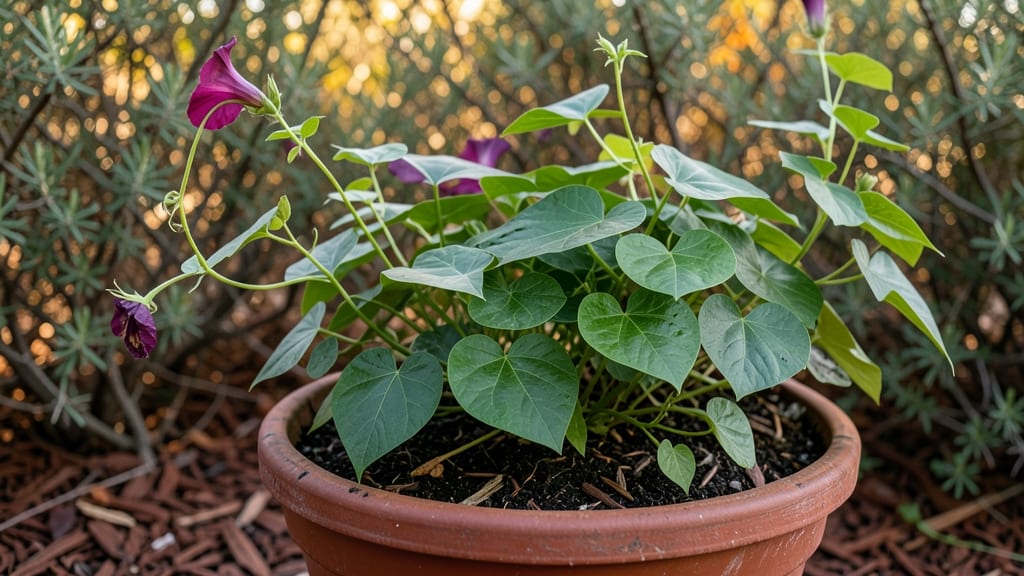
Growing entire leaf morning glory transforms shady corners into lush, flower-filled escapes—fast. 🌿 I learned the hard way that this vine thrives where others fail, smothering weeds and blooming prolifically in spots that get overlooked.
The secret lies in its adaptability: it’s an annual that treats shade like a vacation spot, not a limitation.
This variety needs minimal fuss: well-draining soil, occasional watering, and a sturdy trellis or fence to climb. Unlike sun-loving vines, entire leaf morning glory tolerates partial shade beautifully, making it perfect for north-facing walls or under trees. Just avoid soggy soil—root rot is its only real enemy.
By midsummer, you’ll see cascades of blue, pink, or white blooms that last until frost. The foliage stays lush even in heat waves, and it self-seeds reliably if you let it. Prune spent flowers to encourage more blooms, and watch your garden transform into a vertical paradise.
Perfect for beginners or busy gardeners—this vine grows so quickly you’ll forget it’s even work. Just remember: the more you train it, the more dramatic the display. Let’s get those seeds in the ground!
📚 In This Guide
- What you need
- Instructions
- Tips and common mistakes
- Wrapping up and next steps
What you need
- ● Seeds: 20-50 entire leaf morning glory seeds (organic, non-GMO preferred).
- ● Potting mix: 10-15 lbs of well-draining, peat-based soil mix (or coco coir for sustainability).
- ● Containers or garden bed: Containers: 5-10 gallon pots (1 per 3-5 plants) with drainage holes.
- ● Garden bed: A shaded area with loose, fertile soil (6+ inches deep).
- ● Watering can or hose: With a gentle spray nozzle for seedlings.
- ● Mulch: 2-3 yards of straw or wood chips to retain moisture.
- ○ Fertilizer (optional but helpful): Balanced 10-10-10 or compost tea for nutrient boost.
- ● Gloves: Gardening gloves to protect hands from soil and thorns.
- ● Trowel or small shovel: For transplanting seedlings.
- ● Trellis or support structure: 4-6 ft tall (e.g., bamboo stakes or wire mesh) for climbing.
- ● Pruning shears: For shaping vines and removing dead leaves.
- ● Pest control (preventative): Neem oil or insecticidal soap (for aphids/spider mites).
- ○ Shade cloth (optional): 30-50% coverage if your garden gets partial sun.
Step-by-step guide to growing entire leaf morning glory in shade
Here’s how to coax these fast-climbing vines into lush, shade-loving beauty with minimal fuss.
🌱 Step 1: Select the Right Location and Prepare the Soil
Entire leaf morning glory thrives in partial to full shade, making it perfect for north-facing walls, trellises under trees, or fences that block harsh afternoon sun. Choose a spot where the vine can climb—install a 5-6 foot trellis or let it scramble over a sturdy arbor. The soil should drain well but retain moisture, so amend heavy clay with 2-3 inches of compost mixed into the top 12 inches of soil.
These vines tolerate poor soil better than most, but they’ll reward you with faster growth if you work in a handful of aged manure or worm castings for extra nutrients. Test the soil pH—morning glories prefer slightly acidic to neutral (6.0-7.0). If your soil runs alkaline, add sulfur or peat moss to adjust it before planting.
🌱 Step 2: Plant Seeds at the Right Depth and Spacing
Direct-sow seeds in early spring after the last frost, or start them indoors 4-6 weeks before your average last frost date if your growing season is short. Plant seeds ½ inch deep—deeper than this and they’ll struggle to emerge. Space seeds 6-8 inches apart in rows 12-18 inches apart if growing as a ground cover, or 18 inches apart if training on a trellis. I like to plant in double rows along trellises for a denser, faster-growing curtain of foliage.
Water gently after planting to settle the soil without disturbing the seeds. Keep the soil consistently moist (not soggy) until germination, which typically takes 7-14 days in warm soil. If sowing directly outdoors, wait until the soil warms to at least 60°F—cold soil delays germination and can cause rot.
☀️ Step 3: Provide Support and Train the Vines Early
Once seedlings reach 4-6 inches tall, gently guide the main stems onto the trellis or fence using soft twine or plant ties. Morning glories are twining vines, meaning they’ll coil around supports naturally, but giving them a head start prevents tangled, weak growth. I tie the main stem loosely to the trellis every 6-8 inches as it climbs—this keeps the vine upright and encourages stronger lateral growth.
Prune leggy side shoots back to 2-3 leaves if they grow too long before reaching the trellis. This redirects energy to the main vine and produces a bushier, more compact plant. Avoid heavy pruning once flowering begins—you’ll sacrifice some blooms, but the vine will still produce plenty.
💧 Step 4: Water and Fertilize for Fast, Healthy Growth
Water deeply once a week during dry spells, aiming for 1-1.5 inches of water per week. Morning glories are drought-tolerant once established, but they’ll grow twice as fast with consistent moisture. Water at the base of the plant in the morning to reduce fungal risks—wet foliage at night invites powdery mildew, especially in humid shade gardens.
Feed lightly with a balanced, water-soluble fertilizer (10-10-10) at half strength when vines are 12-18 inches tall and again when they start flowering. Over-fertilizing leads to lush foliage but fewer blooms. I also top-dress with compost tea every 4-6 weeks for a gentle nutrient boost without burning the roots.
✂️ Step 5: Deadhead and Maintain for Continuous Blooms
Pinch off spent blooms daily during peak flowering to encourage more blossoms. Morning glories are annuals, so they’ll produce flowers nonstop from early summer until frost if you keep up with deadheading. The key is to remove faded flowers before they form seed pods—this redirects the plant’s energy into new blooms instead of seed production.
Watch for Japanese beetles or slugs in humid shade—these pests love morning glory blooms. Handpick beetles in the morning when they’re sluggish, or use neem oil as a preventative spray. Slugs leave telltale silver trails on leaves; set out beer traps or copper barriers to keep them away without chemicals.
Tips & tricks for thriving entire leaf morning glory
These simple but game-changing strategies will help your shade-loving vines grow faster and bloom more prolifically.
The Soil Secret: Don't just amend the top 12 inches of soil—work in that 2-3 inches of compost down to the full depth where roots will grow. Morning glories develop deep taproots, and richer soil at depth means stronger plants that can support more foliage and blooms. For extra insurance, I like to add a handful of worm castings to each planting hole—they're packed with beneficial microbes that help roots absorb nutrients more efficiently.
Germination Hack: Waiting for soil to reach at least 60°F is critical, but don't let seeds sit in cold, damp soil either. If your spring is slow to warm, try using a seedling heat mat (set to 70°F) for just 3-5 days after planting. This jumpstarts germination by 3-5 days without requiring you to start seeds indoors. The moment you see sprouts, remove the heat mat—you don't want to overheat tender seedlings once they've emerged.
Support System Pro Tip: When training vines in Step 3, use soft plant ties that can stretch as the vine grows—this prevents the twine from cutting into stems as they thicken. I've found that cotton or fabric ties work best because they breathe and won't strangle the vine. For extra stability, install your 5-6 foot trellis with guy wires if it's in a windy location, especially in partial shade where vines might grow more slowly and be less rigid.
Pest Prevention: Japanese beetles and slugs are the biggest threats to morning glories, but you can outsmart them before they become problems. For beetles, I plant a border of marigolds around my morning glory patch—the strong scent repels them naturally. For slugs, I use a combination of copper tape around the base of trellises and diatomaceous earth in a shallow ring around plants. This creates a double barrier that's far more effective than beer traps alone.
Pro Tips for Entire Leaf Morning Glory
- These simple but game-changing strategies will help your shade-loving vines grow faster and bloom more prolifically.
- The Soil Secret: Don't just amend the top 12 inches of soil—work in that 2-3 inches of compost down to the full depth where roots will grow.
- Germination Hack: Waiting for soil to reach at least 60°F is critical, but don't let seeds sit in cold, damp soil either.
Frequently asked questions
Got questions about growing entire leaf morning glory in your shade garden? You’re not alone! Here are some of the most common concerns—and their solutions—to help you cultivate this stunning vine with confidence.
How fast does entire leaf morning glory grow?
This vine is a speed demon! Under ideal conditions (full sun to partial shade, rich soil, and consistent moisture), entire leaf morning glory can climb 6–10 feet in a single season. In cooler climates, growth slows but resumes vigorously once temperatures warm. Use trellises or fences early to guide its rapid ascent!
Is entire leaf morning glory toxic to pets or humans?
Yes, all parts of morning glory contain toxic alkaloids (like beta-carbolines) that can cause nausea, vomiting, or neurological issues if ingested. Keep plants out of reach of pets and children. Never consume—stick to admiring its beauty from afar!
How do I keep entire leaf morning glory from dying in drought?
While drought-tolerant once established, young vines need consistent moisture to thrive. Mulch heavily (2–3 inches of shredded bark or straw) to retain soil moisture. Water deeply 2–3 times per week during dry spells, focusing on the root zone. Avoid overhead watering to prevent fungal diseases.
What pests or diseases should I watch for?
Common issues include:
- Aphids: Look for sticky residue on leaves. Blast off with water or use insecticidal soap.
- Spider mites: Cause yellowing spots. Increase humidity or spray with neem oil.
- Powdery mildew: White fungal coating in humid conditions. Improve airflow and apply fungicide if severe.
Prevent problems by pruning for airflow and avoiding overhead watering.
Can I grow entire leaf morning glory in containers?
Choose a large container (15+ gallons) with drainage holes and a trellis for support. Use a well-draining potting mix and fertilize monthly with a balanced formula. Expect slower growth than in-ground plants, but they’ll still thrive with regular watering and sun.
Wrapping up and next steps
Growing entire leaf morning glory in your shade garden is a rewarding way to add vibrant color and fast-growing charm to your space! 🌿 While pests like aphids and diseases like powdery mildew may pose challenges, staying proactive with neem oil, proper spacing, and regular inspections keeps your vines thriving.
Remember, a little care goes a long way—your garden will thank you with lush, healthy foliage and stunning blooms.
Ready to take the next step? Start small—plant a few vines this season and monitor their progress. Before you know it, your shade garden will be a stunning, low-maintenance oasis! 🌸