
Pruning
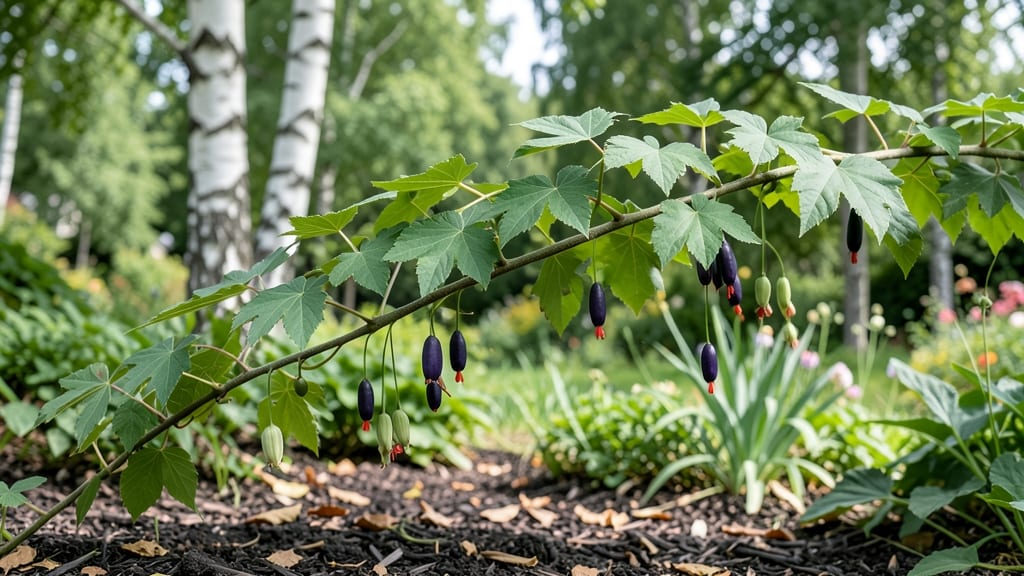
Growing five-leaf akebia fruit means waking up to fragrant purple blooms and harvesting edible berries that taste like a mix of banana and pineapple. 🌱 I planted mine three years ago after seeing the vines climb a neighbor's fence, and now I can't imagine a garden without its lush, glossy leaves and delicate flowers.
This vigorous vine thrives in zones 5-9, where it can spread 15-20 feet in a single season. It’s not picky about soil—just well-draining and slightly acidic—but it rewards patience with heavy fruit clusters in late summer.
The key is giving it a sturdy trellis or fence to climb, as the vines can get top-heavy when loaded with fruit. Once established, akebia fruit becomes a low-maintenance superstar.
Prune in early spring to shape the vine and encourage airflow, and watch as the flowers transform into glossy purple-black berries that ripen in 60-70 days. The berries are edible raw or cooked, though they’re often used in jams, syrups, or fermented drinks.
If you love unusual edibles with minimal fuss, this vine delivers. Just be prepared for its aggressive growth—it’s a gardener’s trade-off for those sweet, exotic-tasting berries.
📚 In This Guide
- What you need
- Instructions
- Tips and common mistakes
- Wrapping up and next steps
What you need
- ● Five-leaf akebia plant: 1-2 healthy nursery-grown vines (ensure they’re disease-free and have strong roots). Pro tip: 💡 Look for plants labeled as hardy in USDA Zones 5-9.
- ○ Growing medium: Well-draining potting mix (50% organic matter like compost, 30% perlite/pumice, 20% coco coir or peat moss). Optional: Add a handful of worm castings for extra nutrients.
- ● For in-ground planting: Amend native soil with compost (2-3 inches mixed into the top 12 inches of soil).
- ● Container (if potted): 1-2 15-20 gallon grow bags or large fabric pots (with drainage holes) for climbing support.
- ● Pruning tools: 1 pair bypass pruners (for clean cuts on new growth).
- ● 1 pruning saw (for thicker stems, if needed).
- ● 1 hand pruner (for precision trimming).
- ○ Support structure: 1 trellis (6-8 ft tall) or arbor (for vertical growth). Optional: Use a chain-link fence or permanent fence if space allows.
- ● 1 roll jute twine or soft plant ties (to secure vines gently).
- ● Soil test kit: 1 (to check pH—ideal range: 6.0-7.0).
- ● Mulch: Wood chips or straw (2-3 inches) to retain moisture and suppress weeds.
- ● Fertilizer: Balanced organic fertilizer (10-10-10 or 5-5-5) or compost tea (apply every 4-6 weeks during growing season).
- ● Drip irrigation system: For consistent moisture (especially in hot climates).
- ● Plant food: Epsom salt (1 tbsp/month in water) to boost magnesium for vibrant foliage.
- ● Frost cloth: For young plants in cooler zones (USDA Zone 5).
Step-by-Step guide to cultivating five-leaf akebia vines
This hardy, fast-growing vine thrives with minimal fuss once you master its quirks—here's how to grow it strong and productive.
🌱 Step 1: Select the Perfect Planting Site
Five-leaf akebia (Akebia quinata) demands a sturdy support structure—think 8-10 feet tall trellis or arbor—because its woody vines can reach 20-30 feet in ideal conditions. Choose a location with partial shade to full sun (morning sun and afternoon shade works best in hot climates). The vine tolerates a wide range of soil types but performs best in well-draining, slightly acidic soil with a pH between 6.0 and 7.0.
I always test soil drainage first by digging a 6-inch deep hole and filling it with water. If it drains within 30 minutes, the site is perfect. Amend heavy clay with 2-3 inches of compost to improve aeration. Avoid low-lying areas where water pools—this vine hates soggy roots. Plant in early spring after the last frost when soil temperatures reach at least 60°F—this ensures vigorous root establishment before summer heat.
🪴 Step 2: Plant and Stake for Optimal Growth
Dig a hole twice as wide as the root ball but no deeper—this prevents the crown from sitting too low, which can cause rot. Gently remove the plant from its container and loosen any circling roots with your fingers. Place the vine in the hole so the top of the root ball sits 1 inch below soil level—this encourages strong root growth without burying the stem. Backfill with native soil mixed with 1 part compost to improve fertility.
Install your trellis or support structure within 12 inches of the planting hole so the vine can immediately begin climbing. I use 3-4 inch wide metal or wooden lattice panels for maximum surface area. Water deeply right after planting to settle the soil and eliminate air pockets. Mulch with 2-3 inches of organic mulch (like shredded bark) to retain moisture and suppress weeds—just keep the mulch 6 inches away from the stem to prevent rot.
☀️ Step 3: Train Vines and Provide Seasonal Care
Five-leaf akebia grows aggressively, so prune in late winter or early spring before new growth begins. Remove any dead, damaged, or crossing branches first—this improves airflow and reduces disease risk. Then, cut back one-third of the previous year's growth to encourage bushier, more productive vines. I always look for lateral buds (small swellings on stems) when pruning, as these will produce new shoots.
Fertilize in early spring with a balanced 10-10-10 fertilizer (about 1/2 cup per mature plant). Water deeply once a week during the first growing season to establish roots, then reduce to every 10-14 days once established—this vine is surprisingly drought-tolerant once mature. Watch for purple-black berries in late summer to early fall; these are edible (though bitter) and attract birds, so harvest promptly if you want to enjoy them.
✂️ Step 4: Harvest and Overwinter for Next Year
Harvest berries when they turn deep purple-black and feel slightly soft to the touch—this usually occurs in late August to September, depending on your climate. Wear gloves when picking, as the berries stain easily. The edible flowers (which bloom in early spring) can also be harvested and used in salads or as garnishes. Cut stems just above a leaf node to encourage more blooms.
In USDA zones 5-8, five-leaf akebia is semi-evergreen and generally hardy down to -10°F, but young plants may need winter protection in colder zones. Wrap the base of the vine with burlap or frost cloth in late fall, and mulch heavily (up to 4 inches) to insulate roots. Prune lightly in late winter to remove any frost-damaged growth before new shoots emerge. The vine’s resilience means it often recovers quickly even after harsh winters.
Tips & tricks for cultivating five-leaf akebia vines
Mastering this vigorous climber takes just a few strategic moves—here's what I've learned from years of growing these lush, productive vines.
Support Structure Wisdom: Don't skimp on the trellis! While instructions call for an 8-10 foot structure, I've found that wider lattice panels (3-4 inches) give vines more surface area to grip and spread. This prevents the vine from becoming top-heavy and reduces the need for constant pruning later. Look for panels with diamond-shaped openings—they allow sunlight to reach lower leaves while still providing plenty of climbing space.
Soil Test Hack: That 30-minute drainage test in Step 1 is crucial, but here's what nobody tells you—if your soil drains too quickly (under 10 minutes), mix in some coconut coir with your compost to help retain moisture without suffocating roots. The ideal drainage rate should be more like 15-20 minutes for this vine, which balances aeration with moisture retention perfectly.
Pruning Precision: When cutting back one-third of last year's growth in Step 3, focus on removing the oldest, thickest stems first. These are often hollow and no longer productive. Make your cuts just above a lateral bud that faces outward from the trellis—this encourages new growth to spread rather than crowd inward. I always prune on a dry day to reduce disease risk, and sterilize my pruners with rubbing alcohol between cuts.
Winter Protection Upgrade: While the instructions mention frost cloth, I've found that wrapping young plants with burlap wrapped around a cardboard cylinder (like a makeshift tube) provides better insulation in zones colder than 5. The cylinder creates an air pocket that traps heat while still allowing some airflow. For established vines, add a layer of straw mulch (not just bark) over the existing mulch—straw breaks down more slowly and provides better insulation.
Pro Tips for Five Leaf Akebia Fruit
- Mastering this vigorous climber takes just a few strategic moves—here's what I've learned from years of growing these lush, productive vines.
- Support Structure Wisdom: Don't skimp on the trellis!
- The ideal drainage rate should be more like 15-20 minutes for this vine, which balances aeration with moisture retention perfectly.
Frequently asked questions
Got questions about growing, harvesting, or using five-leaf akebia fruit?
You’re not alone! Here are some of the most common queries—and their answers—to help you navigate this vining wonder with confidence.
When is the best time to plant five-leaf akebia?
Plant your five-leaf akebia in early spring or fall when the soil is workable but not frozen. This gives roots time to establish before extreme heat or cold sets in. Avoid planting in late summer—young vines struggle with drought stress. If you’re in a mild climate, fall planting can also work!
How long does it take for five-leaf akebia to produce fruit?
Patience is key! Most vines take 2–3 years to mature enough for fruit production. With proper care—like sturdy trellising, consistent watering, and winter protection—you’ll see clusters of edible flowers and berries by year three. Some vigorous varieties may fruit sooner, but don’t rush it!
Can I eat the berries raw, or do I need to cook them first?
The berries are best cooked—they’re tart and astringent raw. Simmer them in syrup, bake into jams, or ferment for a unique flavor. The flowers, however, are edible raw and add a delicate, cucumber-like crunch to salads or garnishes. Always harvest from pesticide-free plants!
How do I protect five-leaf akebia in winter?
This vine thrives in USDA Zones 5–9, but young plants or colder climates need help. Mulch heavily around the base with straw or leaves, and wrap the trellis in burlap or frost cloth. In Zone 5 or below, consider container growing—you can move pots indoors during freezes.
Why aren’t my flowers turning into berries?
No fruit? Check these fixes:
- Age: Vines need 2–3 years to mature.
- Pollination: Hand-pollinate with a paintbrush if bees are scarce.
- Sunlight: Ensure 6+ hours of sun daily—partial shade reduces fruiting.
- Nutrients: Feed with a balanced fertilizer in early spring.
Wrapping up and next steps
Growing five-leaf akebia fruit is a rewarding adventure for any gardener—whether you’re drawn to its stunning flowers, fragrant berries, or the thrill of nurturing an exotic vine.
With the right support structure, well-draining soil, and patience, you’ll soon enjoy a lush, edible landscape that’s as beautiful as it is delicious. 🌿
Ready to take the next step? Start by planting your own vine this season—your future harvest (and Instagram-worthy garden!) will thank you. Happy growing! 🌱