
How To
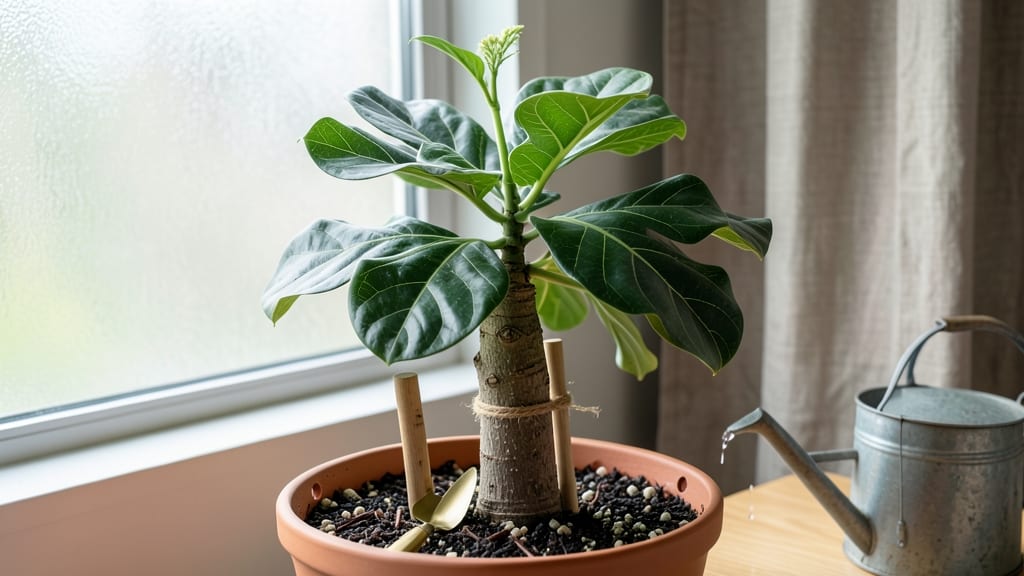
Strengthening a fiddle leaf fig 🌿 trunk means giving it the support it needs to grow tall and sturdy—without bending or breaking under its own weight.
If you’ve ever watched your fiddle leaf fig lean dangerously to one side or split at the base, you know how frustrating it can be. The good news?
With the right techniques—like braiding young stems or using proper staking—you can reinforce that trunk and prevent future weak spots in just a few weeks.
Most weak trunks come from a mix of poor support, inconsistent watering, or overcrowded roots. But the fix is simpler than you think: a little structural help now keeps your plant standing tall for years.
Below, I’ll walk you through the exact steps to braid, stake, and care for your fiddle leaf fig so it grows strong and proud.
You’ll learn when to start braiding, how to choose the right stake, and what to watch for to avoid common mistakes that weaken the trunk even more.
Step-by-step guide to braiding a fiddle leaf fig trunk for maximum support
Braiding your fiddle leaf fig trunk is one of the best ways to encourage a thick, self-supporting base while preventing that dreaded leaning or flopping look. This technique works best when your plant has 3+ stems between 6-12 inches tall, but you can start earlier if you’re patient.
The goal? A strong, tree-like trunk that looks stunning and stays upright for years.
Before you begin, make sure your plant is healthy—no yellowing leaves or root rot. Braiding isn’t a magic fix for overwatering damage or nutrient deficiencies, so address those first.
Once your fiddle leaf fig is ready, grab your supplies: soft plant ties, scissors, and a small stake (optional for support). The process is simpler than it looks, and I’ll walk you through every step.
Why braid? Braiding encourages the stems to grow thicker and stronger by forcing them to lean against each other. Over time, the natural calluses form where the stems rub, creating a single, sturdy trunk. Without braiding, your fiddle leaf fig might grow weak and leggy, especially if it’s reaching for light. Plus, a braided trunk looks intentional and artistic—like a mini bonsai!
How to Braid a Fiddle Leaf Fig Trunk
- 1 Choose the right stems: Select 3+ flexible stems (no thicker than a pencil). If stems are too rigid, braiding will damage them.
- 2 Gather and align: Hold stems together at the base and tie loosely with a plant tie (leave room to grow). Avoid pulling too tight—this can strangle stems as they thicken.
- 3 Braid the stems: Cross stems in a figure-8 pattern (left over right, right over left). Secure each crossing with a small plant tie or soft twine. Keep ties 1-2 inches apart for even pressure.
- 4 Add a stake (optional): Insert a bamboo stake or soft dowel next to the braid for extra support. Tie the braid to the stake every 6 inches to keep it upright.
- 5 Monitor growth: Check ties every 2-4 weeks. If stems outgrow the braid, add new ties or trim the longest stems to balance growth. Avoid cutting more than 1/3 of the stem at once.
- 6 Remove ties over time: Once the braid fuses into one trunk (usually 6-12 months), carefully cut ties to avoid scarring. Leave a few ties at the base for long-term support.
One of the biggest mistakes I see is tying stems too tightly, which can girdle the bark and strangle growth. Always use soft, stretchy ties (like plastic plant straps or jute twine) and check them monthly.
If you notice dark spots or indentations where the tie sits, loosen it immediately or replace it with a softer material.
Another common issue is uneven growth, where one stem grows faster than the others. To fix this, trim the fastest-growing stem by 1/3 to encourage balance. You can also rotate your plant weekly so all stems get equal light exposure.
Consistency is key—your fiddle leaf fig will thank you with a symmetrical, sturdy trunk in no time!
If your plant already has a single, weak stem, braiding might not work. In that case, consider staking or pruning to encourage new growth. But for multi-stemmed fiddle leaf figs, braiding is a game-changer.
With patience and care, you’ll have a show-stopping trunk that’s the envy of every plant lover.
Pro tip: Pair braiding with proper sunlight (bright, indirect light) and balanced watering (let the top inch of soil dry between waterings). These habits will supercharge your fiddle leaf fig’s growth and make the braiding process even more effective.
Ready to give it a try? Grab your plant ties and start braiding—your fiddle leaf fig’s future self will thank you! 🌿
Best staking methods for single-stem fiddle leaf figs (when braiding isn’t an option)
If your fiddle leaf fig has only one stem—whether from pruning or natural growth—you’ll need alternative support to prevent it from bending or toppling. Unlike braiding, which requires multiple stems, staking offers a simple way to reinforce a single-stem fig while promoting upright growth.
The key is choosing the right materials and techniques to avoid damaging the delicate trunk.
Common staking mistakes include using metal stakes that can rust or plastic ties that dig into the stem. Instead, opt for breathable, flexible supports like bamboo stakes or soft plant ties.
The goal is to mimic natural wind resistance while allowing the trunk to thicken over time. Let’s compare your best options to find the perfect fit for your plant’s needs.
Avoid over-tightening ties or stakes, as this can girdle the trunk and restrict growth. Check ties every 2-4 weeks to ensure they’re not digging into the bark. If you notice dark marks or indentations, loosen the tie immediately and reposition it higher on the trunk.
For long-term support, combine staking with pruning techniques like pinching back new growth to encourage thicker trunk development. Place your stake at a 45-degree angle for added stability, especially if your fig is near a drafty window or AC vent.
This mimics natural wind resistance and helps the trunk grow straighter over time.
Remove stakes gradually as the trunk thickens—usually after 6-12 months of consistent support. Start by loosening ties and reducing stake contact, then fully remove supports once the trunk can stand upright on its own. Monitor for leaning or wilting, which may indicate the trunk still needs reinforcement.
With the right staking method, your fiddle leaf fig will grow tall and proud without the risk of snapping. Experiment with these techniques to find what works best for your plant’s unique needs—your fig will thank you with lush, healthy leaves for years to come! 🌿