
Pruning
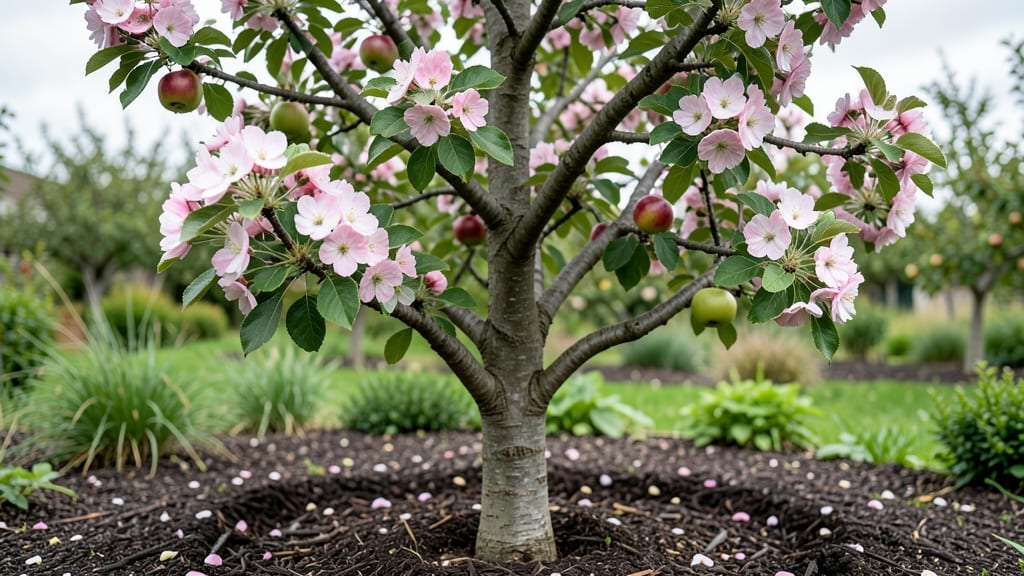
Identifying apple trees by leaf is like reading a tree’s secret code—each variety has unique markings that tell its story. 🌿 The right leaf clues reveal whether that tree produces crisp Honeycrisp apples or tart Granny Smiths, even before the fruit appears.
I’ve spent years comparing leaves in my orchard, and these traits never lie: size, serration, and vein patterns are your best tools.
Start with leaf shape—rounder leaves often mean sweet varieties like Fuji, while narrower leaves suggest tart ones like McIntosh. Then check the edges: fine teeth mean Honeycrisp, while jagged serrations hint at Granny Smith.
The veins matter too: prominent veins signal disease resistance, while faint ones might mean the tree needs extra care. Spring is the best time to study leaves—they’re fresh, vibrant, and free of pests.
You’ll quickly spot the differences: a Honeycrisp leaf is broad with gentle teeth, while Granny Smith’s edges look like tiny saw blades. Gala leaves are oval with smooth edges, and Fuji’s are thicker with a waxy finish.
Once you master these traits, you’ll identify any apple tree in your neighborhood—no fruit needed. The key is patience and close inspection.
This method works year-round, though spring and early summer offer the clearest clues. Bring a magnifying glass for close-ups, and compare leaves side by side. With practice, you’ll recognize trees by their foliage alone—no apples required. Now go test your skills on that mystery tree in your yard!
Nature’s Leaf Design Blueprint
Apple tree leaves don’t just grow randomly—they’re shaped by a mix of genetics, environment, and evolutionary adaptations. Understanding why leaves look the way they do helps you decode their secrets, like a botanical fingerprint. Here’s why leaf traits vary so distinctly across apple varieties.
Every apple tree’s leaf shape, size, and texture is hardwired into its genetic code. Just like humans inherit eye color from parents, apple trees pass down leaf traits through cultivar selection—the process of breeding specific varieties for desirable traits (like disease resistance or fruit flavor).
- Leaf serration (edges): Some varieties, like the Granny Smith, have finely serrated leaves due to genes that promote jagged edges for better water drainage and reduced pest attraction. Smoother edges, like those on Fuji leaves, often indicate a focus on minimizing leaf damage.
- Vein patterns: Pinnate veins (a central midrib with side branches) are common in apples because they optimize photosynthesis and structural support. However, the spacing and angle of these veins can differ based on genetic mutations that affect leaf efficiency.
- Leaf color: Pigments like chlorophyll (green), anthocyanins (red/purple), or carotenoids (yellow) are genetically determined. For example, the Red Delicious’s reddish hues come from anthocyanins, which may also act as a natural sunscreen for the leaf.
Pro Tip: 💡 If you’re comparing leaves, look for consistent patterns within a single tree—genetics ensure uniformity, while environmental factors (like sunlight) can cause slight variations.
Even the most genetically identical apple trees can develop slight leaf differences due to their growing conditions. Here’s how:
| Factor | Effect on Leaves | Example |
|---|---|---|
| 🌞 Sunlight Exposure | Leaves in full sun often grow smaller, thicker, and darker green to reduce water loss. Shady leaves may be larger, thinner, and lighter. | A Honeycrisp tree in a sunny orchard will have denser leaves than one grown under partial shade. |
| 💧 Water Availability | Drought stress causes leaves to curl, yellow, or develop a waxy coating. Overwatering can lead to larger but weaker leaves with poor structure. | Gala leaves may appear dull and limp if the tree is underwatered during summer. |
| 🌡️ Temperature | Cold snaps can cause purpling or mottling (from anthocyanin production), while heat waves may lead to bleaching or scorch marks. | A McIntosh tree in a late frost may sprout leaves with reddish edges as a stress response. |
| 🌿 Soil Nutrients | Nitrogen deficiency = pale, yellow leaves. Iron deficiency = interveinal chlorosis (yellowing between veins). Excess salts = brown, crispy edges. | A Jonathan apple tree in poor soil might show yellowing veins if zinc or magnesium is lacking. |
Actionable Tip: ✨ If you’re identifying a tree in unusual conditions (e.g., urban pollution or poor soil), compare its leaves to reference photos from healthy specimens—stress can mask genetic traits.
Leaves aren’t just for photosynthesis—they’re also the tree’s first line of defense. When pests or pathogens attack, the tree may alter leaf structure as a survival tactic:
- Pests (e.g., aphids, mites):
- Leaves may develop stippling (tiny white dots) from spider mites.
- Curling or puckering can occur as the tree tries to protect tender new growth.
- Some varieties, like Golden Delicious, are more resistant to pests, so their leaves stay smoother and less damaged.
- Fungal diseases (e.g., apple scab, powdery mildew):
- Dark spots or fuzzy coatings appear as the tree’s immune system reacts.
- Leaves may yellow prematurely and drop to conserve energy.
- Resistant varieties (e.g., Liberty) often have thicker cuticles or natural antifungal compounds in their leaves.
- Bacterial infections:
- Look for water-soaked spots that turn brown—common in fire blight.
- Leaves may wilt or blacken as bacteria clog the vascular system.
Key Takeaway: 🔍 If a tree’s leaves show unusual damage, it might not be the variety you think—disease can drastically alter appearance. Always check for healthy reference leaves on the same tree.
By understanding these root causes, you’ll spot the subtle genetic clues that set one apple variety apart from another—even when environmental factors try to muddy the waters.
Quick Fixes for Leaf Confusion
If you’re staring at a leaf and scratching your head—"Is this a Granny Smith or a Honeycrisp?"—don’t panic. With a few simple steps, you can turn leaf identification from a guessing game into a confident diagnosis.
Below, we’ll break down the most common causes of confusion and how to solve them, plus tips to prevent future mix-ups.
Cause: Many apple varieties share overlapping traits (e.g., serrated edges, lobed shapes, or similar vein patterns), making them hard to distinguish at first glance. Fix:
- Compare to a reference guide 📖: Use a printed or digital chart (like the one in this article) to cross-check leaf shape, size, and texture. Hold the leaf up to the screen or page for a side-by-side comparison.
- Examine the underside 🌿: Some varieties, like Arkansas Black, have fuzzy or downy undersides, while others (e.g., Fuji) are smooth. This subtle detail can be a game-changer.
- Check for subtle serrations 🪒: Count the "teeth" along the leaf edge. McIntosh leaves have fine, sharp serrations, while Gala leaves are more gently scalloped.
Prevention Tip: 💡 Take photos of leaves from known trees in your area and organize them by variety in a digital album. Over time, your brain will start recognizing patterns faster!
Cause: New growth or pest/disease damage can warp leaf shape, making them look unlike their mature counterparts. For example, a young Pink Lady leaf might resemble an Ambrosia leaf until it fully unfurls. Fix:
- Wait for mature leaves ⏳: If possible, wait until mid-summer when leaves are fully grown. Immature leaves can be misleading—focus on the 3rd or 4th set of leaves from the branch tip.
- Look for secondary clues 🔍: If leaves are damaged, check the tree’s flowers or fruit (if present) for hints. Jonathan apples, for instance, often have a distinctive reddish blush that can confirm a leaf’s identity.
- Inspect for pests 🐜: Holes, discoloration, or webbing can distort leaves. If you spot signs of aphids, mites, or fungal spots, note whether the damage is consistent with the leaf’s expected health for that variety.
Prevention Tip: ✨ Prune and monitor your trees regularly to reduce stress and disease, which can alter leaf appearance.
Cause: Apple trees can cross-pollinate or mutate, creating leaves that don’t match standard varieties. For example, a seedling apple tree might sprout leaves that resemble neither parent. Fix:
- Trace the tree’s lineage 🌱: If the tree is young and grew from a seed, it’s likely a hybrid. In this case, identification by leaf alone may not be reliable—consider DNA testing or consulting a local arborist.
- Observe the tree’s growth habits 🌿: Does it produce fruit? If so, taste or describe the apple’s color, shape, and flavor to narrow it down. Wild apples (e.g., Malus sylvestris) often have smaller, rounder leaves with fewer serrations.
- Compare to known wild types 📊: Use a key like the one in Peterson Field Guide to Trees to rule out non-cultivated species.
Prevention Tip: 🌡️ If you’re planting new trees, stick to grafted varieties from reputable nurseries to avoid unexpected hybrids.
Cause: Leaves can shrink or stretch due to environmental factors (drought, shade, or overwatering), throwing off size-based identifications. For example, a Golden Delicious leaf might look like a Red Delicious if it’s smaller than average. Fix:
- Use a ruler or app 📏: Measure the leaf’s length and width (from base to tip, and widest point). Create a simple table for reference:
| Variety | Leaf Length (inches) | Leaf Width (inches) |
|---|---|---|
| Granny Smith | 2.5–4.5 | 2–3.5 |
| Honeycrisp | 3–5 | 2.5–4 |
| McIntosh | 2–3.5 | 1.5–3 |
- Take multiple samples 🌿: Compare 3–5 leaves from different branches to account for variations in the same tree.
- Adjust for environmental stress 💧: If leaves are unusually small, check soil moisture and sunlight. A well-watered, sunlit tree will produce leaves closer to its "standard" size.
Prevention Tip: 🎯 Keep a garden journal with photos and measurements of your trees’ leaves over the seasons to track natural variations.
With these fixes, you’ll go from second-guessing to identifying apple trees with confidence. And remember: the more you practice, the sharper your eye becomes. Happy leaf sleuthing! 🕵️♂️🍏
Frequently asked questions
What’s the quickest way to tell if an apple tree leaf is from a sweet or tart variety?
Look at the leaf edges—sweet varieties like Honeycrisp or Gala often have smoother, rounded serrations, while tart types such as Granny Smith or McIntosh feature sharper, more jagged teeth. Also check the leaf’s overall shape: rounder leaves usually mean sweeter apples, while narrower leaves suggest tartness.
Can I identify an apple tree by leaf if it’s winter?
Not reliably! Apple leaves fall in autumn, so winter identification requires looking at buds or bark patterns instead. For leaf identification, focus on spring or early summer when leaves are fresh and undamaged. If you must guess in winter, check for leaf scars on branches—some varieties leave distinctive marks.
Why do some apple tree leaves have fuzzy undersides?
Fuzzy or downy undersides (like on Arkansas Black or Cortland varieties) are a natural defense against pests and moisture loss. This trait is genetic—breeders select for it to improve disease resistance. If you see fuzzy leaves, it’s a clue the tree might be an older or heirloom variety bred for hardiness.
How do I know if a leaf is from a crabapple tree instead of a regular apple tree?
Crabapple leaves are usually smaller (1–3 inches long), with more serrations and a sharper point at the tip. They also often have reddish stems and grow on trees with tiny, tart fruit. Regular apple tree leaves are broader (2–5 inches) and less densely serrated.
What should I do if my apple tree’s leaves look nothing like the reference photos?
Check for pest damage (holes, discoloration) or disease (spots, curling). If the tree is healthy but leaves still don’t match, it might be a hybrid or seedling—these can have unpredictable traits. Compare to multiple sources or consult a local arborist for confirmation.