
Plants
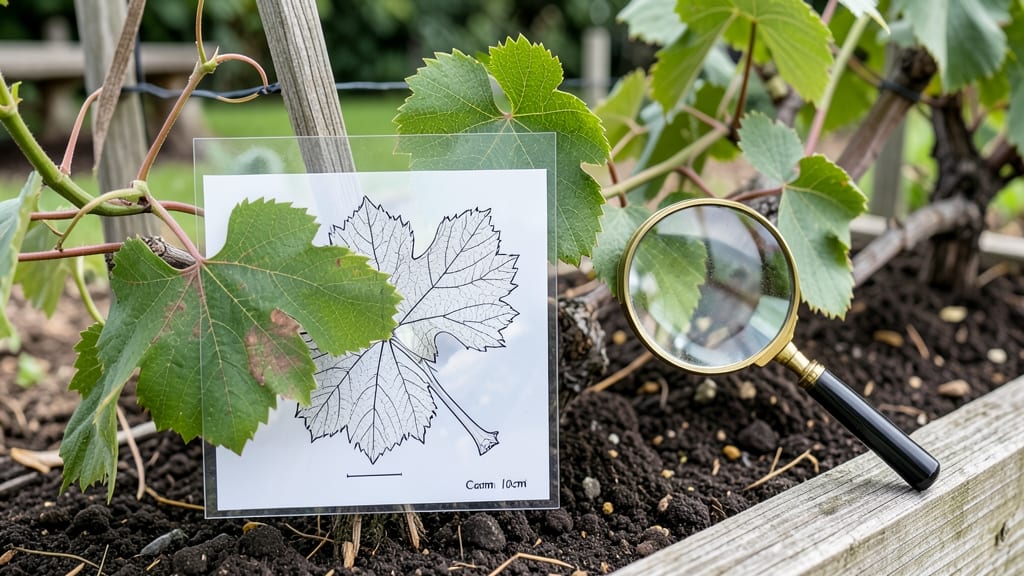
Vine identification by leaf saved me from accidentally planting poison ivy in my garden last spring. 🌿 The key is looking at leaf edges, vein patterns, and how they attach to the stem—details most gardeners overlook until it's too late. A smooth-edged, lobed leaf with three leaflets? That's poison ivy. A heart-shaped leaf with pointed tips? Likely Virginia creeper, which is harmless but aggressive.
Start by checking leaf arrangement: alternate, opposite, or whorled? Then examine the edges—smooth, serrated, or lobed—and the veins: palmate (spreading from one point) or pinnate (running parallel).
Wisteria has compound leaves with 5-13 leaflets, while grapevines have simple, lobed leaves with serrated edges. Ivy's leaves are evergreen, while most vines drop theirs in fall.
You'll quickly spot the differences once you know what to look for, and you'll avoid costly mistakes like planting toxic species or letting invasive vines take over your yard. The payoff is a garden that thrives without surprises—just lush, intentional growth where you want it.
For tricky cases, snap a photo and compare it to a vine ID chart. Most garden centers carry these, or you can find them online. If you're unsure about a vine's toxicity, don't touch it—call your local extension office for help. Safety first, always.
Leaf Traits Shape Vine Identities
Vine identification by leaf relies on a fascinating interplay of genetics, environment, and plant physiology—each factor leaving its unique fingerprint on leaf structure. Understanding why leaves differ across vine species (and even within the same plant!) unlocks the secrets of accurate ID.
Here’s the science behind the shapes, veins, and textures that make vine leaves so distinct.
Every vine’s leaf is a direct reflection of its genetic code, passed down through generations like a botanical family recipe. Key genetic factors include:
- Species-specific traits: For example, Vitis vinifera (grapevine) leaves are lobed and serrated due to genes regulating cell growth and edge formation, while Passiflora edulis (passionflower) leaves have deeply divided lobes shaped by different genetic switches.
- Hereditary mutations: Some vines develop unique leaf patterns (like variegation or extra veins) due to spontaneous genetic changes, making them stand out even within the same species.
- Hybrid vigor: Crossbreeding (e.g., Clematis × jackmanii) often results in hybrid leaves that blend traits from parent plants, creating a "mix-and-match" vein or shape puzzle.
Actionable tip: 🔍 Compare leaf traits to known species databases (like GRIN) to spot genetic outliers—these can reveal rare or hybrid vines!
Leaves aren’t static—they adapt in real-time to their surroundings. Environmental factors can drastically alter a vine’s leaf appearance, sometimes mimicking other species. Common culprits:
| Factor | Effect on Leaves | Example |
|---|---|---|
| 💧 Water availability | Drought → Smaller, thicker leaves with rolled edges (to reduce water loss). Overwatering → Larger, paler leaves with softer veins. | A Wisteria leaf in drought may look like a Glycine (soybean) leaf! |
| ☀️ Sun exposure | Full sun → Leathery, dark green leaves with pronounced veins (for heat resistance). Shade → Larger, lighter leaves with finer veins. | A Morning Glory in shade might resemble a Sweet Pea leaf. |
| 🌡️ Temperature extremes | Cold → Smaller, waxy leaves (to prevent frost damage). Heat → Curled or "crinkled" leaves (to reflect sunlight). | Hops leaves in heat stress can look similar to Humulus japonicus varieties. |
| 🌿 Soil nutrients | Nitrogen-rich soil → Darker, broader leaves. Phosphorus deficiency → Purple-tinged leaves with weaker veins. | A nutrient-deficient Kiwi vine may resemble a struggling Actinidia arguta. |
Pro tip: 🌡️ Observe leaves in their natural habitat—if a vine’s leaves look "off," check for environmental clues like soil pH or nearby water sources.
Diseases and pests don’t just damage leaves—they rewire their structure in ways that can fool even experienced identifiers. Common offenders:
- Fungal infections (e.g., powdery mildew, downy mildew):
- Cause yellowing, curling, or distorted veins (e.g., Vitis leaves with mildew may look like Parthenocissus varieties).
- Produce white or gray patches that alter leaf texture.
- Viral diseases (e.g., leafroll virus in grapes):
- Lead to stunted growth, reddening, or vein clearing (veins appear lighter than surrounding tissue).
- Can make a healthy Clematis leaf resemble a diseased Honeysuckle.
- Insect damage (aphids, spider mites, Japanese beetles):
- Create holes, stippling, or webbing that mimic natural leaf variations.
- Example: Beetle-chewed passionflower leaves may look like a different Passiflora species.
✨ Key insight: Infected leaves often have asymmetrical damage—compare both sides of the leaf and check for patterns (e.g., chew marks vs. fungal spots).
Vine leaves aren’t static—they evolve as the plant matures. A vine’s first leaves (called cotyledons) can look entirely different from its mature foliage, leading to misidentification if you’re not careful.
- Seedling stage: Leaves are often simple (unlobed) and heart-shaped (e.g., young Grapevine leaves resemble Virginia Creeper seedlings).
- Juvenile stage: Leaves may have fewer lobes or serrations than adult leaves (e.g., Wisteria juveniles look like Climbing Roses).
- Mature stage: Leaves reach their full genetic potential—this is the best time for ID!
💡 Quick fix: Wait until the vine has 3–5 sets of true leaves (not cotyledons) before attempting identification.
Quick fixes for vine ID confusion
Now that you understand the why behind vine misidentification, let’s tackle the how—with practical, step-by-step solutions tailored to common challenges. Whether you’re staring at a leaf and scratching your head or struggling to match it to a database, these fixes will turn guesswork into confidence. 🌿✨
Problem: Two vines have leaves that seem nearly identical—same shape, same veins, even similar color. How do you tell them apart?
Solution:
- Check the Stems
- 🔥 Examine the texture: Smooth stems (like grapes) vs. fuzzy or hairy stems (like morning glories).
- 🍳 Compare colors: Green, reddish, or purple stems can hint at species (e.g., Vitis vs. Clematis).
- 👨🍳 Look for thorns: Thorny stems (e.g., Rosa species) vs. thornless (e.g., Wisteria).
- Inspect the Leaf Arrangement
- ⏰ Alternate vs. opposite leaves: Hold the stem and see if leaves grow in pairs (opposite, like Virginia creeper) or singly (alternate, like Poison ivy).
- 🔪 Count leaflets: A single leaf (simple) vs. multiple leaflets (compound, like Bittersweet).
- Smell and Touch
- 🌡️ Crush a leaf: Some vines emit odors (e.g., Hops smell piney; Poison ivy has a faintly fishy scent).
- 🎯 Feel the edges: Serrated (like Virginia creeper) vs. lobed (like Grapevine).
💡 Pro Tip: Take a close-up photo of the leaf and stem together. Apps like iNaturalist or PictureThis use both features to narrow down matches.
Problem: You’ve tried every vine ID app, but the results are vague or wrong. What now?
Solution:
- Narrow Down the Habitat
- 🌿 Is it in shade or sun? Shade-tolerant vines (e.g., Honeysuckle) vs. sun-lovers (e.g., Passionflower).
- 🏡 Urban vs. wild? Invasive species (e.g., Kudzu) often dominate landscapes, while natives (e.g., Trumpet honeysuckle) thrive in forests.
- Seasonal Clues
- ✨ Flowers/Fruit: Even if the vine isn’t flowering, check for buds or last year’s fruit (e.g., Grapevine has persistent tendrils).
- 🍂 Fall colors: Some vines turn brilliant red (Virginia creeper) or gold (Bittersweet).
- Local Expertise
- 📊 Post in regional plant groups on Facebook or Reddit (e.g., "What’s this vine in [Your State]?").
- 💪 Visit a local nursery or arboretum: Bring a sample or photo—they’ve seen it all!
🔥 Quick Fix Table:
| Stuck Point | Try This | Example |
|---|---|---|
| Leaf shape unclear | Trace the outline on paper | Compare to known shapes |
| App gives wrong ID | Check for invasive species first | Kudzu, English ivy |
| No flowers/fruit | Look at stem scars or buds | Wisteria has pea-like buds |
Problem: You don’t want to repeat the guesswork next time. How can you build a foolproof system?
Solution:
- Create a Vine ID Cheat Sheet
- 📝 Jot down 3 key traits for each vine you encounter (e.g., "Grapevine: 5-lobed leaf, smooth stem, tendrils").
- 🖼️ Add photos to a digital album (Google Photos or PlantNet).
- Learn the "Big 5" Leaf Families
- Master these common vine types first:
- **🍎 Vitis (Grapevine): Palmately lobed, smooth.
- 🍓 Rubus (Blackberry/Raspberry): Serrated edges, thorny.
- 🍇 Parthenocissus (Virginia creeper): Blue-black "berries," 5 leaflets.
- 🍃 Humulus (Hops): Saw-toothed leaves, piney smell.
- 🍍 Toxicodendron (Poison ivy): "Leaves of three, let it be!"
- Master these common vine types first:
- Seasonal Scouting
- 🌼 Summer: Hunt for flowers or fruit.
- 🍁 Fall: Note leaf color changes.
- ❄️ Winter: Examine stem patterns** (e.g., Wisteria has zigzag stems).
🎯 Ultimate Tip: Carry a pocket magnifier and a small notebook on hikes. The more you observe, the faster your brain will recognize patterns.
Final Note: Vine ID is a skill—like learning a new language. Start with the basics, celebrate small wins (even if it’s just ruling out Poison ivy), and soon you’ll be spotting vines like a pro. 🌿🔍
Frequently asked questions
What are the most important leaf features to check when identifying vines?
Start with these key traits: leaf shape (lobed, serrated, or smooth), arrangement (alternate, opposite, or whorled), and vein pattern (palmate vs. pinnate). Also check the stem texture (hairy or smooth) and leaflet count (simple vs. compound). Poison ivy’s "leaves of three" is a classic example of why these details matter!
How do I tell the difference between grapevine leaves and Virginia creeper?
Grapevine leaves are palmately lobed (like a hand with fingers) with serrated edges, while Virginia creeper has 5 leaflets arranged in a fan shape. Another clue: grapevines have tendrils, while Virginia creeper produces blue-black berries. Check the stem too—grapevines are smooth, while Virginia creeper has a slightly reddish tint.
Can I use vine ID apps if I don’t have internet access?
Yes! Download the apps first (like PictureThis or PlantNet) and save images offline. For tricky cases, carry a printed vine ID guide or take photos to compare later. Many nurseries also offer free vine identification services—just bring a sample or clear photo.
What should I do if I think I’ve found poison ivy?
Don’t touch it! Poison ivy has three leaflets with smooth edges and a reddish stem. If you suspect it, wash your hands immediately and avoid the area. For removal, wear gloves and long sleeves, then cut the vine at the base. Never burn poison ivy—it releases toxic oils into the air.
How do environmental factors affect vine leaf identification?
Sunlight, water, and soil can drastically change leaf appearance. For example, a drought-stressed wisteria might look like a different vine entirely, with smaller, curled leaves. Always observe leaves in their natural habitat and check for signs of stress (like yellowing or curling) before making a final ID.