
Shrubs
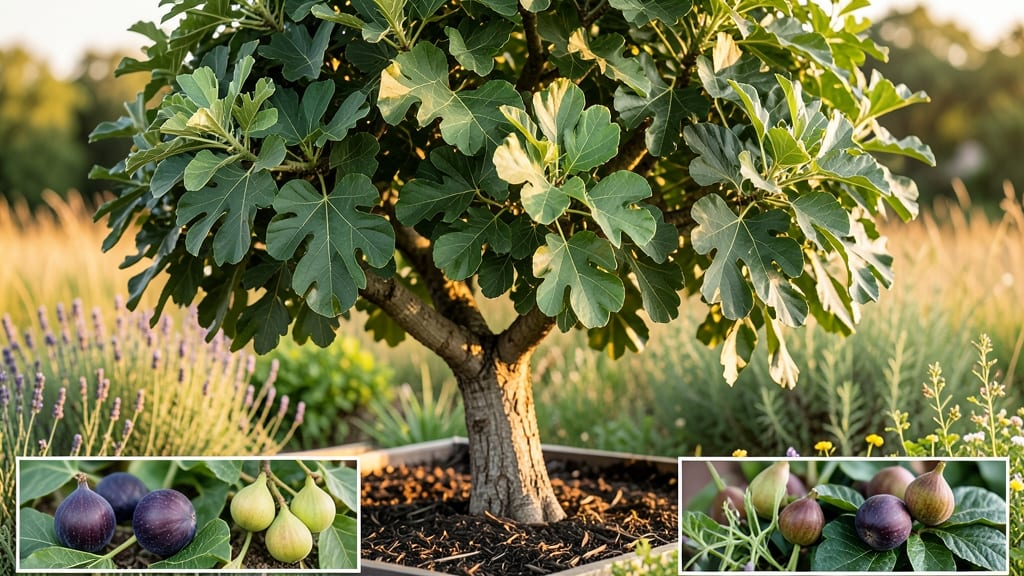
Identify fig varieties by the leaf—they’re the secret key to unlocking the story of what’s growing in your yard. 🌿 The first time I spotted a Chicago Hardy in a nursery, I nearly missed it—its deep green, five-lobed leaves looked identical to a Brown Turkey until I noticed the subtle serrated edges.
That tiny detail unlocked a world of flavor differences: the Chicago Hardy’s sweet, jammy fruit versus the Brown Turkey’s smoky, caramel-like taste.
You don’t need a magnifying glass—just your eyes and a notebook. Start by comparing leaf shape: some figs have smooth, rounded lobes (like Celeste), while others have jagged, almost finger-like indentations (like Osborn Prolific).
Leaf size matters too: Black Mission leaves are broad and leathery, while Desert King leaves are narrower and slightly glossy. Pay attention to texture—some feel fuzzy, others are smooth as silk.
Why bother? Knowing your fig’s identity helps you prune correctly, predict ripening times, and even spot pests early. A Brown Turkey needs winter protection, while a Chicago Hardy thrives in cold snaps. Once you master the leaf clues, you’ll spot varieties in nurseries and wild patches that others overlook.
The best part? Fig leaves change subtly as the season progresses—spring leaves are softer, summer ones tougher.
Pro tip: Snap a photo of your fig’s leaves and compare it to a guide when fruits appear. That’s how I confirmed my mystery fig was a Violette de Bordeaux—not by the fruit, but by the leaves’ deep purple blush in fall.
Start with these 10 types, and you’ll be reading figs like a pro in no time.
📚 In This Guide
- What you need
- Instructions
- Tips and common mistakes
- Wrapping up and next steps
What you need
- ● 1-2 mature fig plants (or access to a garden, nursery, or local park with diverse fig species for comparison).
- ○ Hand lens or magnifying glass (3x–10x magnification) – optional but helpful for examining fine details like leaf texture or vein patterns.
- ● Notebook and pen – To jot down observations like leaf shape, size, color, and arrangement.
- ● Ruler or measuring tape – For recording leaf length and width (in inches or centimeters).
- ● Camera or smartphone – Capture close-ups of leaves (front and back) and whole branches for reference.
- ● Field guide or printed comparison chart – Our visual guide (or a trusted botany book) to cross-check your findings.
- ○ Gloves (optional) – If handling spiky fig varieties like Ficus carica ‘Brown Turkey’.
- ● Basic knowledge of leaf anatomy (e.g., lobes, serrations, petiole length) – think of it as your fig leaf ABCs!
- ● Access to sunlight – Figs thrive outdoors, so plan your leaf-hunting during daylight hours.
- ● Patience – Some leaves (like those of Ficus carica) change shape as they mature. Observe multiple leaves per plant!
How to identify fig varieties by leaf shape and texture
Here's the method I use to distinguish fig types—no fruit needed, just leaves.
🌿 Step 1: Observe Overall Leaf Shape
Fig leaves vary dramatically in shape, and this is your first clue. Look at the general outline—is it lobed like an oak, rounded like a maple, or deeply divided like a fern? For example, Brown Turkey leaves are deeply lobed with 5-7 pointed segments, while Celeste leaves are broadly oval with smooth edges. I always start by tracing the leaf's silhouette with my finger to get a feel for its structure.
Pay attention to the leaf attachment too. Some varieties like Violette de Bordeaux have stems that twist slightly where they connect to the branch, while others like Osborn Prolific attach directly with a straight stem. This subtle detail can narrow down your options significantly.
🌿 Step 2: Examine Leaf Surface and Texture
The texture of the leaf is a game-changer. Run your fingers over the surface—is it smooth, slightly fuzzy, or rough with tiny bumps? Black Mission figs have deeply veined, leathery leaves that feel almost waxy, while Desert King leaves are softer and slightly hairy along the veins. I find a magnifying glass helpful here—some varieties like Sierra have tiny white hairs on the underside that are invisible to the naked eye.
Next, check the edge details. Are the margins smooth, slightly serrated, or deeply lobed? Alma figs have wavy, almost scalloped edges, while Panache leaves are entire (smooth) with a slight roll at the edges. This is where you'll often find the most distinctive clues.
🌿 Step 3: Count and Compare Lobes or Segments
Now, focus on the number of lobes or divisions. Some fig varieties have 3-5 shallow lobes, while others like Chicago Hardy have deep, finger-like divisions that look almost fern-like. I like to count the lobes while holding the leaf up to a bright window—this helps me see the venation pattern more clearly. For instance, Celeste leaves have 3-5 rounded lobes, while Osborn Prolific leaves are deeply divided into 5-7 sharp points.
If the leaf is simple (not lobed), look at the venation. Brown Turkey leaves have prominent veins that create a lattice pattern, while Desert King leaves have softer, less pronounced veins. This can be the tiebreaker when shapes look similar.
🌿 Step 4: Check Leaf Base and Stem Attachment
The base of the leaf and how it attaches to the stem can reveal a lot. Some figs, like Violette de Bordeaux, have asymmetrical bases where one side is slightly larger than the other. Others, like Alma, have symmetrical bases with a rounded shape. I often compare this to a butterfly's wings—one side might be slightly longer or more pointed.
Finally, examine the stem (petiole). Is it thick and sturdy, thin and wiry, or slightly swollen at the base? Black Mission figs have thick, woody stems, while Celeste stems are slender and flexible. This detail is often overlooked but can be the final piece of the puzzle.
📸 Step 5: Compare with Reference Images
Once you've noted all these details, cross-reference them with high-quality images of known varieties. I keep a printed guide of the 10 most common fig leaves next to my workspace—this helps me spot subtle differences I might miss otherwise. For example, Sierra leaves have deep, jagged lobes, while Osborn Prolific lobes are softer and more rounded. A side-by-side comparison can reveal differences you didn't notice at first glance.
If you're still unsure, take a clear photo of the leaf and compare it to online databases or gardening forums. Many fig enthusiasts share detailed images, and you might find a match that confirms your guess. The key is patience—fig leaves can look very similar at first glance, but the devil is in the details.
Tips & tricks for mastering fig leaf identification
These refined techniques will sharpen your eye for distinguishing fig varieties—no fruit required.
Lighting Matters: Natural daylight is your best friend when examining leaves. Position your leaf near a bright window or use a small desk lamp with a white diffuser to eliminate shadows. I've found that backlighting (holding the leaf up to a light source) reveals subtle vein patterns that are invisible in regular light. This is especially helpful when comparing leaves with similar shapes but different venation, like Brown Turkey versus Osborn Prolific. The contrast between light and shadow can make the difference between guessing and knowing.
Texture Test: Don't just look at leaves—touch them! The tactile differences between varieties are often more pronounced than visual ones. For example, Black Mission leaves have that distinctive waxy feel that's almost imperceptible to the naked eye but immediately noticeable when you run your fingers across the surface. I keep a small notepad nearby to jot down texture descriptions like "slightly fuzzy," "rough with tiny bumps," or "almost leathery." This sensory approach helps me remember specific varieties when I'm not looking at them.
Leaf Attachment Clues: The way a leaf attaches to the stem can be the most distinctive feature. Pay special attention to whether the stem twists or remains straight, and whether the base is symmetrical or asymmetrical. I've found that Violette de Bordeaux leaves often have that subtle twist at the base that sets them apart from other varieties with similar lobe patterns. This detail is particularly useful when you're comparing leaves that look nearly identical in shape and texture.
Reference Collection: Build your own visual reference library. I keep pressed leaves from known varieties in a small binder with clear plastic sleeves. When I'm unsure about a new leaf, I can quickly compare it to my collection. For varieties I don't have samples of, I've found that high-resolution photographs with a ruler for scale can be just as effective as physical samples. The key is to have multiple examples of each variety to account for natural variations within the same type.
Pro Tips for Identify Fig Varieties By Leaf
- These refined techniques will sharpen your eye for distinguishing fig varieties—no fruit required.
- Lighting Matters: Natural daylight is your best friend when examining leaves.
- Texture Test: Don't just look at leaves—touch them!
Frequently asked questions
Got questions about spotting fig varieties by their leaves? You’re not alone! Here are some of the most common queries—plus quick, actionable answers to help you master fig identification like a pro.
How do I tell the difference between a common fig and a brown turkey fig leaf?
The common fig (Ficus carica) has deeply lobed, rough-edged leaves with a glossy finish, while brown turkey figs feature broad, wavy, and slightly fuzzy leaves with a more rounded shape. Hold them up to light—common fig leaves often have a slightly translucent, almost "veiny" look, whereas brown turkey leaves are thicker and more textured.
Can I identify fig varieties by leaf in winter when there’s no foliage?
Not reliably! Leaves are your best clue, but winter’s the time to focus on bark texture or fruit remnants (if any). For example, Mission figs have smooth bark, while Black Mission trees develop rougher, darker bark as they age. If you’re unsure, snap a photo of the tree’s structure and compare it to online guides.
What if my fig tree’s leaves look abnormal—could it be a different variety or a disease?
Abnormal leaves (yellowing, spots, or curling) might signal rust, blight, or pests—not just a new variety. Start by checking the underside of leaves for mites or fungal growth. Compare your tree to healthy examples in our guide. If you’re still stumped, snap a photo and consult your local extension service for a diagnosis.
Do fig leaves change shape as the tree matures? Should I wait to identify it?
Yes! Young fig trees often have smaller, simpler leaves that develop lobes and complexity over time. For accurate ID, wait until the tree is at least 3–5 years old and compare mature leaves to our visual guide. Pro tip: Note the leaf’s armpit (axil)—some varieties (like Celeste) have tiny hairs there!
Is there a quick trick to measure leaf size for identification?
Use a ruler or your hand as a guide:
- Mission figs: Leaves are medium (6–10 inches), deeply lobed, and fit comfortably in your palm.
- Brown Turkey: Leaves are large (10–14 inches), often wider than they are long.
- Smyrna figs: Smaller (4–8 inches) with a heart-shaped base.
Wrapping up and next steps
Mastering the art of identifying fig varieties by leaf opens up a world of gardening possibilities—whether you're a hobbyist or a seasoned grower! 🌿 With this visual guide, you now have the tools to confidently distinguish between Brown Turkey, Kadota, and Black Mission (just to name a few) by simply observing their leaf shape, texture, and color.
The next time you spot a fig tree, don’t just admire it—explore, compare, and connect with its unique traits!
Ready to put your new skills to the test? Head outdoors, grab a notebook, and start documenting the fig varieties in your area! You might just uncover a rare or overlooked treasure growing right under your nose. 🌟