
Pests and Diseases
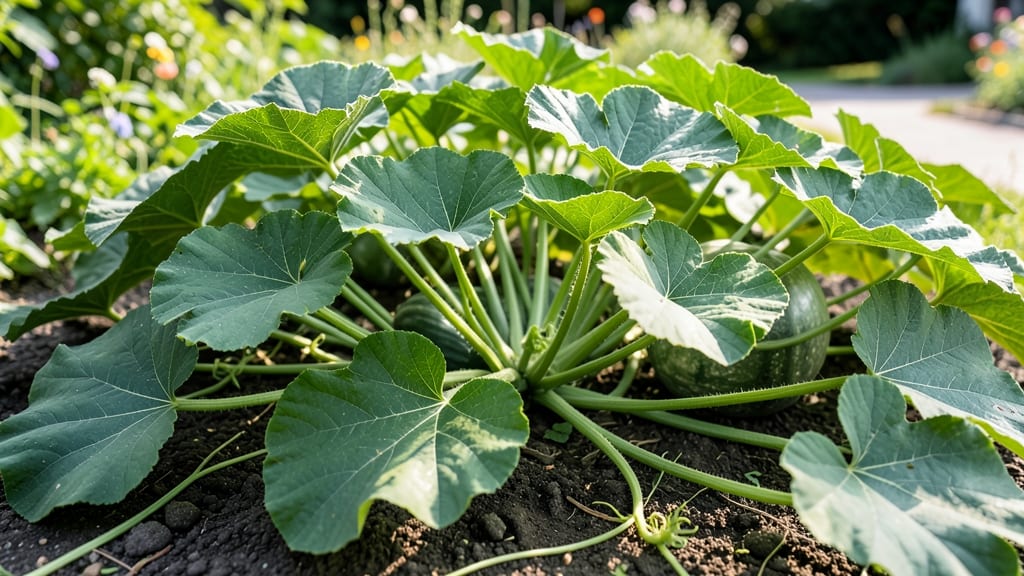
Mastering gourd leaf identification starts with noticing the subtle differences that separate pumpkins from squash—or even cucumbers. 🌿 I’ve spent years comparing leaf shapes, vein patterns, and textures, and the key is in those details: lobed edges, serrated teeth, or smooth curves that give each variety away.
One wrong guess can mean planting the wrong thing or missing early signs of disease.
Most common gourd leaves share a few traits—deep green, waxy surfaces, and palmate veins—but the real clues lie in the edges. Pumpkin leaves tend to have deep, jagged lobes, while butternut squash leaves are more rounded with shallow serrations.
Cucumbers? Their leaves are hairy and finely serrated, almost like a fern. Even small differences like leaf size or stem hairiness can confirm what’s growing in your patch.
Healthy leaves are your baseline: vibrant, firm, and free of spots or powdery residue. But when powdery mildew turns leaves white or leaf spot creates dark splotches, you’ll spot the problem early.
A quick photo comparison with a field guide or plant ID app can save your harvest before pests take over.
This isn’t just about naming what’s growing—it’s about catching issues before they spread. Grab a magnifying glass, a notebook, and a few reference images, and you’ll master gourd leaf identification in no time. The payoff? A garden that thrives, not one that’s full of surprises.
📚 In This Guide
- What you need
- Instructions
- Tips and common mistakes
- Wrapping up and next steps
What you need
- ● Gourd leaves – Fresh samples from your garden or a trusted source (10+ leaves for comparison).
- ● Magnifying glass – A 10x–20x handheld magnifier for inspecting fine details like veins, edges, and textures.
- ● Ruler or measuring tape – For recording leaf dimensions (inches or centimeters).
- ● Notebook or digital device – To jot down observations (shape, color, size, and unique features).
- ● Camera or smartphone – High-resolution shots (natural light preferred!) for later reference.
- ● Field guide or printed reference sheet – A gourd leaf identification chart (like this one!) to cross-check traits.
- ● Pruning shears or knife – For safely collecting leaf samples without damaging the plant.
- ● Leaf press – Preserves samples for long-term study (or use heavy books!).
- ● pH testing kit – If diagnosing potential nutrient deficiencies or soil issues.
- ● UV flashlight – Reveals hidden patterns or fungal spores under blacklight.
- ● Gloves – Protects hands from prickly or toxic gourd varieties (e.g., Cucurbita species).
- ● Online plant ID apps – Like PlantNet or iNaturalist for crowdsourced verification.
How to identify gourd leaves: a botanist's field guide
Mastering gourd leaf shapes unlocks the secrets of your vine's identity—here's how to tell them apart with confidence.
🌿 Step 1: Examine Leaf Shape and Lobing Patterns
Begin with the most obvious feature: leaf shape. Cucurbita pepo (squash family) leaves are deeply lobed with 3-5 pointed fingers, often resembling a child's handprint. Lagenaria siceraria (bottle gourds) have smooth-edged, heart-shaped leaves with shallow lobes—almost like a rounded maple leaf without serrations. Hold the leaf up to a bright window to see the subtle differences in vein patterns.
For Cucurbita maxima (winter squash), look for broad, rounded lobes with smooth edges and a prominent central vein. The lobes often overlap slightly, creating a scalloped effect. Cucurbita moschata (like butternut squash) leaves are similar but slightly narrower with more pronounced serrations along the edges—almost like the lobes have tiny teeth.
🌿 Step 2: Compare Leaf Texture and Surface Details
Run your fingers over the leaf surface—hairy or smooth is your next clue. Cucurbita leaves (most edible gourds) are typically rough to the touch with short, stiff hairs, especially on the underside. Lagenaria leaves, however, are usually smooth or lightly fuzzy, with a waxy sheen when mature. This texture difference helps distinguish bottle gourds from their squash relatives.
Check the leaf margins for serration patterns. Cucurbita argyrosperma (Cushaw squash) leaves have deeply serrated edges with sharp points, while Cucurbita mixta (like cushaw) leaves are broad with wavy, undulating edges. The more you handle leaves, the more these subtle differences become instinctive—like recognizing a friend's handshake.
🌿 Step 3: Observe Vein Structure and Arrangement
The vein pattern is often the most reliable identifier. Cucurbita leaves typically have palmate venation—veins radiate outward from a single central point like spokes on a wheel. Lagenaria leaves, however, often show pinnate venation where the main vein runs down the center with smaller veins branching off symmetrically. Use a magnifying glass if needed—this is where gourd identification gets scientific.
Pay special attention to the secondary veins. Cucurbita maxima leaves have thick, prominent secondary veins that create a grid-like pattern between lobes. In contrast, Cucurbita pepo leaves have thinner secondary veins that fade toward the leaf edges. This vein structure helps differentiate between summer and winter squash varieties when leaves look similar.
🌿 Step 4: Check Stem Attachment and Leaf Arrangement
Look at how the leaf attaches to the stem. Cucurbita leaves have petioles (leaf stems) that are thick and hairy, often with small, pointed tendrils at the base. Lagenaria leaves have slender, smooth petioles without tendrils. This is a game-changer for identifying young plants before leaves fully develop.
Observe the leaf arrangement along the vine. Most gourds have alternate leaf patterns (one leaf per node), but Cucurbita pepo sometimes shows opposite arrangement in crowded vines. Take a step back and examine the entire plant—sometimes the overall growth habit (trailing vs. bushy) gives away the variety before you even look at the leaves.
🌿 Step 5: Cross-Reference with Flower and Fruit Clues
While leaves are your primary tool, flowers and developing fruits provide confirmation. Cucurbita pepo flowers are yellow with five petals and appear singly on long stems. Lagenaria flowers are white with yellow centers and often grow in clusters. If you see white, star-shaped flowers, you're likely dealing with a bottle gourd relative.
Check for fruit shape developing near the leaves. Cucurbita maxima fruits grow directly from the vine with stout stems, while Cucurbita pepo fruits often have slender stems that angle away from the vine. This final cross-reference ensures your leaf identification is accurate—because in gardening, context is everything.
Tips & tricks for mastering gourd leaf identification
These pro insights will help you distinguish between gourd varieties with the confidence of a seasoned botanist.
Leaf Shape Deep Dive: When examining Cucurbita pepo leaves in Step 1, focus on the angle between lobes—look for acute angles (under 90 degrees) between the "fingers." This sharpness is more pronounced than the broader, rounded lobes of Cucurbita maxima. For tricky cases, compare side-by-side with a reference photo of both varieties—your eyes will quickly learn to spot the subtle differences in the lobe curvature and spacing.
Texture Contrast Technique: In Step 2, the underside of leaves holds crucial clues. Cucurbita leaves often have visible trichomes (tiny hair-like structures) that feel like fine sandpaper when rubbed between fingers. For Lagenaria, gently rub the leaf surface—if it feels slightly waxy (like a fresh magnolia leaf), that's your confirmation. This tactile method works even when leaves look similar in shape.
Vein Pattern Verification: Step 3's vein analysis becomes even more powerful when you examine the tertiary veins—the smallest veins branching from secondaries. Cucurbita moschata leaves show a reticulate pattern (net-like) between lobes, while Cucurbita pepo veins tend to fade gradually toward the edges. Use a 10x magnifying glass if available—this level of detail separates experts from enthusiasts.
Seasonal Development Insight: Remember that leaf characteristics change with maturity. Young leaves often lack the full lobing or serration patterns seen in mature specimens. For accurate identification, focus on fully developed leaves (typically the 3rd or 4th leaf from the vine). This is why Step 4's stem attachment analysis becomes so valuable—it works even on smaller leaves where shape isn't fully developed.
Pro Tips for Gourd Leaf Identification
- These pro insights will help you distinguish between gourd varieties with the confidence of a seasoned botanist.
- Leaf Shape Deep Dive: When examining Cucurbita pepo leaves in Step 1, focus on the angle between lobes—look for acute angles (under 90 degrees) between the "fingers."
- Texture Contrast Technique: In Step 2, the underside of leaves holds crucial clues.
Frequently asked questions
Got questions about gourd leaf identification?
You’re not alone—even experienced gardeners sometimes need a little extra help! Here are answers to the most common queries about spotting, troubleshooting, and working with gourd leaves.
How can I tell if a gourd plant is healthy or diseased just by looking at its leaves?
Healthy gourd leaves are deep green, glossy, and free of spots or holes. Watch for yellowing (chlorosis), brown patches (fungal infections), or chewed edges (pests). Compare your leaves to our visual guide—if they don’t match the healthy reference, check for common gourd diseases like powdery mildew or bacterial spots.
When is the best time of day to identify gourd leaves for accuracy?
Morning (6–9 AM) is ideal! Leaves are fully hydrated, making colors and textures easier to assess. Avoid midday when heat stress can cause temporary wilting or discoloration. If you must inspect later, do it in the late afternoon when leaves have recovered.
What’s the easiest way to distinguish between a pumpkin and a squash leaf?
Pumpkin leaves are lobed with jagged edges (like maple leaves) and often hairy. Squash leaves are broader, smoother, and more rounded with fewer lobes. Pro tip: Check the stem—pumpkin vines are sturdier, while squash vines trail more. See our visual comparison for side-by-side examples!
My gourd leaves are curling—is it a pest or a nutrient issue?
Curling can mean aphids, cucumber beetles, or even overwatering. Start by inspecting the undersides of leaves for tiny bugs. If no pests, check soil moisture—waterlogged roots cause stress. Yellowing + curling? Likely nitrogen deficiency. Try a balanced fertilizer or compost tea.
Can I use gourd leaves for anything other than identification?
Young, tender gourd leaves are edible (cook like spinach) and rich in fiber. Older leaves can be used for mulch or compost. Just avoid leaves from decorative gourds (like Lagenaria), as some may be toxic. Always confirm edibility before using!
Wrapping up and next steps
Mastering gourd leaf identification is the first step toward protecting your garden from pests and diseases—and you’ve got the tools to do it! 🌱 With this visual guide, you can confidently spot the 10 most common gourd varieties, ensuring your plants thrive.
Now that you’re armed with knowledge, take the next step: inspect your garden regularly and act fast at the first sign of trouble. Happy growing! 🌿