
Landscaping
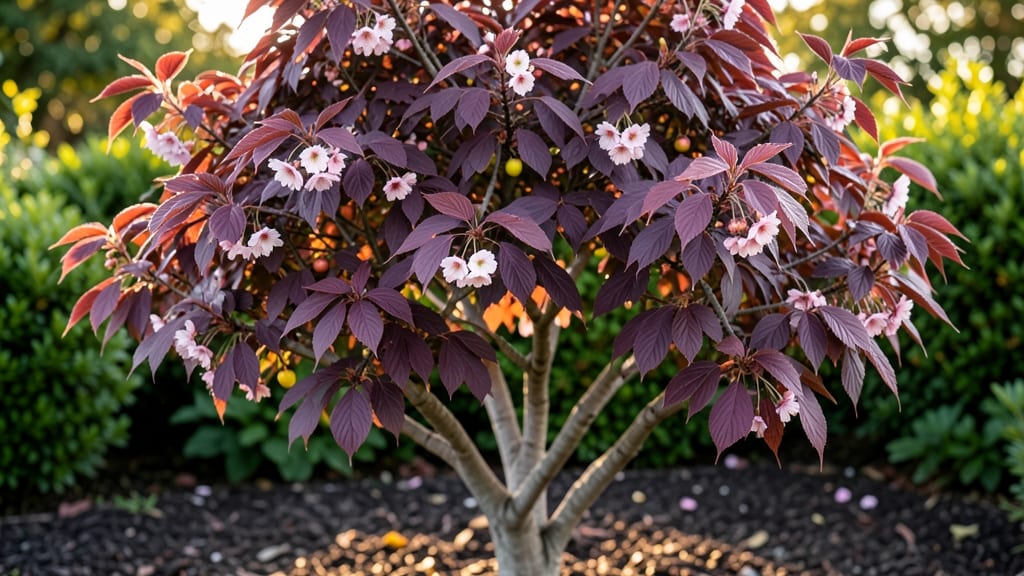
Landscaping with a purple leaf sand cherry turns your yard into a living painting. 🌿 This small but mighty tree bursts with deep purple foliage that glows even brighter in full sun, creating a striking contrast against any landscape. I’ve used it as a focal point in my front yard, and the way its branches arch gracefully makes it impossible to ignore.
The best part? It’s low-maintenance yet high-impact. Plant it near a patio or walkway to draw the eye, or pair it with silver foliage plants like lamb’s ear or dusty miller for a show-stopping contrast.
In spring, its delicate white blossoms add another layer of interest, while fall’s fiery red leaves keep the show going through the seasons.
You’ll love how it thrives in full sun with minimal fuss—just prune lightly after flowering to keep its shape. The purple leaves stay vibrant all summer, and its compact size (15–20 feet tall) makes it perfect for smaller spaces.
It’s the kind of plant that turns heads without demanding constant attention.
Whether you’re creating a cottage garden, a modern minimalist space, or a pollinator-friendly haven, this tree delivers year-round color and structure. Here’s how to make the most of its stunning presence in your landscape.
📚 In This Guide
- What you need
- Instructions
- Tips and common mistakes
- Wrapping up and next steps
What you need
- ● Purple Leaf Sand Cherry Trees – 1–3 plants (depending on desired coverage; spacing ~15–20 ft apart for mature growth). Choose 1–3 gallon containers for established plants or bare-root seedlings for budget-friendly options.
- ● Well-draining soil – Amend with compost (2–3 inches) or a 50/50 mix of native soil and organic matter if your soil is heavy clay or sandy.
- ● Mulch – 2–3 inches of wood chips, shredded bark, or pine straw to retain moisture and suppress weeds.
- ● Slow-release fertilizer – 10-10-10 or 5-10-10 NPK ratio (apply at planting and again in early spring).
- ● Shovel or spade – For digging planting holes.
- ● Garden trowel – For breaking up soil and placing roots.
- ● Wheelbarrow or bucket – For mixing soil amendments.
- ● Pruners or loppers – To trim dead branches or shape young plants.
- ● Watering can or hose with nozzle – For gentle, deep watering.
- ● Garden gloves – To protect your hands from thorns and rough soil.
- ● Epsom salt (1 tbsp per plant) – Boosts magnesium for richer purple foliage.
- ● Tree stakes & ties – Supports young trees in windy areas.
- ● Drip irrigation system – Ensures consistent moisture for new plantings.
- ● Decorative rocks or pebbles – Adds contrast around the base of the tree.
Step-by-step guide to planting purple leaf sand cherry trees
Here's how to get these showstopping trees thriving in your landscape with minimal fuss.
🪴 Step 1: Choose the Perfect Planting Location
Purple leaf sand cherry trees need full sun—at least 6 hours of direct sunlight daily—to maintain their vibrant purple foliage. I always scout locations where they'll receive morning sun and afternoon light, avoiding spots where afternoon shade might strip their color. The tree's native habitat is sunny prairies, so mimic those conditions.
Check the soil by digging a 12-inch deep hole. These trees tolerate a range of soil types but perform best in well-draining soil with a pH between 6.0 and 7.5. If your soil is heavy clay, amend it with 2-3 inches of compost mixed into the top 6 inches. The roots need room to breathe, so avoid low-lying areas where water pools after rain.
🌱 Step 2: Prepare the Planting Hole and Tree
Dig a hole twice as wide as the tree's root ball but only as deep as the container it came in. This prevents burying the trunk too deeply, which can suffocate the roots. Gently remove the tree from its container and loosen any circling roots with your fingers—this encourages outward growth instead of root binding.
Place the tree in the hole so the top of the root ball sits 1-2 inches above ground level. This small mound helps prevent soil from washing over the trunk during watering. Fill the hole with the native soil you removed, tamping it lightly every 3 inches to eliminate air pockets. Avoid compacting too firmly, or you'll restrict root expansion.
☀️ Step 3: Water Deeply and Mulch for Retention
Water the tree immediately after planting with 5 gallons of water, enough to soak the root ball thoroughly. You'll see the soil settle as it absorbs moisture—this is normal. Watering deeply encourages roots to grow outward rather than staying concentrated near the surface. Over the next 2 weeks, water 2-3 times weekly until the soil feels 3-4 inches deep damp to the touch.
Spread 2-3 inches of mulch (like shredded bark or wood chips) over the soil surface, keeping it 6 inches away from the trunk to prevent rot. Mulch helps retain moisture and regulate soil temperature, but too much can smother the roots. Replenish mulch annually as it breaks down—this tree's roots will thank you for the consistent care.
✂️ Step 4: Prune for Shape and Airflow
Prune your new tree right after planting to remove any broken branches or crossing limbs. Use clean, sharp pruners to make cuts just outside the branch collar—the swollen area where the branch meets the trunk. This encourages faster healing. I like to shape the tree slightly to open up the center, which improves airflow and reduces disease risk.
Wait until spring to do any major pruning. Purple leaf sand cherry trees bloom on old wood, so pruning in late fall or winter removes next year's flowers. Limit yourself to removing no more than 25% of the tree's foliage at any one time—this keeps the tree strong and vibrant. You'll see new growth emerge within 3-4 weeks of proper pruning.
🌿 Step 5: Monitor and Maintain for Long-Term Health
Fertilize in early spring with a balanced, slow-release fertilizer (like 10-10-10) to support new growth. Apply it 6 inches away from the trunk and water it in immediately. Over-fertilizing can burn roots and cause leaf scorch, so follow the package instructions closely. These trees are generally low-maintenance but appreciate a monthly deep watering during the first growing season.
Watch for aphids or spider mites, which sometimes target new growth. A strong spray of water usually knocks them off, but for stubborn infestations, use neem oil as a natural remedy. The tree's vibrant purple leaves will signal its health—if they start turning dull or yellow, it's a sign of overwatering or nutrient deficiency. Adjust your care routine accordingly.
Tips & tricks for perfect purple leaf sand cherry landscaping
These simple tricks will help you avoid common pitfalls and get your purple leaf sand cherry thriving from day one.
Sunlight Strategy: The 6 hours of daily sunlight is non-negotiable for those stunning purple leaves, but here's the thing: morning sun is your best friend. Position your tree to catch eastern sunlight first—this prevents afternoon shade from fading the vibrant color. If you notice leaves starting to lose their purple hue, they're getting too much shade. Move the tree or trim nearby foliage to restore full sun exposure.
Soil Prep Secret: Before planting, test your soil's pH—these trees prefer 6.0 to 7.5. If your soil is heavy clay, mix in the 2-3 inches of compost only in the top 6 inches, not throughout the entire hole. This creates a perfect root zone while preventing waterlogging deeper down. I've seen trees struggle when people over-amend the whole hole—stick to the top layer for best results.
Watering Wisdom: That first 5-gallon watering after planting is crucial, but don't stop there. Over the next 2 weeks, water 2-3 times weekly until the soil stays damp 3-4 inches deep. Here's my trick: use a moisture meter to check—it's more accurate than guessing. Watering deeply but less frequently encourages stronger root growth than frequent light waterings. And always water at the base, not the leaves, to prevent disease.
Pruning Precision: When you're pruning right after planting, focus on removing crossing branches and any that rub together—they'll create weak points. For the spring pruning, remember the 25% rule: never remove more than a quarter of the foliage at once. I like to prune just after flowering when new growth is visible—this gives me a clear picture of what to shape. And always use clean, sharp tools to prevent tearing the bark.
Pro Tips for Landscaping Purple Leaf Sand Cherry
- These simple tricks will help you avoid common pitfalls and get your purple leaf sand cherry thriving from day one.
- Sunlight Strategy: The 6 hours of daily sunlight is non-negotiable for those stunning purple leaves, but here's the thing: morning sun is your best friend.
- Soil Prep Secret: Before planting, test your soil's pH—these trees prefer 6.0 to 7.5.
Frequently asked questions
Got questions about adding Prunus serrulata 'Pendula' (Purple Leaf Sand Cherry) to your landscape? Here are some of the most common ones—and their answers!
How fast does a Purple Leaf Sand Cherry grow?
A young Purple Leaf Sand Cherry typically grows 12–24 inches per year, reaching maturity (15–25 feet tall) in about 10–15 years. For faster results, plant in well-draining soil with regular watering. Prune lightly in late winter to encourage bushier growth and maintain its weeping form.
Can Purple Leaf Sand Cherry survive winter?
This hardy tree thrives in USDA Zones 5–8 and handles winter well, but young trees may need mulch around the base to protect roots. In colder climates, a lightweight burlap wrap can shield tender branches from harsh winds. Spring brings back its stunning purple foliage!
What if my tree isn’t turning purple?
Purple foliage fades or fails to develop due to too much shade or over-fertilizing with nitrogen. Ensure it gets 6+ hours of full sun daily and use a balanced, low-nitrogen fertilizer in early spring. Yellow leaves? Check for iron deficiency—a soil test helps!
Are there dwarf varieties of Purple Leaf Sand Cherry?
Yes! If space is limited, consider 'Kwanzan Compact' (8–10 feet) or 'Mount Fuji' (12–15 feet), both with vibrant purple leaves. These stay smaller but still offer spring blooms and fall color. Just ensure they get full sun to maintain their striking hue.
Do Purple Leaf Sand Cherries attract pollinators?
Their early spring blooms (before leaves emerge) are a magnet for bees and butterflies. The tree also hosts birdlife later in the season. For extra pollinator appeal, pair it with native perennials like coneflowers or bee balm.
When and how should I prune?
Prune in late winter or early spring (before buds swell) to shape the tree and remove dead wood. Avoid heavy pruning in fall—it can stimulate late growth vulnerable to frost. Use clean, sharp tools and sterilize cuts with pruning sealant if needed.
Wrapping up and next steps
Transforming your outdoor space with purple leaf sand cherry is a rewarding choice—its vibrant foliage, low-maintenance nature, and adaptability make it a standout addition to any sun-loving garden.
Whether you’re aiming for a bold focal point or a lush, layered border, this versatile shrub delivers year-round beauty with minimal effort. 🌿
Ready to bring this stunning plant to life? Start by sketching your design, gathering your supplies, and planting with confidence—your future landscape will thank you! Happy gardening!