
Pests and Diseases
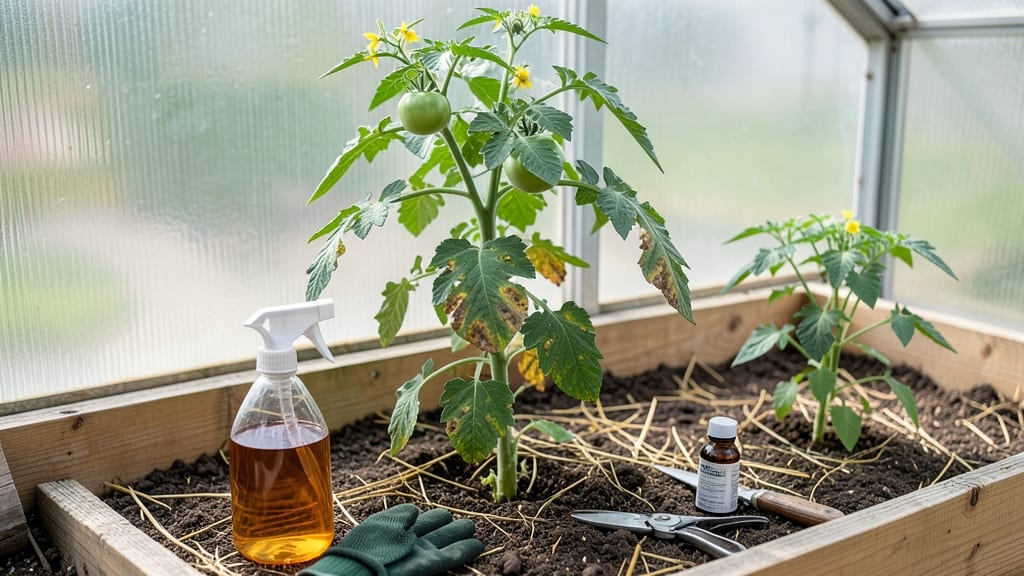
Copper fungicide spray saved my tomato plants from looking like Swiss cheese last summer. 🌱 Leaf septoria turns lush foliage into a canvas of unsightly brown spots, and without the right treatment, it spreads like wildfire.
The good news? Copper spray doesn’t just stop the damage—it rebuilds plant resilience so future outbreaks stay at bay.
This isn’t just about spraying copper—it’s about timing, coverage, and pairing it with cultural fixes like pruning infected leaves and spacing plants properly. My 6-foot tomato plants went from ragged to robust within weeks, and the same method works for basil, celery, and even ornamental shrubs.
The key is catching it early and being consistent.
You’ll see new growth emerge within 2-3 weeks of starting treatment, with leaves staying vibrant instead of developing new spots. The copper spray also prevents secondary infections, so your plants stay healthier overall. Plus, it’s one of the few treatments that works on both organic and conventional gardens.
Works for home gardeners and small farms alike, but if your plants are severely infected or you’re dealing with a large-scale outbreak, it’s worth calling in a local extension service for a second opinion. Here’s how to make it work for your garden.
The Hidden Triggers Behind Septoria Spots
Leaf septoria—caused by the Septoria fungus—isn’t just a random attack on your plants. It thrives due to a mix of environmental, cultural, and biological factors. Understanding these triggers is the first step to preventing those unsightly brown spots from ruining your garden.
Let’s break down the real culprits behind this fungal foe.
The Septoria fungus loves damp conditions, and water is its greatest ally. Here’s why:
- Prolonged leaf wetness: The fungus spores germinate best when leaves stay wet for 12+ hours. Heavy dew, frequent rain, or overhead irrigation (especially in the evening) creates the perfect breeding ground. 💡 Pro tip: Water plants early in the day to allow foliage to dry quickly.
- Poor soil drainage: Waterlogged soil doesn’t just drown roots—it keeps fungal spores active near the soil surface, where they splash onto leaves during rain or watering. Test your soil’s drainage: Dig a hole, fill it with water, and time how long it takes to drain. If it’s slower than 4 hours, amend with compost or sand.
- High humidity: Greenhouses, shaded areas, or tropical climates with 70%+ humidity accelerate spore release. The fungus spreads 3x faster in these conditions.
Healthy plants resist disease, but stress opens the door for Septoria. Common stress factors include:
- Poor air circulation: Tightly packed plants trap moisture and spores between leaves. Solution: Prune to improve airflow—aim for 6–12 inches of space between plants, depending on the species.
- Nutrient deficiencies: Low nitrogen (_N_) or potassium (_K_) weakens cell walls, making leaves more susceptible. Fix it: Conduct a soil test and apply a balanced fertilizer (e.g., 10-10-10) before planting.
- Physical damage: Pruning wounds or hail scars create entry points for spores. Always sterilize tools with 70% isopropyl alcohol to prevent cross-contamination.
Septoria spores can hibernate in old plant material or linger on tools for years. Here’s how they sneak in:
- Infected plant residues: Leaving fallen leaves, stems, or diseased foliage in the garden spreads spores via wind or water. Action step: Remove and compost only if heated to 140°F+ (or better, bag and trash infected material).
- Unsterilized pruners: A single cut with a contaminated tool can transfer spores to healthy plants. Quick fix: Wipe blades with rubbing alcohol between cuts or use a bleach solution (1 part bleach:9 parts water) for deep cleaning.
- Reused potting mix: Spores survive in old soil. Prevent reuse: Sterilize soil by baking it at 200°F for 30 minutes or solarizing it (covering with clear plastic for 4–6 weeks in hot sun).
The Septoria fungus is a cool-season opportunist, but it adapts. Key temperature triggers:
| Temperature Range | Risk Level | Why It Matters |
|---|---|---|
| 50–75°F (10–24°C) | ⚠️ High | Optimal for spore germination and growth. Spring and fall (with moisture) are peak seasons. |
| Above 80°F (27°C) | ✅ Lower | Heat slows fungal activity, but Septoria can still survive in shaded or irrigated areas. |
| Below 40°F (4°C) | ❄️ Dormant | Cold halts spore release, but spores may linger in debris until conditions improve. |
💡 Pro tip: Monitor your local NOAA forecasts for humidity + temperature combos—aim to water only when needed during high-risk windows.
By addressing these root causes—moisture, stress, contamination, and climate—you’ll starve Septoria of its favorite conditions. Next up: How to fight back with copper fungicides and organic fixes.
Fixing Fungal Spots Naturally
Leaf septoria may feel like a stubborn foe, but with the right approach, you can reclaim your plants’ vibrant health. Below are practical, step-by-step solutions tailored to the root causes—whether it’s humidity, poor airflow, or weak plant defenses—and how to prevent future outbreaks.
Problem: Dead or diseased leaves harbor spores and spread the fungus. Fix:
- 🔪 Snip or prune infected leaves with clean, sharp scissors or shears (sterilize with rubbing alcohol between cuts).
- 🗑️ Dispose of leaves in the trash—not your compost bin—to prevent reinfection.
- ⏰ Do this early: Act at the first sign of spots (tiny brown/yellow lesions) to stop the spread.
Pro Tip: 💡 Check the undersides of leaves—septoria often starts there!
Problem: Septoria thrives in damp, stagnant conditions. Fix:
- 🌬️ Space plants 12–18 inches apart (or thin crowded foliage) to allow air circulation.
- 🌧️ Water wisely: Water early in the day (before 10 AM) so leaves dry quickly. Avoid overhead watering—use drip irrigation or a watering can with a narrow spout.
- 🌡️ Reduce humidity in greenhouses or indoor setups with a fan or dehumidifier (keep humidity below 70%).
Pro Tip: ✨ Mulch properly—keep mulch 2–3 inches away from stems to prevent soil-borne moisture from splashing onto leaves.
Problem: Septoria is a fungal disease—copper disrupts its life cycle. Fix:
- 🍳 Mix a copper fungicide spray (like Bordeaux mixture or copper sulfate) as directed on the label.
- 👨🍳 Spray thoroughly, covering both sides of leaves and stems. Reapply every 7–14 days or after rain.
- ⏰ Time it right: Apply preventatively at the start of rainy seasons or when new growth appears.
Pro Tip: 🌡️ Test a small area first—some plants (like tomatoes) may react to copper. Dilute if needed.
Problem: Weak plants are more susceptible. Fix: - 💪 Fertilize properly: Use a balanced fertilizer (10-10-10) or compost tea to strengthen roots.
Avoid excess nitrogen—it encourages lush, weak growth. - 🌿 Companion plant: Interplant with garlic, chives, or marigolds—they repel fungi and improve soil health. - 🍎 Prune for light: Thin dense foliage so sunlight reaches lower leaves (reduces moisture buildup).
Pro Tip: 🎯 Neem oil (1 tsp per quart of water) can be a preventative spray—it’s a mild fungicide and strengthens plant defenses.
If spots are spreading rapidly:
- 🔥 Isolate infected plants to prevent cross-contamination.
- 🍄 Try a baking soda spray (1 tsp baking soda + 1 quart water + a drop of dish soap) as a short-term fungicide (reapply every 5–7 days).
- 🌱 Replace heavily infected plants if they’re not responding—sometimes it’s better to cut losses.
| Do This | Avoid This |
|---|---|
| Rotate crops yearly | Planting the same family (e.g., tomatoes) in the same spot. |
| Clean tools with alcohol | Skipping pruning infected leaves. |
| Use drip irrigation | Watering late in the day. |
| Mulch correctly | Letting mulch touch stems. |
| Monitor humidity levels | Ignoring damp, shaded areas. |
Final Note: Consistency is key! Septoria won’t vanish overnight, but with early action, copper sprays, and smart gardening habits, your plants will bounce back stronger. 🌿💪
Frequently asked questions
How do I know if my plant has leaf septoria vs. another disease?
Leaf septoria spots are typically small, circular, and brown with dark borders, often appearing on older leaves first. Unlike powdery mildew (which looks like white dust), septoria spots usually have tiny black specks (pycnidia) in the center when mature. Check the undersides of leaves too—septoria often starts there.
Can I use copper spray on edible plants like herbs or vegetables?
Yes, but follow label instructions carefully. Copper fungicides are generally safe for edible plants when used as directed. Wait 24 hours after spraying before harvesting leaves or fruits that come into direct contact with the spray. Organic options like copper sulfate or Bordeaux mixture are common choices.
How often should I apply copper fungicide for best results?
Apply copper fungicide every 7–14 days during active growth or high-risk periods (like rainy seasons). For prevention, spray every 2–3 weeks. Always reapply after heavy rain, as water washes away the protective layer. Consistency is key—don’t skip applications once you start.
Will removing infected leaves stop the spread completely?
Pruning infected leaves helps, but it’s not a standalone solution. Spores can linger in soil, tools, or nearby plants. Combine pruning with copper sprays and improving airflow/circulation for best results. Remove leaves early (at the first sign of spots) to prevent spore production.
Can I use household items like baking soda or hydrogen peroxide to treat leaf septoria?
Yes, but with limitations. A baking soda spray (1 tsp baking soda + 1 quart water + dish soap) can help as a mild fungicide, but it’s less effective than copper for severe cases. Hydrogen peroxide (3%) may slow fungal growth, but it can damage plant tissue if overused. Use these as supplemental treatments, not replacements.