
Shrubs
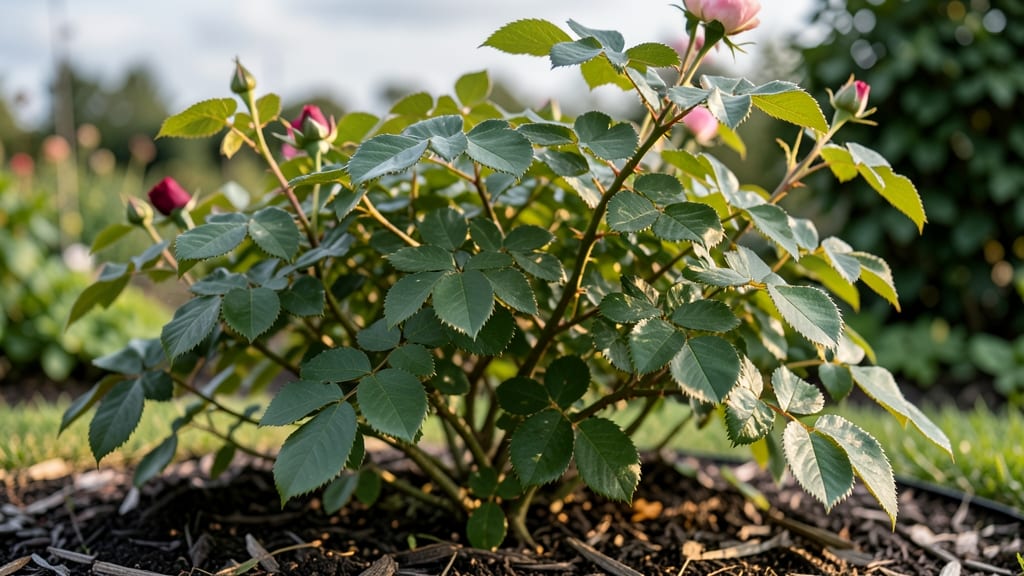
The leaf shape of rose plants typically features pinnate compound leaves with 3–9 small, oval leaflets arranged along a central stem. Some varieties like 'Bourbon' or 'Noisette' showcase serrated edges or glossy surfaces, while others may have deeply lobed or smooth-edged foliage, all reflecting their unique growth patterns and care requirements.
The leaf shape of roses isn't just about aesthetics—it's a key indicator of the plant's identity and health. 🌿 For example, hybrid teas often have sleek, elongated leaflets that grow tightly along the stem, while climber roses might display broader, more textured leaves to support their vigorous growth habits.
Understanding these variations helps you match varieties to your garden's conditions and spot early signs of stress or disease in the leaf structure itself.
Leaf shape also influences how you care for your roses. Delicate varieties with fine leaflets may need gentler pruning to avoid damage, while robust shrub roses with thick foliage can handle more aggressive trimming.
Pay attention to edge details: serrated leaves often indicate hardier plants, while smooth-edged varieties might need more protection from harsh winds.
💡 In This Article
- How Rose Leaf Shapes Differ by Species and Variety
- What Rose Leaf Shapes Reveal About Plant Health and Care
How rose leaf shapes differ by species and variety
The botanical term for most rose leaves is "pinnate compound," meaning they feature multiple leaflets (typically 5-7) arranged symmetrically along a central stem called the rachis. 🌿 This structure maximizes sunlight exposure while conserving water—a clever adaptation for roses that thrive in diverse climates.
For instance, hybrid teas often display 5-7 glossy, elongated leaflets measuring about 1-2 inches long, while climber roses like 'New Dawn' may have broader, 7-9 leaflets per stem to support their climbing habits.
Leaf edges reveal even more about a rose's identity. Smooth-edged varieties like 'David Austin English Roses' often indicate delicate growth patterns, while serrated edges (like those on 'Bourbon' roses) suggest hardier, more disease-resistant foliage.
The texture also varies: some leaves are leathery and thick (common in shrub roses), while others are thin and papery (found in some miniatures). These differences aren't just cosmetic—they influence how the plant interacts with its environment, from water absorption to pest resistance.
Consider the 'Noisette' rose group, where leaflets often have a distinctly glossy finish and may exhibit slight curvature. This adaptation helps reflect sunlight in hot climates, reducing water loss. In contrast, 'Floribunda' roses typically showcase smaller, more densely packed leaflets that create a bushier appearance.
The arrangement of these leaflets—whether they grow tightly against the stem or spread outward—also affects airflow, which is critical for disease prevention in humid conditions.
For gardeners, recognizing these patterns helps with variety identification. For example, a rose with deeply lobed leaflets (like some 'China' roses) often indicates a more tropical origin, while narrow, pointed leaflets (common in 'Tea' roses) suggest a hybrid lineage.
These visual clues can guide your selection process, ensuring you choose roses that match your climate and care preferences.
Even within a single species, leaf shape can vary by age. Young rose leaves often appear more rounded and less segmented than mature foliage, which develops the classic pinnate structure.
This progression is part of the plant's natural development, where early leaves prioritize rapid growth while later leaves focus on photosynthesis efficiency.
Understanding these variations also helps when propagating roses. Leaf cuttings from a serrated-leaf variety may root differently than those from a smooth-edged type, requiring adjustments in humidity and hormone treatments. The leaf's structure essentially serves as a blueprint for the plant's overall growth strategy.