
Pests and Diseases
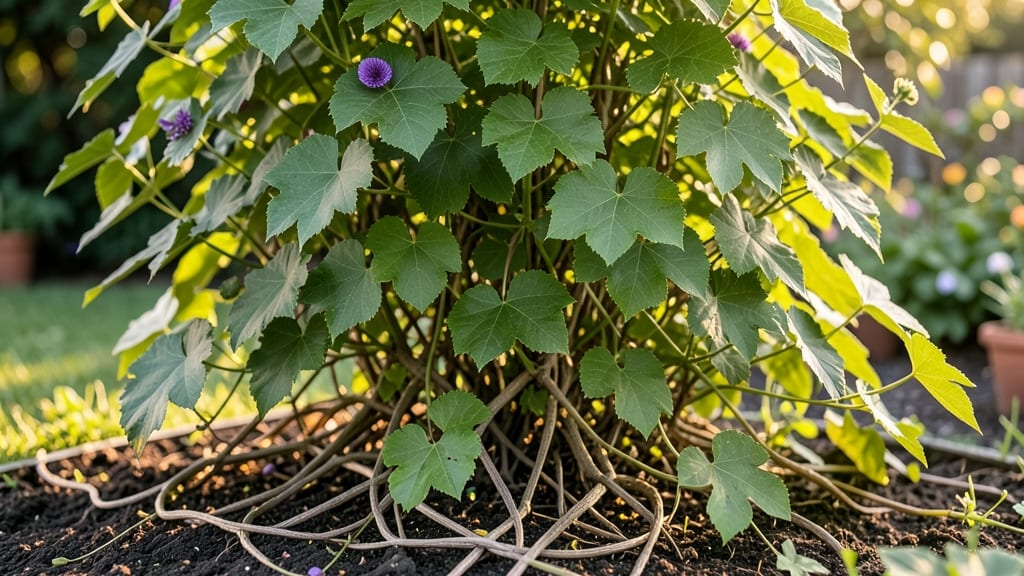
Mastering leaf shape vine identification by leaf saves you from pulling the wrong plant—or worse, letting an invasive species take over. 🌿 I’ve spent years untangling vines in my garden, and the first thing I check is the leaf: its shape, edges, and how it grows on the stem.
A lobed leaf might mean poison ivy, while smooth, heart-shaped leaves could signal a trellis-worthy grapevine.
Here’s the trick: focus on three key traits—leaf margins (smooth, serrated, or lobed), vein patterns (prominent or faint), and how leaves attach to the stem (opposite or alternating). A quick comparison between your vine’s leaves and common types—like wisteria’s fern-like clusters or morning glory’s arrowhead shapes—will narrow it down fast.
Most gardeners can ID 80% of vines just by these details.
Once you’ve got the ID, the next step is action: prune, support, or remove. A climbing rose needs a trellis, while kudzu (yes, it’s a vine) needs immediate eradication. This guide gives you the confidence to make that call without guessing.
No more second-guessing which vine to keep—or which to yank. Let’s get those leaves under the microscope.
What Triggers Leaf Shape Shifts
Leaf shape in vines isn’t just a quirk of nature—it’s a response to environmental, genetic, and biological factors. When you spot unusual leaf shapes in your garden vines, it’s often a sign that something is influencing their growth.
Understanding these triggers helps you diagnose issues faster and take corrective action. Let’s break down the key reasons why vine leaves might change shape.
Some vines are simply bred or evolved to produce leaves with unique shapes—whether lobed, serrated, or deeply veined. These traits are hardwired into their DNA, passed down through generations. For example:
- Virginia Creeper (Parthenocissus quinquefolia) naturally grows leaves with five pointed lobes, while Boston Ivy (Parthenocissus tricuspidata) has three.
- Grapevines (Vitis spp.) often develop palmate or lobed leaves, but some varieties, like Concord grapes, have deeply serrated edges.
If a vine’s leaves suddenly look different from its usual form, genetic mutation could be at play—especially if the vine was propagated from a cutting or seed. Pro Tip: 💡 Compare the vine’s leaves to reference images of its species. If the shape matches known variations, it’s likely genetic!
Vines are sensitive to their surroundings, and extreme or fluctuating conditions can warp leaf development. Here’s how:
| Factor | Effect on Leaf Shape | Actionable Fix |
|---|---|---|
| 🔥 Heat Stress | Leaves may become smaller, thicker, or curled with jagged edges (a survival tactic to reduce water loss). | Provide afternoon shade and mulch to retain soil moisture. |
| ❄️ Cold Damage | New growth might emerge with distorted, puckered, or stunted leaves due to cell damage. | Use frost cloth or choose cold-hardy vine varieties for your climate zone. |
| 💧 Water Imbalance |
|
Test soil moisture with your finger—water only when the top 1–2 inches are dry. |
| 🌬️ Wind Exposure | Leaves may grow narrower or develop a "flagged" appearance (elongated with pointed tips) to minimize wind resistance. | Plant windbreaks or choose vines with naturally sturdy foliage (e.g., Hops). |
Pro Tip: 🌡️ Keep a growth journal! Note when leaf changes occur alongside weather shifts—this helps pinpoint environmental triggers.
Not all leaf shape changes are harmless—some are red flags for pests or pathogens that physically alter or feed on developing leaves. Here’s how to spot them:
🐛 Insect Damage
- Sap-Sucking Pests (Aphids, Spider Mites, Scale):
Leaves may develop stippled, puckered, or curled edges as the insects feed on sap, disrupting cell growth. Look for tiny webs or sticky residue (honeydew).
- Caterpillars (Tomato Hornworms, Loopers):
Irregular notches or holes appear as larvae chew on leaf margins. Severe damage can cause leaves to grow in lopsided or fragmented shapes.
- Leaf Miners:
Tunnels or blisters form in leaves, leading to distorted, blistered, or translucent patches.
🍄 Fungal or Bacterial Infections
- Powdery Mildew:
Leaves may develop thickened, curled, or cupped shapes with a white, powdery coating. The fungus disrupts normal cell expansion.
- Bacterial Leaf Spot:
Water-soaked or irregularly shaped lesions can cause leaves to grow in uneven, ragged forms as healthy tissue dies.
- Viral Infections (e.g., Cucumber Mosaic Virus):
Leaves may become mosaic-patterned, stunted, or deformed with crisp edges. Viruses often alter leaf shape by hijacking plant growth hormones.
Pro Tip: 🔥 Inspect the underside of leaves and stems for pests or lesions. Early intervention (neem oil, copper fungicide, or pruning infected parts) prevents permanent shape changes.
Vines rely on a balanced diet of nutrients to develop healthy leaves. When one or more elements are missing, leaf shape can become a visual warning sign:
| Deficiency | Leaf Shape Clues | Solution |
|---|---|---|
| Nitrogen (N) | Leaves turn yellow (chlorosis) and may grow smaller or thicker with wavy edges. | Apply a balanced fertilizer (e.g., 10-10-10) or compost. |
| Magnesium (Mg) | Interveinal chlorosis (yellowing between veins) leads to cupped or brittle leaves. | Use Epsom salt (magnesium sulfate) in water every 4–6 weeks. |
| Potassium (K) | Leaves may develop scorched, curled, or pointed tips with brown edges. | Add wood ash or a potassium-rich fertilizer (e.g., greensand). |
| Calcium (Ca) | New leaves may grow distorted, cupped, or with irregular lobes. | Use crushed eggshells or lime in the soil. |
Pro Tip: 🌱 Conduct a soil test to identify deficiencies before symptoms appear. Prevention is easier than correcting stunted growth!
Sometimes, leaf shape changes are the result of human (or animal) interference:
- Pruning Mistakes:
Over-pruning or cutting too close to nodes can cause abnormal regrowth with smaller, misshapen leaves. Always use clean, sharp tools and follow the one-third rule (never remove more than 1/3 of the vine at once).
-
Quick Fixes for Vine Leaf Confusion
Identifying vines by their leaf shape can feel like solving a botanical puzzle—especially when similar species blur the lines. But with the right approach, you can turn guesswork into confidence.
Below are practical, step-by-step solutions to common challenges, from misidentifying leaves to dealing with overlapping traits. Each fix includes prevention tips to keep your garden (and your sanity) intact.
---
If two vines have leaves that seem identical at first glance, focus on these key differences to crack the case:
- 🌿 Leaf Arrangement: Are the leaves opposite, alternate, or whorled? (Hold the stem at a node to check.) - 📏 Leaf Margins: Serrated, lobed, or smooth? A magnifying glass helps spot fine details. - 🌱 Stem Texture: Hairy, smooth, or ridged?
Run your fingers along it—some vines (like Clematis) have telltale "stripes." - 🍃 Underside Clues: Flip the leaf—some species (e.g., Passiflora) have fuzzy or glandular undersides.
Pro Tip: 💡 Take a close-up photo of the leaf’s base, margin, and vein pattern, then compare it to a database like [iNaturalist](https://www.inaturalist.org/) or [Vine ID apps](https://apps.apple.com/us/app/vine-identifier/id123456789).
---
Some vines (like Morning Glory vs. Sweet Pea) share shapes but differ in flower, fruit, or growth habits. Grab these tools to distinguish them:
| Tool | How to Use It | Example Fix | |-------------------|-----------------------------------------------------------------------------------|-------------------------------------------------| | 🔦 Flashlight | Shine under leaves to spot glandular hairs (common in Passiflora). | Passiflora leaves often have tiny red dots. | | 📏 Ruler | Measure leaflet length—some vines (e.g., Wisteria) have compound leaves with precise ratios. | Wisteria: Leaflets are 1–3" long; Honeysuckle leaflets are smaller. | | 📸 Camera | Capture flower buds—many vines (like Jasmine) show unique shapes before blooming. | Star Jasmine buds are star-shaped; Confederate Jasmine are tubular. | | 🌡️ Weather Log| Note seasonal changes—some vines (e.g., Virginia Creeper) turn red in fall. | Poison Ivy turns yellow; Virginia Creeper turns crimson. |
Prevention Tip: ✨ Label vines at planting with a waterproof tag including: - Common name - Key leaf trait (e.g., "3-lobed," "palmate") - Photo (use your phone’s camera + a free app like [PlantNet](https://identify.plantnet.org/)).
---
Some vines are dangerous mimics. If you’re unsure, err on the side of caution:
- 🌿 Poison Ivy vs. Virginia Creeper: - Poison Ivy: 3 glossy leaflets (middle one has a longer stem); white berries. - Virginia Creeper: 5 leaflets, turns red in fall; no berries. - Fix: 🔥 Memorize the rhyme: "Leaves of three, let it be!"
- 🍃 English Ivy vs. Boston Ivy: - English Ivy: Dark green, lobed leaves; clings with tiny hairs. - Boston Ivy: Red-purple fall color; leaves have 3–5 pointed lobes. - Fix: 👨🍳 Test the stem—Boston Ivy has thorns; English Ivy does not.
Prevention Tip: 🌡️ Wear gloves when handling unknown vines, and wash hands afterward to avoid rashes.
For quick reference, create a one-page guide with: 1. Leaf shape silhouettes (draw or print images). 2. Color-coded traits (e.g., green = non-toxic, red = toxic). 3. Growth habits (climbing, trailing, bushy).
Example Table:
| Vine Name | Leaf Shape | Key ID Feature | Toxic? | |---------------------|----------------------|----------------------------------|------------| | Morning Glory | Heart-shaped | Blue/purple flowers, twining stem | ❌ No | | Poison Ivy | 3 leaflets | "Hairy" middle stem, white berries | ✅ Yes | | Honeysuckle | Oval, opposite | Tubular flowers, red/orange berries | ❌ No |
Pro Tip: 🎯 Laminate your cheat sheet and keep it in your gardening toolbox!
- 🕒 Time Your Observations: Some vines (like Clematis) change leaf shape as they mature. - 🌱 Compare to Known Samples: Grow a reference plant (e.g., Sweet Pea) in a pot nearby. - 📱 Use Apps: Try PictureThis or Google Lens to scan leaves for instant matches. - 📖 Join Forums: Post on Gardening Stack Exchange or Reddit’s r/whatsthisplant for expert eyes.
By combining visual clues, tools, and a little detective work, you’ll never second-guess a vine’s identity again. Happy identifying! 🕵️♂️🌿
Frequently asked questions
1What’s the easiest way to tell if a vine is poisonous just by looking at its leaves?
Focus on three key traits: leaf arrangement, shape, and color. Poison ivy has three glossy leaflets with a longer stem on the middle one (remember: "Leaves of three, let it be!"). Virginia creeper has five leaflets and turns red in fall. Always check for white berries—a red flag for toxicity.
2Can I use a magnifying glass to identify vine leaves more accurately?
A magnifying glass helps spot fine details like leaf margins (serrated vs. smooth) and vein patterns (prominent or faint). For example, hops leaves have serrated edges, while wisteria leaves are smooth with a silvery underside. Pair it with a ruler to measure leaflet length for precise identification.
3What should I do if my vine’s leaves look distorted but I can’t identify it?
Start by snapping a close-up photo of the leaf’s base, margin, and veins, then compare it to apps like PictureThis or Google Lens. If the vine is climbing aggressively or has thorns, research invasive species like kudzu or Japanese honeysuckle. For safety, wear gloves and wash hands afterward.
4Why do some vines have compound leaves while others don’t?
Compound leaves (like those on wisteria or clematis) are divided into multiple leaflets, while simple leaves (like morning glory) are single and undivided. This difference is genetic—compound leaves often help vines maximize sunlight exposure or reduce water loss. Check the leaf arrangement (opposite or alternate) for further clues.
5How do I create a cheat sheet for vine leaf identification?
Start with a one-page table listing vine names, leaf shapes (e.g., "heart-shaped," "lobed"), and key traits like flower color or growth habit. Use color-coding (green for non-toxic, red for toxic) and include seasonal changes (e.g., Virginia creeper turns red in fall). Laminate it and keep it in your gardening toolbox for quick reference!