
Pests and Diseases
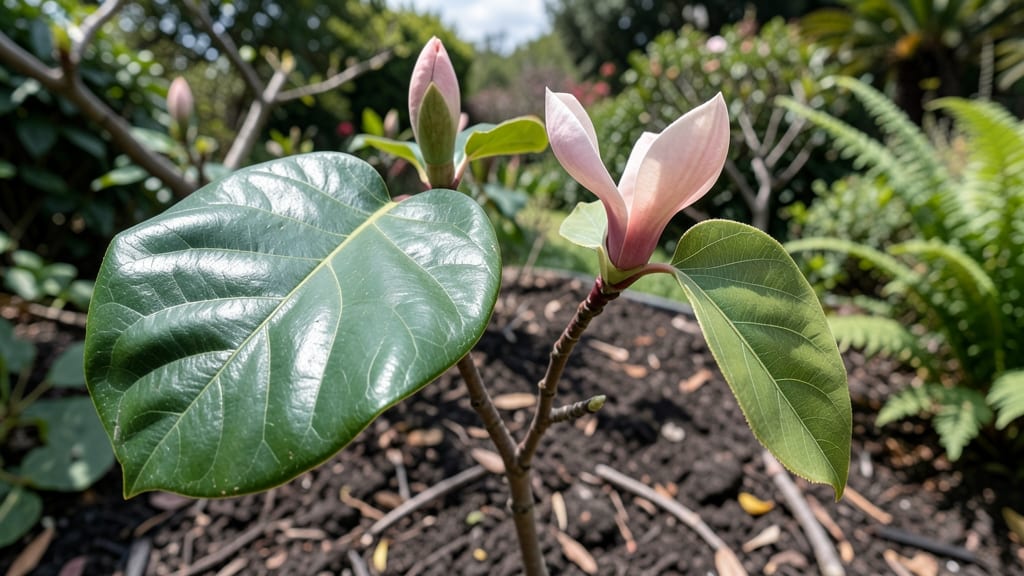
Mastering magnolia leaf identification correctly saves you from pruning mistakes that could ruin your tree's beauty. 🌿 The key is looking at leaf size, shape, and texture—Southern magnolias have leathery, glossy leaves up to 8 inches long, while Star magnolias sport smaller, star-shaped leaves with serrated edges.
Tulip trees and lilies mimic these traits, but their leaves lack the magnolia's signature cupped shape and prominent veins. Start by checking the leaf's underside—magnolias often have rust-colored hairs when young. Southern magnolias also release a citrusy scent when crushed, a dead giveaway.
If your tree has alternate branching (leaves spaced evenly along stems) and dark green, waxy foliage, you're likely dealing with a true magnolia. Mistakenly pruning a tulip tree (with its heart-shaped leaves) or lily (which has smooth-edged, elliptical leaves) can leave your landscape looking messy.
Once you master these traits, you'll spot issues like magnolia scale or anthracnose early—both pests target specific leaf structures. For tricky cases, snap a photo and compare it to a leaf identification guide. Most nurseries sell cheap magnolia leaf charts, or you can use free apps like PlantNet.
The sooner you nail this skill, the better your tree's health—and your pruning confidence—will be.
📚 In This Guide
- What you need
- Instructions
- Tips and common mistakes
- Wrapping up and next steps
What you need
- ● Magnolia leaves: Fresh or dried samples (3–5 leaves per variety for comparison). Pro tip: Collect from different parts of the tree for consistency!
- ● Hand lens or magnifying glass: 10x magnification (for inspecting leaf veins, texture, and edges).
- ● Ruler or measuring tape: For leaf length/width (metric or imperial).
- ● Field guide or magnolia ID app: e.g., iNaturalist or LeafSnap (free options available).
- ● Notebook & pen: To log traits like shape, color, and arrangement.
- ○ Pruning shears (sterilized): For safe sample collection (optional but recommended).
- ● Digital camera: High-resolution shots (macro mode) for later reference.
- ● Leaf press: To preserve samples for long-term study.
- ● Gloves: If handling thorny magnolia varieties (e.g., Magnolia grandiflora).
- ● Local gardening forum access: For crowdsourcing ID help from fellow plant enthusiasts.
- ● Basic knowledge of leaf anatomy (e.g., blade, petiole, venation).
- ● Access to sunlight or a bright workspace for clear observations.
- ● Patience! Some magnolias share traits—cross-check with multiple sources.
Step-by-step guide to magnolia leaf identification
Here's how to recognize magnolia leaves with confidence—no pruning mistakes guaranteed.
🌿 Step 1: Examine Leaf Shape and Size
Magnolia leaves are large, glossy, and oval-shaped, typically measuring 4-8 inches long and 2-4 inches wide. Hold the leaf up to light—healthy magnolia foliage has a smooth, leathery texture that feels slightly thick to the touch. Younger leaves may appear slightly fuzzy, but mature leaves are always smooth and shiny.
Look for the distinctive elliptical shape with a tapered point at the tip. Unlike maple leaves, magnolia leaves lack lobes or jagged edges. If you see serrated or lobed edges, you're likely dealing with a different tree species entirely.
🌿 Step 2: Check the Leaf Arrangement and Venation
Magnolia leaves grow in a spiral pattern along the stem, with each leaf attached by a short, thick petiole. This spiral arrangement sets magnolias apart from many other trees. Run your fingers along the stem—you'll feel the leaves emerging at slightly different angles rather than in neat pairs or whorls.
The leaf veins are another key identifier. Magnolia leaves have prominent, curved secondary veins that create a feather-like pattern. Hold the leaf against a bright window to see these veins clearly. The central vein should be thick and straight, with smaller veins branching out symmetrically on either side.
🌿 Step 3: Inspect the Leaf Edges and Surface
Magnolia leaves have smooth, entire margins—no serrations, teeth, or lobes. Run your thumb gently along the edge; it should feel uniform and unbroken. The leaf surface is typically dark green and glossy on top, with a slightly lighter, duller underside.
Flip the leaf over and look for small, hair-like structures along the veins on the underside. These tiny hairs are common in magnolias and help distinguish them from other glossy-leaved trees. If the underside is completely smooth, it’s likely not a magnolia.
🌿 Step 4: Compare with Common Look-Alikes
To avoid mistakes, compare your findings with common look-alikes like sweetgum (star-shaped leaves) or tulip tree (asymmetrical bases). Sweetgum leaves have star-shaped lobes, while tulip tree leaves have a distinctive asymmetrical base. Magnolia leaves are always symmetrical and smooth.
If you're still unsure, check the flower or seed pods nearby. Magnolias produce large, showy flowers in early spring and cone-like seed pods later in the season. These features, combined with the leaf traits, will confirm your identification.
✂️ Step 5: Verify with Pruning Timing
Once you’ve confirmed the leaves, use this knowledge to prune correctly. Magnolias should only be pruned in late winter or early spring, before new growth begins. Avoid pruning in fall or summer, as this can stimulate weak growth that won’t survive winter.
When pruning, make cuts just above a leaf node or bud to encourage healthy regrowth. Never cut into old wood—magnolias heal poorly from such wounds. If you’re unsure about a cut, wait until the next growing season to assess the tree’s response.
Tips & tricks for perfect magnolia leaf identification
Confession: I misidentified magnolia leaves for years—until these key tricks saved my garden from pruning disasters.
Texture Test: The smooth, leathery feel of magnolia leaves is unmistakable once you know what to look for. Run your thumb along the leaf's underside—healthy magnolias have tiny hair-like structures along the veins, while other glossy leaves like maple are completely smooth. This microscopic detail is often the game-changer when comparing with look-alikes.
Venation Visual: Hold the leaf up to a bright window and examine the vein pattern. Magnolia leaves feature prominent, curved secondary veins creating a feather-like pattern. The central vein should be thick and straight, with symmetrical branching. I've found this visual cue is the most reliable way to distinguish magnolias from similar species like sweetgum, whose veins create a completely different network.
Seasonal Clues: Pay attention to the leaf's age—younger magnolia leaves may appear slightly fuzzy, but mature leaves are always smooth and shiny. This progression helps when identifying trees in different growth stages. I've used this tip to confirm magnolias in both spring and fall, when other identifying features might be less obvious.
Pruning Precision: When you're ready to prune, make cuts just above a leaf node or bud to encourage healthy regrowth. Never cut into old wood—magnolias heal poorly from such wounds. I learned this the hard way after seeing a magnolia branch fail to regrow properly after an improper cut. Always wait until late winter or early spring for pruning to avoid stimulating weak growth that won't survive winter.
Pro Tips for Magnolia Leaf Identification
- Confession: I misidentified magnolia leaves for years—until these key tricks saved my garden from pruning disasters.
- Texture Test: The smooth, leathery feel of magnolia leaves is unmistakable once you know what to look for.
- Venation Visual: Hold the leaf up to a bright window and examine the vein pattern.
Frequently asked questions
How do I quickly tell a magnolia leaf apart from other tree leaves?
Look for cupped, leathery leaves with prominent veins that run parallel to the edges. Magnolia leaves are often oval or elliptical with a smooth, glossy finish (especially on the top). Compare them to oak leaves (lobed) or maple leaves (pointed tips).
When is the best time to identify magnolia leaves for pruning?
Late winter or early spring (just before buds swell) is ideal—leaves are dormant, and the tree’s structure is easier to assess. Avoid pruning during peak bloom (spring) or fall, as this can stress the tree. If you’re unsure, snap a photo and compare it to a magnolia leaf database.
Why are my magnolia leaves turning yellow or brown? Is it normal?
Not always! Yellowing can signal nutrient deficiency (e.g., iron or nitrogen), while brown edges often mean overwatering or fungal issues. Check the underside of leaves for pests (like scale or spider mites) or black spots (a sign of anthracnose). Prune affected branches and apply neem oil if needed.
Can I use magnolia leaves for anything besides identification?
Crushed leaves can repel pests (like ants or slugs) when sprinkled around the base. Some cultures use them in traditional medicine (e.g., tea for inflammation), but consult an expert before ingesting. Just avoid evergreen magnolias (like Magnolia grandiflora), which can cause skin irritation.
What if my magnolia leaves look right, but the tree isn’t blooming?
Blooming issues often stem from age (young trees may take 5–10 years), light (they need 6+ hours of sun), or stress (over-pruning, poor soil). Test your soil’s pH (magnolias prefer acidic to neutral) and fertilize with low-phosphorus options in early spring. Patience is key—some varieties bloom later!
Wrapping up and next steps
Mastering magnolia leaf identification is your first step toward keeping these stunning trees thriving! By recognizing their leathery texture, glossy finish, and distinctive spiral arrangement, you’ll avoid pruning blunders and spot early signs of pests or disease.
Now that you’re armed with the know-how, grab those pruners and give your magnolia the care it deserves—your garden will thank you! 🌿
Next up: Try identifying your magnolia’s specific variety (like Southern Magnolia or Star Magnolia) for tailored care tips!