
Pruning
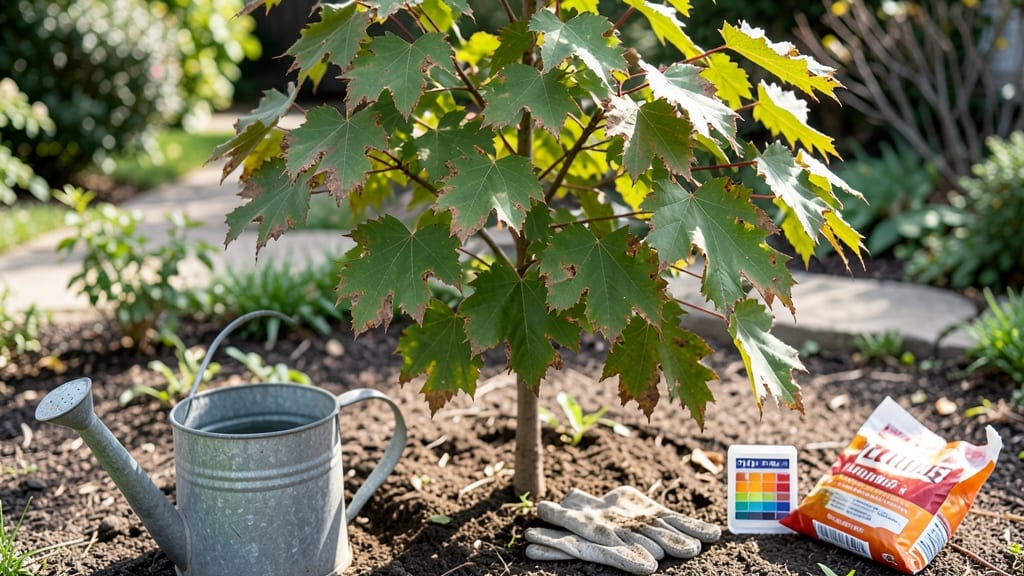
Your maple tree’s crispy leaf edges are screaming for help—this isn’t just cosmetic, it’s a stress signal. 🌳 The browned, brittle edges (leaf scorch) usually mean your tree is fighting drought, fungal pressure, or poor soil pH, and the damage spreads faster than you think if ignored.
But here’s the good news: maples are tough, and with the right fix, you can bring back that deep, glossy green by late summer.
First, rule out the obvious: check your watering. Maple roots need deep, infrequent soaking—not light sprinkles—that reach 12-18 inches down. If the soil’s dry past 3 inches, you’re underwatering. Then test your soil pH: maples crave acidic soil (5.0-6.5).
If yours is alkaline, the tree struggles to absorb nutrients, making it vulnerable to scorch. A simple soil test kit solves half the problem.
For existing damage, prune only the crispy edges—never healthy tissue—using sterilized shears to avoid spreading fungal infections. After pruning, apply a fungicide spray (like copper-based or neem oil) to protect new growth.
Within 4-6 weeks, you’ll see fresh leaves pushing out, and by next season, your tree’s canopy will look full and vibrant again.
Prevention is easier than repair: mulch with 3-4 inches of wood chips (keep it 6 inches from the trunk), water deeply 2-3 times per week during droughts, and fertilize in early spring with acid-loving plant food.
If scorch keeps coming back year after year, it might be time to call an arborist—sometimes deeper soil or pest issues are at play. But in most cases, you’ve got this!
📚 In This Guide
- What you need
- Instructions
- Tips and common mistakes
- Wrapping up and next steps
What you need
- ● Pruning shears or loppers: Sharp, bypass-style (for clean cuts) – 1 pair (or 2 pairs for larger branches).
- ● Pruning saw: Curved-tooth, 8-10 inches (for thick branches) – 1.
- ● Garden hose with adjustable nozzle: For deep watering – 1 (with a gentle spray setting).
- ● pH testing kit: Digital or liquid test strips to check soil acidity – 1.
- ● Sulfur or aluminum sulfate: For acidifying soil (follow label for pounds per 100 sq ft) – 1 bag (20-50 lbs).
- ● Organic mulch: Pine bark, wood chips, or 2-4 inches of acid-loving mulch – 1-2 bags.
- ● Gloves: Heavy-duty, gardening-grade (nitrile or leather) – 1 pair.
- ● Disinfectant (70% isopropyl alcohol or bleach solution): To clean tools – 1 small bottle.
- ● Trash bags (heavy-duty): For removing scorched leaves/debris – 2-3.
- ● Fungicide (copper-based or neem oil): If fungal issues are suspected – 1 bottle.
- ● Slow-release fertilizer (acid-loving formula): For nutrient boost – 1 bag.
- ● Soil moisture meter: To monitor hydration – 1.
- ● Knee pads or stool: For comfort during extended work – 1.
- ● Dust mask: If working with sulfur or heavy debris – 1.
How to revitalize maple trees affected by leaf scorch
Leaf scorch isn’t a death sentence—here’s how to nurse your maple back to vibrant health.
🌿 Step 1: Diagnose the Problem and Confirm Leaf Scorch
Leaf scorch appears as crispy, brown edges on leaves while the center stays green—a classic sign of stress. First, rule out pests like lace bugs or spider mites by shaking a branch over white paper. If you see tiny moving specks, those are the culprits. For true scorch, the damage is uniform and starts at leaf edges, often on older leaves first.
Check the soil pH with a test kit—maples thrive in acidic soil (pH 5.0-6.5). If your soil is alkaline (pH 7.0+), that’s likely the root cause. Scorch worsens in hot, dry conditions, so note if your tree’s location gets afternoon sun without shade or consistent water.
✂️ Step 2: Prune Damaged Leaves and Improve Airflow
Remove any leaves showing more than 50% browning—they won’t recover and drain the tree’s energy. Use clean, sharp pruners to cut just above the next healthy leaf node. Avoid heavy pruning now; focus on selective removal to reduce stress. I prune on a cool, cloudy morning to prevent shock.
Thin out dense branches to improve airflow—crowded growth traps heat and humidity, which worsens scorch. Aim for a 20-30% reduction in leaf density in the most affected areas. This isn’t about shaping the tree but creating space for air circulation and light penetration.
💧 Step 3: Adjust Watering and Mulching for Stress Relief
Maples hate soggy roots but also can’t tolerate drought. Water deeply once a week (or more in extreme heat) until the soil 12 inches down feels moist. Use a soil probe or dig a small hole to check—if it’s dry, water again. Drip irrigation or soaker hoses work best to deliver moisture slowly without wetting foliage.
Apply 3-4 inches of organic mulch (like shredded bark or pine needles) around the tree’s drip line, keeping it 6 inches away from the trunk. Mulch retains moisture, cools roots, and slowly acidifies the soil over time. Replenish mulch annually to maintain its protective layer.
☀️ Step 4: Acidify the Soil and Protect Against Future Scorch
Spread 1-2 pounds of elemental sulfur per 100 square feet of root zone in early spring or fall. Work it into the top 6 inches of soil and water thoroughly. Sulfur lowers pH gradually—test soil again in 3-6 months to monitor progress. Avoid quick-release acidifiers like vinegar, which can burn roots.
For immediate relief, mix 1 tablespoon of liquid iron supplement (like Ironite) with 1 gallon of water and apply as a foliar spray in the early morning. This replenishes chlorophyll and helps leaves recover faster. Repeat every 2-3 weeks until new growth appears.
🌱 Step 5: Monitor and Prevent Recurrence Next Season
Keep a log of your tree’s progress—note when new leaves emerge and their color. Healthy maple leaves should be deep green with no browning by midsummer. If scorch returns, consider installing drip irrigation for consistent moisture or adding shade cloth to filter harsh afternoon sun.
Fertilize lightly in early spring with an acid-loving tree formula (10-10-10 or similar). Over-fertilizing stresses maples, so follow package rates precisely. Avoid high-nitrogen fertilizers, which can worsen leaf burn. A slow-release, organic option is safest for long-term health.
Tips & tricks for reviving maple trees with crispy edges
Real talk: The difference between a tree that recovers and one that keeps struggling often comes down to these targeted adjustments—especially when dealing with that telltale crispy edge damage.
Diagnosis Precision: When checking for pests in Step 1, focus on the undersides of leaves first—that's where lace bugs and spider mites hide. I use a bright flashlight at a 45-degree angle to spot their webbing. If you find pests, treat with horticultural oil or insecticidal soap immediately, but only after confirming they're the issue, not just scorch.
Pruning Strategy: In Step 2, don't be afraid to get aggressive with the 50%+ browning leaves—they're sapping energy from healthy growth. I mark leaves with a white clothespin before cutting to visualize the reduction. For large trees, consider using a pole pruner to reach higher branches safely. The goal is airflow, not aesthetics.
Watering Technique: That "once a week" guideline in Step 3 is a baseline, but in extreme heat (90°F+), you might need twice-weekly deep watering. I test soil moisture by digging a 12-inch hole—if the soil feels like a damp sponge, you're good. If it crumbles, water again. Drip irrigation systems are worth the investment for large maples.
Soil Acidification: For Step 4, elemental sulfur is your best bet, but if you need faster results, you can mix in some peat moss (1 part peat to 3 parts soil) when applying the sulfur. Just remember—peat moss breaks down over time, so you'll need to reapply annually. The key is patience; soil pH changes gradually, so retest every 3-6 months as instructed.
Pro Tips for Maple Tree Leaf Scorch
- Real talk: The difference between a tree that recovers and one that keeps struggling often comes down to these targeted adjustments—especially when dealing with that telltale crispy edge damage.
- Diagnosis Precision: When checking for pests in Step 1, focus on the undersides of leaves first—that's where lace bugs and spider mites hide.
- Pruning Strategy: In Step 2, don't be afraid to get aggressive with the 50%+ browning leaves—they're sapping energy from healthy growth.
Frequently asked questions
Got questions about reviving your maple tree’s crispy edges?
You’re not alone! Here are answers to the most common concerns about maple tree leaf scorch—so you can take action with confidence.
What causes leaf scorch on maple trees in the first place?
Leaf scorch is usually triggered by environmental stress, like intense heat, drought, or poor soil drainage. Acid-loving maples (especially sugar maples) also suffer when soil pH rises above 6.0. Fungal infections or over-fertilization can worsen the issue too. Think of it as your tree’s way of saying, “I need more love—or water!”
How long does it take for maple leaves to recover from scorch?
Recovery time varies! With proper care—like deep watering, mulching, and soil acidification—you’ll see improvement in 4–8 weeks. Severe cases may take a full season, but new leaves should look healthier. Patience is key: Focus on root health first, and the canopy will follow.
Should I water my maple tree more if the leaves are scorched?
Absolutely!
Deep, slow watering (1–2 inches per week) mimics natural rainfall and reduces stress. Water at the base of the tree (not the leaves) to prevent fungal spread. Early morning is best—avoid evening watering to deter disease. Mulch heavily (3–4 inches) to retain moisture and cool roots.
Are there chemical-free ways to fix leaf scorch?
Yes! Skip harsh chemicals and try these natural fixes:
- Soil acidification: Mix sulfur or peat moss into the top 6 inches of soil (test pH first!).
- Organic mulch: Use pine needles or compost to lower pH and retain moisture.
- Shade cloth: Temporarily shield young trees from midday sun during heatwaves.
- Avoid pruning scorched leaves: Focus on healthy branches to reduce stress.
Will leaf scorch kill my maple tree if I ignore it?
Not immediately, but chronic scorch weakens trees, making them vulnerable to pests, disease, or even death over time. Act fast if you notice:
- Leaves browning at the edges (like paper burning).
- Premature leaf drop.
- Thin, stunted new growth.
Wrapping up and next steps
Maple tree leaf scorch may seem alarming, but with the right care—like adjusting soil pH, proper watering, and strategic pruning—your tree can bounce back stronger than ever! 🌿 Remember, acid-loving trees thrive with patience and precision, so don’t rush the process.
Your next step? Grab those tools, roll up your sleeves, and give your maple the tender, science-backed love it deserves. Happy gardening!