
Watering
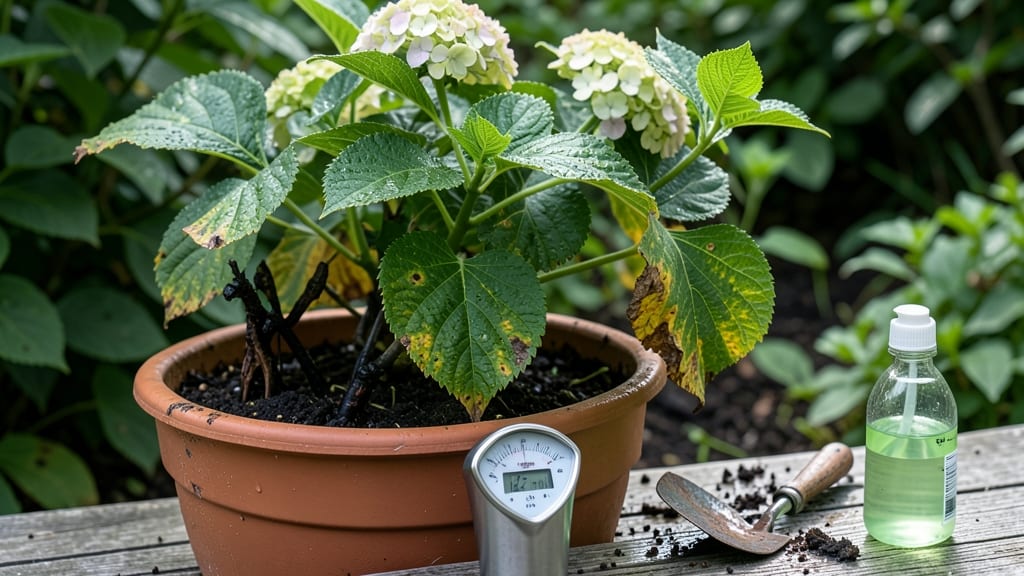
Your hydrangeas look like they're drowning in overwatered too much water—check out these pictures of hydrangea leaf problems to see what I mean. 🌿 I've seen this exact scenario too many times: yellowing leaves, mushy stems, and fungal spots that turn your prized shrubs into sad, soggy messes.
The good news? Fixing overwatered hydrangeas is simpler than you think once you recognize the signs.
Most people assume hydrangeas need constant moisture, but the truth is they thrive on consistent but well-drained soil. Overwatering creates a suffocating environment where roots can't breathe, leading to those telltale yellow leaves and foul-smelling soil.
The fix starts with adjusting your watering routine—think deep but infrequent waterings rather than daily sprinkles.
Within just 2-3 weeks, you'll notice new green growth as roots recover. The key is improving drainage: amend heavy soil with compost, elevate containers with feet, and always check moisture before watering. Trust me, your hydrangeas will bounce back faster than you expect once they're breathing easy again.
This works for both in-ground and container-grown hydrangeas, no matter your climate. The same principles apply whether you're dealing with a soggy backyard bed or a potted plant on your patio.**
Root Causes Of Overwatering
When your hydrangeas start showing signs of distress—yellowing leaves, wilting stems, or even moldy soil—it’s often a cry for help from roots drowning in excess moisture. But why does this happen?
Overwatering isn’t just about pouring too much water; it’s a chain reaction triggered by soil, climate, and even human habits. Let’s break down the key culprits behind hydrangea leaf problems caused by too much water, so you can fix the issue at its source.
Hydrangeas thrive in well-draining soil, but if your garden or pots lack proper drainage, water pools around the roots instead of draining away. Here’s why this becomes a problem:
- Compacted or clay soil acts like a sponge, holding onto water for days. Roots suffocate because they can’t access oxygen, leading to root rot (a fungal infection that turns roots black and mushy).
- Lack of organic matter (like compost or perlite) reduces soil porosity, trapping water. Over time, this creates an anaerobic (oxygen-free) zone where beneficial microbes die off.
- Improper pot drainage: If your container lacks drainage holes, water sits at the bottom, creating a soggy, disease-prone environment. Even "self-watering" pots can backfire if not monitored.
💡 Pro Tip: Test your soil’s drainage by filling a bucket with water, dumping it into a hole where your hydrangea grows, and timing how long it takes to drain. If it’s slower than 4 hours, amend the soil with sand, perlite, or coconut coir to improve airflow.
Even with good soil, watering on a schedule (rather than by need) is a common mistake. Hydrangeas don’t follow a rigid timetable—they respond to:
- Weather conditions: Rainy days or high humidity mean the soil stays wet longer. Watering on top of that drowns roots.
- Seasonal needs: In winter, hydrangeas enter dormancy and need far less water. Yet many gardeners keep up summer watering, leading to soggy soil.
- Ignoring the "finger test": Sticking your finger 2–3 inches into the soil tells you the real story. If it’s damp, wait. If it’s dry, water deeply but thoroughly.
⚠️ Warning: Automated sprinklers or drip systems can overwater if left running without adjustments for rain or evaporation rates. Always pair them with a rain sensor or manual override.
Hydrangeas love moisture, but not in every climate. Certain environments amplify overwatering risks:
- Humid climates (like the Southeast U.S.) slow evaporation, keeping soil wet for days. Without proper airflow, fungal diseases like powdery mildew or botrytis take hold.
- Shady spots reduce evaporation, so water lingers. If your hydrangea is under trees or a dense canopy, it’s more prone to root rot.
- Cold, waterlogged winters: In freezing temps, water expands in the soil, physically damaging roots and preventing them from absorbing oxygen.
🌡️ Climate Fix: In humid areas, raise garden beds or use gravel mulch to improve drainage. In shady spots, amend soil with coarse sand to speed up drying.
Overwatering doesn’t work alone—it often invites trouble:
- Fungal infections (like phytophthora) thrive in soggy conditions, clogging root cells and blocking water/nutrient uptake. Infected leaves turn brown and crispy at the edges.
- Slugs and snails love damp soil and chew on hydrangea leaves, creating ragged holes that mimic water stress.
- Bacterial leaf spot spreads faster in wet foliage, causing dark, greasy spots with yellow halos.
🛡️ Defense Strategy: If you suspect pests or disease, prune affected leaves immediately and apply copper fungicide or neem oil to break the cycle. Never water overhead—use drip irrigation at the base instead.
Now that you know why hydrangeas suffer from too much water, the next step is how to fix it. The good news? Most overwatered hydrangeas recover with the right adjustments—stay tuned for actionable solutions!
Fixing Overwatered Hydrangeas Fast
Reviving your hydrangeas after too much water starts with quick action—but don’t panic! The key is to diagnose the exact issue (yellowing leaves, wilting, fungal spots, or root rot) and apply the right fix.
Below, we map the most common symptoms to step-by-step solutions, plus prevention tips to keep your plants thriving.
Cause: Oxygen deprivation from soggy soil, leading to nutrient starvation or root suffocation.
How to Fix It:
- 🔥 Stop Watering Immediately
- Let the top 2–3 inches of soil dry out completely before watering again. Stick your finger in the soil—if it’s damp past your first knuckle, wait.
- 👨🍳 Improve Drainage
- For pots: Move to a well-draining container with holes. Add a layer of gravel or perlite at the bottom to prevent compaction.
- For garden beds: Amend the soil with compost or coarse sand to loosen it.
- 🥘 Prune Damaged Foliage
- Snip off yellow or mushy leaves with clean pruners to redirect energy to healthy growth.
Prevention Tips: ✨ Water deeply but infrequently—hydrangeas prefer 1–1.5 inches per week (including rain). ✨ Use a moisture meter to track soil dampness accurately. ✨ Choose the right pot—terracotta or fabric pots dry out faster than plastic.
Cause: Excess moisture creates the perfect breeding ground for powdery mildew, leaf spot, or root rot.
How to Fix It:
- 🔪 Trim Infected Areas
- Cut off spotted or moldy leaves and dispose of them in the trash (not compost).
- 🌡️ Fungicide Treatment
- Spray with a copper-based fungicide (like Bonide Copper Fungicide) or a baking soda mix (1 tsp baking soda + 1 quart water + a drop of dish soap).
- Apply every 7–10 days until new growth appears.
- 💡 Adjust Watering Habits
- Water early in the morning (not at night) to allow foliage to dry quickly.
- Avoid overhead watering—use drip irrigation or soaker hoses instead.
Prevention Tips: 🔥 Space plants 3–4 feet apart for airflow. 🌿 Mulch around the base (but keep it 2–3 inches away from the stem) to regulate moisture.
Cause: Chronic overwatering leads to anaerobic soil, where roots suffocate and rot.
How to Fix It (Severe Cases):
- 🍳 Check the Roots
- Gently remove the plant and inspect roots. Healthy roots are firm and white; rotten roots are mushy, brown, or black.
- 🔪 Prune Rotten Roots
- Use sterilized pruners to cut away all soft, discolored roots. Keep only firm, white roots.
- 🥘 Repot in Fresh Soil
- Place the plant in a clean pot with fresh, well-draining potting mix (add perlite or orchid bark for aeration).
- Do not water for 3–5 days to let roots recover.
Prevention Tips: ✨ Never let hydrangeas sit in saucers of water—empty saucers after watering. ✨ Use raised beds or containers if your garden soil drains poorly.
Once you’ve addressed the root cause, give your hydrangeas a boost with these steps:
- 📊 Fertilize lightly with a balanced, slow-release fertilizer (10-10-10) 4–6 weeks after pruning.
- 💪 Support weak stems with a small stake if they’re struggling to stand upright.
- 🌞 Ensure 4–6 hours of sunlight daily—hydrangeas need light to recover.
Pro Tip: If your hydrangea is beyond saving, take a cutting! Healthy stems can root in water or moist perlite—just trim a 4–6 inch section, remove lower leaves, and place in water until roots form. 🌱
Frequently asked questions
How can I tell if my hydrangea is overwatered vs. underwatered?
Check the leaves and soil: overwatered hydrangeas have yellowing leaves, mushy stems, and soggy soil that smells foul. Underwatered plants show crispy brown edges, dry soil that pulls away from the pot, and wilted leaves that don’t bounce back when watered. Stick your finger 2-3 inches deep—if it’s damp, you’re overwatering!
Can I save a hydrangea with root rot from overwatering?
Yes, but act fast! Prune away all black/mushy roots with sterilized scissors, then repot in fresh, well-draining soil (mix potting mix with perlite). Hold off watering for 3-5 days to let roots recover. If most roots are healthy, it’ll bounce back in 2-4 weeks with proper care.
Why do my hydrangea leaves turn yellow even when I’m not watering much?
Yellow leaves can mean more than just overwatering! Check for nutrient deficiencies (like iron chlorosis), pests (like spider mites), or poor drainage in clay soil. Test soil pH—hydrangeas prefer 5.2-6.0. If leaves are yellow with green veins, it’s likely overwatering; if uniformly yellow, check for nutrient issues.
How often should I water hydrangeas in containers vs. garden beds?
Containers dry out faster—water when the top 1 inch of soil is dry (usually every 2-3 days in summer). Garden hydrangeas need 1-1.5 inches per week (including rain). Morning watering prevents fungal growth. Use a moisture meter for accuracy—don’t guess!
What’s the fastest way to fix fungal spots on hydrangea leaves?
Prune all spotted leaves immediately, then spray with a baking soda mix (1 tsp baking soda + 1 quart water + drop of dish soap). For severe cases, use copper fungicide every 7-10 days. Water at the base (not overhead) and ensure 3-4 feet of spacing between plants for airflow. Healthy leaves should appear in 2-3 weeks.