
Pruning
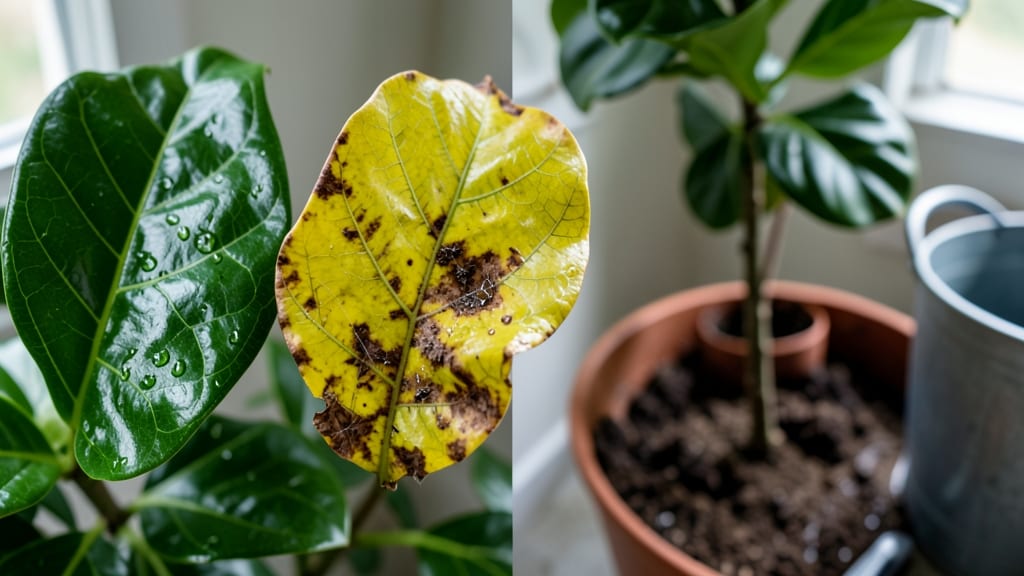
A sick fiddle leaf fig with brown spots isn’t a death sentence—copper spray can turn them around. 🌿 I’ve nursed back more than a dozen of these plants, and the secret weapon is a simple copper treatment that tackles fungal infections before they spread.
The key is acting fast, because those spots won’t fix themselves.
Most brown spots come from fungal infections (like leaf spot) or spider mites, both of which copper spray targets directly. Overwatering or poor airflow just makes it worse—so while you’re treating, adjust those habits too.
My plants recover within 2-4 weeks of consistent spraying, and the new growth stays crisp and vibrant.
You’ll see the difference in just a few sprays: fresh green leaves pushing out where brown spots used to be. The copper spray works on existing spots and prevents new ones, so it’s a one-two punch for your plant’s health.
Just mix it right and apply it carefully—no harsh chemicals needed.
This method works for any fiddle leaf fig with brown spots, whether it’s your first plant or you’ve had a collection for years. The only time to worry is if the spots spread despite treatment—then it’s time to check the roots for rot.
But 90% of cases? Copper spray fixes it.
Root Causes Of Leaf Damage
Understanding why your fiddle leaf fig develops unsightly brown spots or wilts is the first step to saving it. These issues often stem from environmental stress, improper care, or underlying health problems.
Below, we break down the scientific triggers behind a struggling fiddle leaf fig, so you can diagnose—and fix—the problem accurately.
Fiddle leaf figs (Ficus lyrata) are tropical plants that thrive in well-draining soil with moderate moisture.
When roots sit in soggy conditions for too long, they suffocate due to lack of oxygen, leading to anaerobic respiration—a process that produces toxic byproducts like ethanol and lactic acid. This toxicity disrupts nutrient uptake, causing leaves to yellow, brown, or drop prematurely.
Key signs:
- Soft, mushy stems (press gently—if it feels squishy, it’s rotten).
- Musty soil smell (a red flag for bacterial or fungal root rot).
- Leaves curling inward (a stress response to poor root function).
Why it happens:
- Poor drainage (clay pots without drainage holes or compacted soil).
- Overzealous watering (watering before the top 2–3 inches of soil dry out).
- Cold temperatures (roots slow down in chilly conditions, increasing rot risk).
While overwatering is a common killer, chronic underwatering can also devastate your fiddle leaf fig. These plants store water in their stems and leaves, but prolonged drought forces them into water stress mode, triggering:
- Plasmolysis (cell membranes shrink as water exits, causing leaf edges to crisp and brown).
- Abscission (the plant sheds damaged leaves to conserve energy).
Key signs:
- Dry, brittle leaves that crumble at the touch.
- Wilting even after watering (a sign of irreversible cell damage).
- Brown patches that start at the edges (classic drought symptom).
Why it happens:
- Infrequent watering (letting the soil dry out completely between waterings).
- Low humidity (below 40% relative humidity causes transpiration to outpace moisture intake).
- Direct sunlight without acclimation (sudden heat stress dehydrates leaves faster).
Brown spots with yellow halos or blackened veins often signal fungal or bacterial infections, typically caused by:
- Botrytis blight (gray mold) – Thrives in high humidity + poor airflow.
- Pythium or Phytophthora (root-invading water molds) – Spreads in overwatered, anaerobic soil.
- Bacterial leaf spot – Caused by Xanthomonas or Pseudomonas, often from contaminated water or tools.
Key signs:
- Spots that spread rapidly (especially in damp conditions).
- Leaves developing a slimy texture (bacterial infection).
- White or black fuzzy growth on stems/leaves (fungal spores).
Why it happens:
- Stagnant water on leaves (traps pathogens; use a leaf duster after watering).
- Dirty pruning tools (bacteria hitchhike on cuts; sanitize with 70% isopropyl alcohol).
- Poor air circulation (crowded leaves or sealed pots trap moisture).
Fiddle leaf figs are tropical natives, meaning they hate extremes. Sudden changes in temperature, light, or drafts trigger physiological stress, leading to:
- Chlorosis (yellowing between veins due to disrupted chlorophyll production).
- Necrosis (brown, dead patches from cold damage or sunburn).
Key signs:
- Brown patches in direct sun (sunburn; looks like scorched edges).
- Yellow leaves with crispy edges (cold drafts or AC vents).
- Slow growth + drooping (shock from moving to a new location).
Why it happens:
- Sudden temperature drops (below 55°F/13°C stuns the plant).
- Hot afternoon sun without shade (leaves burn in direct rays > 65°F/18°C).
- Drafty windows or vents (cold air disrupts stomatal function, causing water loss).
Tiny pests like spider mites, mealybugs, or scale pierce leaves, sucking out sap and leaving behind stippled brown patches or sticky residue (honeydew). Their saliva contains toxins that trigger cell death, causing leaves to yellow, curl, or drop.
Key signs:
- Fine webbing on undersides of leaves (spider mites).
- Cottony white clusters in leaf axils (mealybugs).
- Shiny, bump-like growths on stems (scale insects).
Why it happens:
- Dry air (mites thrive in low humidity < 30%).
- Weakened plants (stressed figs attract pests like a buffet).
- Bringing infected plants indoors (pests hitchhike on new purchases).
Reviving Your Fiddle Leaf Fig
Now that you’ve pinpointed the cause of your fiddle leaf fig’s distress—whether it’s fungal spots, bacterial infections, nutrient deficiencies, or environmental stress—it’s time to roll up your sleeves and bring it back to health!
Below are practical, step-by-step solutions tailored to each issue, plus prevention tips to keep your plant thriving long-term.
If your fiddle leaf fig is battling copper-resistant fungal spots or bacterial leaf blight, act fast with these targeted fixes:
🔥 Step 1: Isolate & Remove Infected Areas
- Prune diseased leaves with sterilized scissors (wipe with rubbing alcohol between cuts).
- Dispose of infected foliage in the trash (not compost)—don’t risk spreading spores.
- Pro Tip: 💡 Cut ½ inch below the spot to ensure you remove the entire infected tissue.
🍳 Step 2: Apply a Copper-Based Fungicide (The Game-Changer)
Since your plant needs copper spray, here’s how to use it effectively:
- Mix a copper fungicide (like Copper Soap or Bordeaux Mixture) as directed on the label.
- Spray thoroughly on both sides of leaves, stems, and soil surface (fungus loves hiding in crevices!).
- Reapply every 7–10 days for 3–4 weeks, even if spots seem to disappear.
- Safety Note: 🌡️ Avoid spraying in direct sunlight (can burn leaves) or when rain is forecasted (washes it off).
👨🍳 Step 3: Boost Airflow & Reduce Humidity
- Move your plant to a spot with indirect light and better airflow (e.g., near a window with a fan on low).
- Wipe leaves with a damp microfiber cloth to remove dust and prevent fungal growth.
- Avoid overwatering—let the top 1–2 inches of soil dry out before watering again.
🥘 Step 4: Strengthen the Plant’s Defenses
- Fertilize lightly with a balanced liquid fertilizer (diluted to ¼ strength) to support recovery.
- Add beneficial microbes like mycorrhizal fungi or compost tea to the soil to crowd out pathogens.
If your fiddle leaf fig is starving for nutrients, these fixes will revive its vigor:
📊 Step 1: Diagnose the Deficiency
Check the leaf symptoms to identify the missing nutrient:
| Symptom | Likely Deficiency | Solution |
|---|---|---|
| Yellow leaves (oldest first) | Nitrogen (N) | Use a balanced fertilizer (e.g., 10-10-10) or fish emulsion. |
| Yellow leaves (new growth) | Magnesium (Mg) | Apply Epsom salt (1 tbsp per gallon of water, spray or water soil). |
| Purple stems/leaves | Phosphorus (P) | Use a phosphorus-rich fertilizer (e.g., bone meal). |
| Brown leaf edges | Potassium (K) | Feed with potassium sulfate or banana peel tea. |
💪 Step 2: Adjust Your Fertilizing Routine
- Flush the soil with water to remove excess salts (over-fertilizing burns roots!).
- Switch to slow-release fertilizer (like osmocote) to avoid nutrient spikes.
- Water before fertilizing to prevent root burn.
✨ Step 3: Improve Soil Health
- Repot if needed into well-draining soil (mix potting soil + perlite + orchid bark).
- Add worm castings or compost for a nutrient boost without overwhelming the plant.
If your fiddle leaf fig is struggling from temperature swings, drafts, or poor light, these fixes will stabilize it:
🎯 Step 1: Optimize Light Conditions
- Move to bright, indirect light (e.g., east or north-facing window).
- Rotate the plant weekly so all sides get even light.
- Quick Fix: 💡 Use a grow light (12–14 hours/day) if natural light is insufficient.
🔪 Step 2: Regulate Temperature & Humidity
- Keep temps between 65–80°F (avoid cold drafts or heaters).
- Increase humidity with:
- A pebble tray (fill a tray with water + pebbles, place plant on top).
- A humidifier (set to 40–50% humidity).
- Misting (lightly, in the morning to prevent fungal growth).
⏰ Step 3: Reestablish a Watering Routine
- Water only when the top 2 inches of soil are dry (stick your finger in to check!).
- Use room-temperature water (cold water shocks roots).
- Ensure pots have drainage holes to prevent root rot.
Once your plant is on the mend, prevent future issues with these habits:
- Inspect leaves weekly for early signs of pests or disease.
- Clean leaves monthly with a damp cloth to remove dust and pests.
- Quarantine new plants for 2–4 weeks before introducing them to your collection.
- Avoid overcrowding—fiddle leaf figs need space to breathe.
- Seasonal check-up: In spring, fertilize and repot if needed; in fall, reduce watering as growth slows.
By following these targeted solutions, your fiddle leaf fig should bounce back stronger than ever—and with a little TLC, those browning spots will be a distant memory! 🌿✨
Frequently asked questions
Why does my fiddle leaf fig develop brown spots even after adjusting watering?
Brown spots often persist due to fungal infections or pests like spider mites, not just watering issues. The spots may be caused by Botrytis blight (gray mold) or bacterial leaf spot, which thrive in humid conditions. Check for webbing (mites) or fuzzy growth (fungus) before assuming it's water-related.
How often should I apply copper spray for fungal spots?
Apply copper spray every 7–10 days for 3–4 weeks, even if spots seem to fade. For best results, spray in the early morning on both leaf sides and stems. Avoid spraying in direct sunlight or before rain—it needs time to work!
Can I save a fiddle leaf fig with root rot?
It depends on how severe it is. If only the outer roots are mushy, trim them with sterilized scissors and repot in fresh, well-draining soil. For advanced rot, the plant may not recover—check for a firm, white root core before deciding. Prevent future rot by watering only when the top 2 inches of soil are dry.
Will pruning help my sick fiddle leaf fig recover faster?
Yes! Pruning diseased leaves removes fungal/bacterial sources and redirects energy to healthy growth. Cut ½ inch below brown spots with clean scissors, and dispose of infected leaves in the trash (not compost). This also improves airflow, which prevents future infections.
Is my fiddle leaf fig dying if new leaves are small and yellow?
Not necessarily! Small, yellow new leaves often signal nutrient deficiencies (like nitrogen or magnesium) or stress from over/underwatering. Try fertilizing with Epsom salt (for magnesium) or fish emulsion (for nitrogen), and adjust your watering routine. If the soil is waterlogged, repot immediately.