
Pests and Diseases
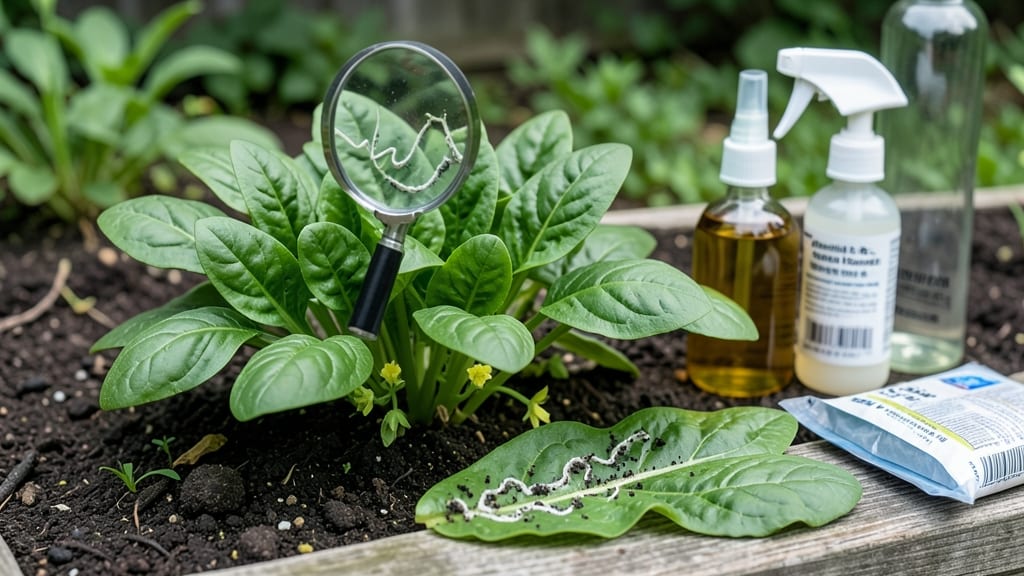
Those serpentine white trails on your spinach leaves mean one thing: leaf miners have arrived. 🌱 Honestly, I’ve seen these tiny pests turn a lush harvest into a skeleton of chewed foliage in just a few days—but there’s a fast organic spray protocol that stops them dead in their tracks.
The problem starts when tiny moth larvae burrow into leaves, creating the telltale serpentine mines. Most gardeners panic and reach for chemicals, but the real solution is a two-pronged attack: neem oil sprays for immediate control and row covers for prevention.
I’ve used this combo to save entire beds in under a week.
By the time you’re done, your spinach will look vibrant and healthy again, with no more white trails or stunted growth. The best part? This method works without harming beneficial insects or leaving toxic residues on your food.
Works for home gardens, community plots, or even container-grown spinach. Let’s get those leaves back in top shape—naturally.
Root Causes of Leaf Damage
When tiny, serpentine trails appear on your spinach leaves, it’s not just random damage—it’s the work of a hidden pest with a specific life cycle and preferences.
Understanding why these pests target your greens is the first step to stopping them. Below, we break down the science-backed reasons behind their destructive behavior.
The primary culprit behind the telltale serpentine mines in spinach leaves is the larva of the Phytomyza sylvestris fly (or related leaf miner species). These larvae don’t just nibble—they burrow into the leaf tissue, creating protected tunnels where they feed on chlorophyll-rich cells. Here’s why they do it:
- Safety in numbers: The leaf’s interior provides shelter from predators (like birds or beneficial insects) and environmental stressors (like wind or rain). Larvae are vulnerable when exposed, so tunneling minimizes risks.
- Nutrient efficiency: Spinach leaves are packed with nitrogen and water, which are essential for larval growth. By feeding internally, they avoid competition with other pests and maximize their food source.
- Developmental necessity: The larvae must molt 3–4 times before pupating. Each molt requires more space and nutrients, which tunneling provides in a compact, high-yield environment.
Actionable insight: Since larvae are inside the leaf, surface sprays (even organic ones) often miss them. The key is disrupting their life cycle at the right stages—more on that later!
Not all leafy greens suffer equally from leaf miners. Spinach’s thin, tender leaves and rapid growth make it an ideal host. Here’s why:
| Spinach Trait | Why It Attracts Leaf Miners |
|---|---|
| Thin leaves | Larvae can easily penetrate the leaf surface with their mouthparts, unlike thicker leaves (e.g., kale or collards). |
| High moisture content | Spinach retains water well, creating a moist, oxygen-rich environment perfect for larval respiration and digestion. |
| Fast regrowth | Leaf miners thrive where new growth is constant. Spinach’s quick turnover means fresh, uninfested leaves are always available for egg-laying adults. |
| Low natural defenses | Unlike some plants, spinach lacks trichomes (hair-like structures) or tough wax coatings that deter ovipositing flies. |
Actionable insight: If you’re growing spinach alongside resistant crops (like Swiss chard or beet greens), leaf miners may shift their focus elsewhere. Crop rotation can break their life cycle.
Leaf miners are temperature-sensitive. Their populations explode when conditions align with their optimal growth range. Here’s how climate plays a role:
- Ideal temperature range: Larvae develop fastest between 60–80°F (15–27°C). Below 50°F (10°C), their growth stalls; above 90°F (32°C), they may die.
- Humidity matters: High humidity (>60%) keeps eggs and larvae hydrated, reducing mortality. Dry conditions can crack mines, exposing larvae to predators.
- Seasonal peaks: In most regions, infestations worse in spring and fall when temperatures are moderate and rainfall is frequent.
Actionable insight: Monitor your local microclimate. If your area hits 70–75°F (21–24°C) with high humidity, be extra vigilant—this is prime leaf miner real estate.
Leaf miner flies (Phytomyza species) are highly selective about where they lay eggs. They avoid:
- Plants with visible damage (e.g., chewed leaves or disease spots).
- Leaves treated with repellent sprays (like neem or kaolin clay).
- Stressed plants (e.g., those with nutrient deficiencies or overcrowding).
Instead, they target:
- Lush, vibrant spinach with untouched leaves.
- Plants in shaded or partially shaded areas (they prefer cooler, humid microclimates).
- Fields or gardens with no prior pest control efforts.
Actionable insight: Mimic stress to deter flies: lightly prune outer leaves, thin crowded plants, or use yellow sticky traps to intercept adults before they lay eggs.
💡 Pro Tip: The earlier you disrupt the adult fly’s choice (e.g., by removing egg-laying sites or using physical barriers), the fewer larvae will hatch—and the less damage you’ll see!
Quick Fixes for Leaf Munchers
Tiny, serpentine trails in your spinach leaves? Those sneaky leaf miners are wreaking havoc—and the good news is, you can fight back! The key is acting fast with targeted, organic solutions that disrupt their life cycle without harming your plants (or your conscience).
Below, we break down the most effective fixes by cause, from early detection to long-term prevention.
If you’ve spotted the first signs—thin, winding tunnels or wilting leaves—act immediately to prevent an infestation.
🍳 Handpick & Destroy
- How: Wear gloves and inspect leaves daily (especially undersides).
Use tweezers or your fingers to pluck larvae (tiny white maggots) and drop them into soapy water. - Why: Removes adults before they lay eggs, cutting the cycle short. - Pro Tip: 💡 Do this in the early morning when larvae are sluggish and easier to spot.
👨🍳 Yellow Sticky Traps
- How: Hang yellow sticky cards near your spinach patch. Leaf miners are attracted to yellow and will get trapped.
- Why: Reduces adult populations before they reproduce.
- Pro Tip: ✨ Replace traps every 3–5 days or when 20+ pests are stuck.
Once larvae are burrowed in, you’ll need a systemic or contact spray to suffocate them. Here’s what works best:
| Solution | How to Apply | Frequency | Why It Works |
|---|---|---|---|
| Neem Oil (1%) | Mix 1 tbsp neem oil + 1 tsp mild soap in 1 quart water. Spray top and bottom of leaves. | Every 5–7 days for 2 weeks, then weekly. | Disrupts feeding, repels adults, and smothers larvae. |
| Insecticidal Soap | Spray directly on tunnels (soap enters mines). Use at dusk to avoid burning leaves. | Every 3–4 days until no new mines appear. | Kills soft-bodied larvae on contact. |
| Kaolin Clay (Surround WP) | Mix 1–2 tbsp in 1 gallon water. Spray evenly on leaves (forms a protective barrier). | Every 7–10 days or after rain. | Creates a physical barrier that blocks oviposition and dries out larvae. |
| Bacillus thuringiensis var. israelensis (Bti) | Follow label rates for foliar spray. Best for organic certifications. | Every 7 days until infestation clears. | Targets only leaf miners (safe for bees/pollinators). |
⚠️ Spray Tips:
- Cover both sides of leaves—larvae hide underneath!
- Apply in the evening to reduce plant stress from sunlight.
- Reapply after rain (organic sprays wash off).
Prevent future outbreaks with smart gardening habits that make your spinach less appealing.
🌱 Rotate & Trap Crops
- Plant nasturtiums, radishes, or alyssum nearby to distract leaf miners away from spinach.
- Interplant spinach with onions or garlic—their strong scent repels pests.
- Avoid successive planting in the same spot; rotate crops yearly.
🌡️ Mulch & Moisture Management
- Use straw or grass clippings as mulch to smother emerging larvae and retain moisture.
- Water at the base (not overhead) to discourage adult flies from laying eggs on wet leaves.
🎯 Clean Up Debris
- Remove fallen leaves, weeds, and plant debris after harvest—these harbor overwintering pupae.
- Solarize soil in late summer: Cover beds with clear plastic for 4–6 weeks to kill pupae before replanting.
Once your spinach is miner-free, keep it that way with proactive care:
- Choose resistant varieties: Some spinach types (like ‘Bloomsdale Long Standing’) are less attractive to leaf miners. - Encourage beneficial insects: Ladybugs, lacewings, and parasitic wasps eat leaf miner larvae.
Plant dill, fennel, or marigolds to attract them. - Plant timing matters: Start spinach early spring or late summer (leaf miners thrive in warm weather). - Row covers: Use floating row covers (fine mesh) over young plants to block adult flies entirely.
Final Reminder: 🌿 Consistency is key—leaf miners return if you stop treatments mid-cycle. Combine sprays, traps, and cultural fixes for the best results!
Frequently asked questions
What do spinach leaf miner tunnels actually look like?
Leaf miner damage appears as thin, winding white or brown trails between leaf veins. These serpentine patterns are created as larvae feed just beneath the leaf surface. Look for small holes where they exit or wilting along the tunnels—these are clear signs of active infestation.
Can I still eat spinach with leaf miner damage?
Yes, but remove heavily damaged leaves first. The tunnels themselves aren't harmful, but larvae can contaminate the leaf. For maximum safety, harvest outer leaves first and discard any with visible mines. Young, tender leaves with minimal damage are perfectly edible.
How long does it take for neem oil to work on leaf miners?
Neem oil starts working within 24 hours but requires 3-5 applications spaced 5-7 days apart for full control. It disrupts feeding immediately but needs repeated exposure to kill larvae already inside leaves. Combine with physical removal for fastest results.
Will leaf miners affect other vegetables besides spinach?
Yes, they commonly target beets, Swiss chard, and collard greens too. While spinach is their favorite, these pests will attack any thin-leaved vegetable. The same organic control methods work for all susceptible plants—just adjust spray frequency based on damage severity.
Can I use coffee grounds to repel leaf miners?
Coffee grounds can help as a mulch barrier to deter adult flies, but they're not a direct treatment. Sprinkle fresh grounds around plant bases weekly—the caffeine smell repels ovipositing adults. For existing larvae, pair with neem oil sprays for complete control.