
Aphids
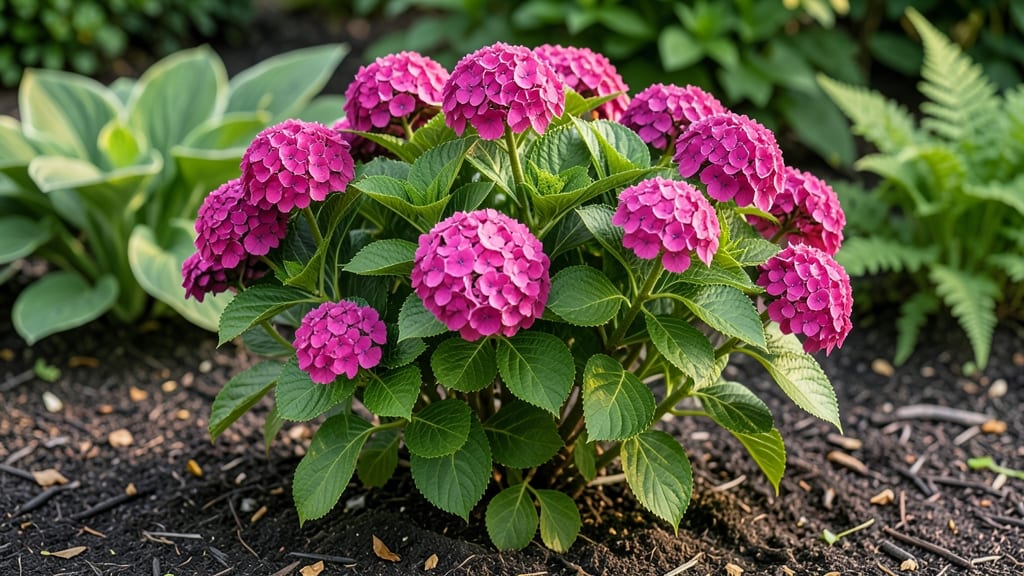
Your shade garden just got an upgrade with Summer Crush bigleaf hydrangea—deep pink blooms that pop against its bold blue-green leaves. 🌿 This compact powerhouse thrives where others falter, turning dull corners into showstopping displays.
The secret? Plant it where morning sun kisses its foliage, then let it bask in dappled shade all day.
Pair it with purple foliage plants like 'Black Lace' elderberry or 'Purple Smoke' bush for a moody, romantic border. Or contrast its rich tones with white blooms like 'Anemone' or 'White Swan' hydrangeas for a fresh, airy feel.
The deep pink flowers last from midsummer through frost, ensuring your garden stays dramatic long after other blooms fade.
For maximum impact, tuck it into containers near patios where you can admire its glossy leaves up close. The foliage alone makes a statement, but the blooms add a splash of color that ties seasonal themes together. Think "summer garden party" with this hydrangea as the star.
Works in foundation plantings, woodland gardens, or even as a striking focal point in containers. The best part? It handles humidity and heat better than most, so your design stays lush even on the hottest days. Let's make your shade garden the envy of the neighborhood!
📚 In This Guide
- What you need
- Instructions
- Tips and common mistakes
- Wrapping up and next steps
What you need
- ● Bigleaf Hydrangea Plant: Choose a healthy nursery-grown Hydrangea macrophylla (preferably in a 1-gallon or 3-gallon container). Look for vibrant foliage and no signs of pests!
- ● Well-Draining Soil: A mix of 50% garden soil, 30% compost, and 20% perlite or coarse sand (to prevent root rot). Aim for pH 5.5–6.2 for those dreamy blue blooms!
- ● Organic Mulch: 2–3 inches of shredded bark, pine needles, or wood chips (keeps roots cool and moist).
- ● Slow-Release Fertilizer: 10–10–10 NPK or an acid-loving plant fertilizer (follow package rates for application).
- ● Watering Can or Hose: With a gentle spray nozzle (hydrangeas hate soggy roots!).
- ● Garden Trowel or Spade (for digging holes 2x wider and slightly shallower than the root ball).
- ● Pruning Shears (sterilized with rubbing alcohol to prevent disease).
- ○ Gloves (optional but handy for messy soil or thorny stems).
- ○ pH Test Kit (optional but highly recommended—blue blooms depend on it!).
- ○ Stakes or Plant Supports (optional, for young or top-heavy plants in windy areas).
- ● Shady Spot: Partial to full shade (3–6 hours of morning sun max; afternoon shade is ideal in hot climates).
- ● Moisture-Loving Location: Avoid areas with dry, sandy soil or poor drainage.
- ● Patience: Bigleaf hydrangeas can take 2–3 years to reach their full, lush potential!
How to grow and maintain a thriving summer Crush bigleaf hydrangea
Here's the straightforward approach I use to keep this shade-loving beauty vibrant all season long.
🪴 Step 1: Choose the Perfect Planting Location
Summer Crush thrives in partial shade—think 3-6 hours of morning sun with afternoon shade protection. Too much direct sun scorches those stunning blue-green leaves, while too little light dulls the foliage color. I always test a spot by placing a white board where the plant will go; if it gets hotter than 85°F in summer afternoons, it's too sunny.
This variety tolerates 4-8 hours of shade in hotter climates, but the foliage will be less vibrant. Amend the soil with 2-3 inches of compost before planting to improve drainage and nutrient availability. The roots appreciate a slightly acidic soil (pH 5.5-6.5), so test your soil if possible—you can adjust with sulfur if needed.
🌱 Step 2: Plant at the Right Depth and Spacing
Dig a hole twice as wide as the root ball but only as deep—planting too deep suffocates the roots. Gently loosen any circling roots at the bottom of the root ball to encourage outward growth. Place the plant so the top of the root ball sits 1 inch below soil level—this prevents crown rot while keeping the plant stable.
Space plants 4-6 feet apart to allow for mature growth. Summer Crush grows 3-5 feet tall and wide, so crowding leads to poor air circulation and disease. Water deeply right after planting to eliminate air pockets in the soil. You'll know it's settled when the soil surface looks slightly compressed around the base.
☀️ Step 3: Water Consistently Without Overdoing It
Keep the soil evenly moist but never soggy—this hydrangea hates wet feet. Water 1-2 inches per week, adjusting for rainfall. I check moisture by sticking my finger 2 inches deep into the soil; if it feels dry, it's time to water. Mulch with 2-3 inches of shredded bark to retain moisture and regulate soil temperature.
Yellowing leaves often signal overwatering, while crispy edges mean underwatering. In extreme heat (above 90°F), water in the early morning to reduce evaporation. Avoid wetting the foliage to prevent fungal diseases—water at the base instead.
✂️ Step 4: Prune for Health and Shape
Prune in late winter or early spring before new growth begins. Remove dead, diseased, or crossing branches first—these compete with healthy growth. Cut back last year's stems by one-third to encourage bushier growth. Never prune into old wood (more than 2 years old) as it won't produce new blooms.
Shape the plant by trimming back any leggy growth to maintain a compact form. Use clean, sharp pruners to make cuts at a 45-degree angle just above a leaf node. Avoid heavy pruning in fall—it stimulates tender new growth that won't survive winter.
🌿 Step 5: Feed for Vibrant Foliage
Apply a balanced, slow-release fertilizer (10-10-10) in early spring when new growth appears. Follow package instructions—over-fertilizing burns roots and causes leaf scorch. I also top-dress with 1 inch of compost in early spring and again in midsummer for a nutrient boost.
For extra vibrant foliage, add a small handful of aluminum sulfate (1/4 cup per plant) in early spring if you want to intensify the blue-green tones. This works best in acidic soils. Stop fertilizing by mid-summer to encourage hardier fall growth.
Tips & tricks for perfect summer Crush bigleaf hydrangea care
Here's what nobody tells you about keeping your hydrangea looking like a million bucks all season.
Lighting Secret: The 3-6 hours of morning sun is non-negotiable for that signature blue-green color. I've learned this the hard way—planting mine in afternoon sun gave me dull, yellowing leaves by midsummer. Use a white board test: if it gets hotter than 85°F in summer afternoons, find a shadier spot. For hotter climates, you can stretch to 4-8 hours of shade, but expect slightly less vibrant foliage.
Planting Depth Matters: That 1-inch below soil level rule isn't just arbitrary—it's about preventing crown rot while keeping the plant stable. I've seen too many hydrangeas planted too deep where they struggle to establish. After planting, give it a gentle tug to make sure it doesn't pop out easily. The roots need that perfect balance of support and airflow.
Watering Wisdom: The 1-2 inches per week guideline works, but timing matters just as much. I water in the early morning to prevent fungal diseases from wet foliage. And here's a trick: use your finger to check moisture 2 inches deep—if it feels dry, that's your cue. Mulching with 2-3 inches of shredded bark helps maintain that perfect moisture balance while keeping roots cool.
Pruning Precision: That one-third cut back on last year's stems is crucial for bushier growth. I always prune in late winter/early spring when new growth is just starting. The 45-degree angle cuts above leaf nodes encourage new shoots to grow outward. And never prune into old wood—it won't produce new blooms, and you'll be left with bare stems.
Pro Tips for Summer Crush Bigleaf Hydrangea
- Here's what nobody tells you about keeping your hydrangea looking like a million bucks all season.
- Lighting Secret: The 3-6 hours of morning sun is non-negotiable for that signature blue-green color.
- Planting Depth Matters: That 1-inch below soil level rule isn't just arbitrary—it's about preventing crown rot while keeping the plant stable.
Frequently asked questions
How much shade does Summer Crush Bigleaf Hydrangea really need?
Summer Crush thrives in partial to full shade, ideally 4–6 hours of filtered light daily. Too much sun? Its leaves may scorch. Too little? It’ll grow leggy. A spot under tall trees or near a north-facing wall is perfect—just avoid deep, dark corners.
When is the best time to plant Summer Crush?
Plant in early spring or fall when temperatures are mild (50–70°F). Avoid summer heatwaves or winter freezes, which stress roots. If you must plant in summer, water deeply daily for the first 2 weeks to help it establish.
How often should I water Summer Crush?
Keep soil consistently moist but not soggy. Water 1–2 inches per week, more in extreme heat. Mulch around the base (2–3 inches) to retain moisture. Yellowing leaves? You’re likely underwatering. Brown, crispy edges? Overwatering or sunburn.
Can Summer Crush grow in containers? What size pot do I need?
Yes! Use a 15–20 gallon pot with drainage holes. Opt for lightweight mixes (like 50% potting soil, 30% perlite, 20% compost). Repot every 2–3 years. Place in shade and water daily in summer—containers dry out faster than ground soil.
Are aphids a common problem? How do I treat them?
Aphids love Summer Crush’s lush foliage! Spray infested areas with soapy water (1 tsp mild dish soap + 1 quart water) or introduce ladybugs. For severe cases, use neem oil. Prune heavily damaged leaves and dispose of them in sealed bags.
Do I need to prune Summer Crush? When and how?
Prune in late winter or early spring (before new growth starts). Remove dead, crossing, or weak stems at the base. Avoid heavy pruning—this hydrangea blooms on old and new wood. Shape lightly to encourage bushiness, but don’t overdo it!
Is Summer Crush cold-hardy? What about heat tolerance?
It’s hardy to USDA Zones 5–9, surviving winters down to -15°F. In heat zones 9–10, provide afternoon shade to prevent leaf scorch. If your area gets consistent 90°F+ temps, mulch heavily and water at the soil level (not overhead) to protect roots.
Wrapping up and next steps
Transforming your shady spots into a lush, summer crush with bigleaf hydrangeas is easier—and more rewarding—than you think! 🌿 These vibrant plants bring bold color and texture to your garden while thriving in low-light conditions.
Now that you’re armed with care tips and troubleshooting tricks, it’s time to roll up your sleeves and plant your first bigleaf hydrangea—your future shade oasis awaits!
Start by picking a spot, gathering your supplies, and planting with confidence. Watch as your garden blooms with effortless beauty, and don’t forget to share your progress with fellow plant lovers. Happy gardening! 🌸