
Trees
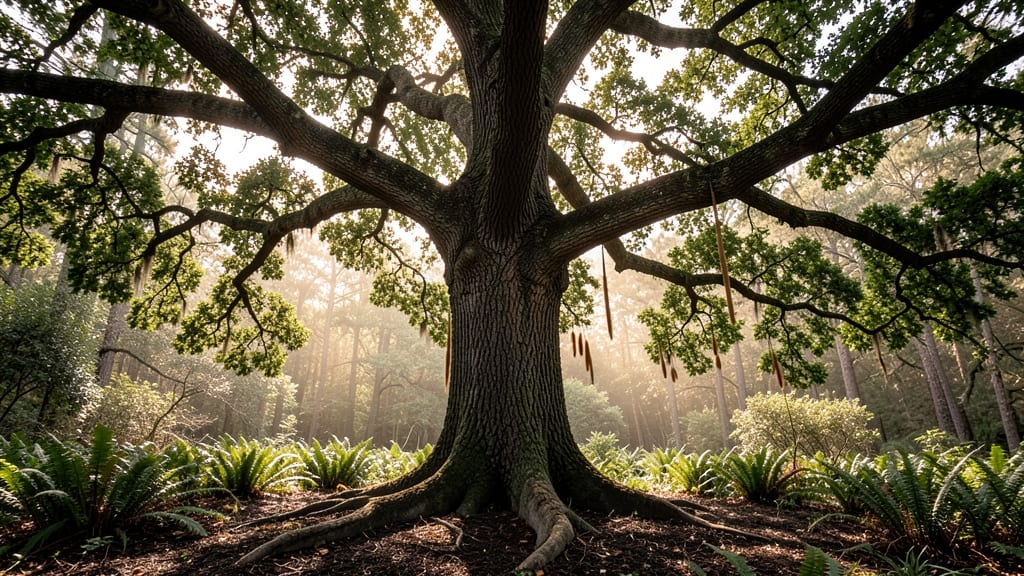
Mastering swamp oak leaf identification starts with their bold, 7-9 lobed shape that looks like a child’s finger-painting gone wild. 🌳 Unlike willow oaks with their smooth edges or water oaks with their bristly teeth, swamp oak leaves have rounded lobes with smooth, glossy undersides—almost like polished jade.
The veins branch out dramatically, and the edges curve inward like a smile. The real giveaway? Habitat and bark. Swamp oaks thrive near wetlands, with bark that develops deep ridges and furrows as they age.
Their acorns are smaller than white oaks but larger than pin oaks, with a flat cap covering about a third of the nut. If you’re still unsure, snap a photo and compare the leaf’s lobe shape and gloss to reference images.
This matters because swamp oaks handle wet soil better than most, making them ideal for rain gardens or low-lying landscapes. But planting the wrong oak could mean soggy roots and early decline. One wrong ID could cost you years of frustration—or worse, a tree that outgrows its space.
Grab a magnifying glass and check those lobes: swamp oak leaves are nature’s fingerprint, and once you spot them, you’ll never confuse them again.
Root Causes Behind Leaf Appearance
Understanding why swamp oak leaves look the way they do starts with their evolutionary and environmental adaptations. These trees thrive in wet, nutrient-rich soils, and their leaf characteristics are a direct response to their habitat. Let’s break down the science behind their distinctive features.
Swamp oaks (Quercus nigra and related species) inherit their lobed, glossy leaves through genetic traits optimized for their ecosystem. Here’s why:
- Lobed Shape: The deep, rounded lobes increase surface area, allowing the tree to absorb more sunlight for photosynthesis—critical in shaded, waterlogged environments where light competition is fierce. - Glossy Texture: A waxy cuticle on the leaf surface reduces water loss while reflecting excess sunlight, preventing overheating in humid conditions.
This adaptation also makes leaves less appealing to insects, reducing herbivory damage. - Thick Leatheriness: The tough, leathery texture is a defense mechanism against fungal diseases and physical stress, common in swampy, oxygen-poor soils where roots struggle.
Pro Tip: 💡 If you’re comparing swamp oak leaves to other oaks (like white oak), notice how swamp oak lobes are more rounded and less pointed—a genetic tweak to maximize efficiency in their niche.
Swamp oaks don’t just look adapted—they react dynamically to their environment. Key factors shaping their leaves include:
| Factor | Effect on Leaves | Why It Matters |
|---|---|---|
| High Humidity | Leaves retain moisture longer; glossy sheen enhances water retention. | Prevents desiccation in perpetually damp air. |
| Poor Soil Drainage | Thicker leaves develop to resist root asphyxiation from waterlogged soil. | Oxygen deprivation stresses roots, forcing the tree to invest in durable foliage. |
| Competition for Light | Larger, broader lobes capture more sunlight in shaded understories. | Swamps often have dense canopies, so size matters for survival. |
| Pest Pressure | Toxic compounds in leaves deter insects (e.g., caterpillars, beetles). | Glossy surfaces and tough texture make chewing harder for herbivores. |
Fun Fact: 🌡️ Swamp oaks in drier microclimates (e.g., edges of swamps) may develop slightly less glossy leaves—a trade-off between water retention and energy conservation.
Swamp oaks aren’t immune to threats, and their leaves often show visible signs of adaptation to pathogens or physical damage:
- Fungal Resistance: The glossy cuticle and thick epidermis repel spores like Anthracnose or oak wilt, common in wet environments.
If you spot yellowing or necrotic spots, it may signal a fungal battle the tree is losing. - Herbivore Deterrence: Some swamp oaks produce tannins (bitter compounds) in their leaves, making them unpalatable to deer or insects.
Chewed edges? That’s a sign the tree’s defenses are being tested. - Mechanical Damage: In flood-prone areas, leaves may develop uneven lobes or tears as a side effect of debris or water current stress. Unlike other oaks, swamp oaks prioritize regrowth over perfect symmetry.
Warning Sign: ⚠️ If leaves turn brown and crispy (not just glossy), it’s often a sign of overwatering or root rot—a critical issue for swamp oaks, which need wet but not waterlogged soils.
Not all swamp oak leaves are created equal—age and season play a role in their appearance:
- Young Trees: Leaves may be smaller, less lobed, and darker green, as the tree focuses on vertical growth before investing in broad canopies.
- Mature Trees: Deep lobes and glossy finishes peak in mid-summer, when the tree has fully allocated resources to photosynthesis.
- Fall Transition: Leaves turn brown or russet (not red/orange like red oaks) due to lower sugar content in swampy soils, which limits anthocyanin production.
Identification Hack: 🎯 Compare a swamp oak’s fall foliage to a white oak’s—swamp oak leaves often drop earlier and look more tattered, a clue to their high-moisture habitat.
Practical steps for identifying swamp oak leaves
If you’re standing in a wetland or wooded area wondering whether those glossy, lobed leaves belong to a swamp oak (like Quercus nigra or Quercus lyrata), follow these step-by-step solutions to confirm your ID with confidence.
From leaf shape to bark texture, we’ll break it down into clear, actionable fixes for common confusion points.
Swamp oaks have distinctive leaf shapes that set them apart from other oaks. Here’s how to check:
- 🍃 Count the lobes: Swamp oaks typically have 3–7 rounded lobes per leaf. Quercus lyrata (overcup oak) often has 5–7 lobes with a wavy, lyrate (lyre-like) pattern, while Quercus nigra (water oak) has 5–9 lobes that may appear bristle-tipped.
- 📏 Measure the sinuses: The indentations (sinuses) between lobes are shallow to moderate. Deep sinuses (like in red oaks) are a red flag for misidentification.
- 🌿 Check the base: Swamp oak leaves usually have a rounded or slightly heart-shaped base, not tapered like white oaks.
Swamp oaks have a glossy, leathery texture that’s hard to miss. Use these clues:
- 💧 Shine test: Hold the leaf up to light—if it reflects a slight sheen, it’s likely a swamp oak. Dull or matte leaves suggest another species.
- 🍂 Color comparison:
- Quercus lyrata: Darker green above, paler below with a blue-green tint.
- Quercus nigra: Brighter green with a yellowish underside.
- ❄️ Winter check: If leaves persist into late fall/winter (a trait of swamp oaks), note their brownish, papery appearance before dropping.
Leaves aren’t enough—swamp oaks have unique bark and branch patterns:
- 🌲 Bark texture:
- Quercus lyrata: Dark, scaly bark that looks almost blocky.
- Quercus nigra: Grayish-brown, ridged bark with vertical grooves.
- 🌿 Branch arrangement: Swamp oaks often have alternate branching (leaves spaced singly along the stem, not in pairs).
- 🌊 Habitat hint: If the tree grows in wet soils, swamps, or near water, it’s a strong clue—swamp oaks thrive in soggy conditions.
Still unsure? Technology can help!
- 📱 Leaf identification apps: Try PictureThis, Seek by iNaturalist, or LeafSnap. Upload a photo, and they’ll cross-reference leaf shape, color, and location.
- 📖 Field guides: Carry a tree identification book (like “National Audubon Society Field Guide to Trees”) for side-by-side comparisons.
- 🌐 Online databases: Websites like USDA Plants or Florida Native Plant Society offer regional swamp oak profiles.
Even experts mix up swamp oaks with willows, hickories, or other oaks. Prevent errors with these tricks:
- 🌿 Compare with known samples: Collect a few leaves from a confirmed swamp oak tree (ask a local arborist or park ranger) and compare.
- 📅 Track seasonal changes: Swamp oak leaves turn brownish-red in fall (not fiery orange like red oaks).
- 🌧️ Note water dependency: Swamp oaks often grow in groups near standing water. If the tree is isolated in dry soil, it’s probably not one.
- 🔍 Check for acorns: Swamp oaks produce small, rounded acorns (1–1.5 inches long) with shallow caps. Compare with other oak acorns in your area.
With these steps, you’ll nail down swamp oak leaf identification like a pro—no more guessing! For extra credit, snap a photo and share it with local plant communities (like Facebook groups or Reddit’s r/whatsthisplant) for a second opinion. Happy exploring! 🌳🔍
Frequently asked questions
How do swamp oak leaves compare to willow oak leaves?
Swamp oak leaves have 3-7 rounded lobes with smooth edges, while willow oak leaves are narrower with wavy, finger-like lobes that look almost feathered. Swamp oak lobes are more circular and less elongated, and their undersides have a noticeable glossy sheen that willow oaks lack.
Can I identify a swamp oak just by looking at its leaves in winter?
Yes, but focus on the branch patterns and bark. Swamp oak branches have alternate leaves (not paired like some oaks), and their bark develops deep ridges as they mature. In winter, look for persistent leaf scars shaped like small, rounded triangles along the branches.
Why do some swamp oak leaves look dull instead of glossy?
Glossy leaves are a hallmark of healthy swamp oaks, but dullness can indicate stress from drought, poor soil, or pests. If leaves lose their shine, check for yellowing, spots, or chewed edges—signs the tree needs better water or protection from insects.
How can I tell the difference between swamp oak and water oak?
Water oak leaves have 5-9 lobes with bristle-tipped points, while swamp oak lobes are smoother and more rounded. Also, water oaks grow in drier uplands, whereas swamp oaks thrive in wet, boggy areas. Compare their habitats for a quick clue!
What’s the best time of year to identify swamp oak leaves?
Late spring to early summer (May-July) is ideal when leaves are fully mature and glossy. Avoid fall—swamp oak leaves turn brownish-red (not bright orange like red oaks), which can make them harder to distinguish from other species.