
Diseases
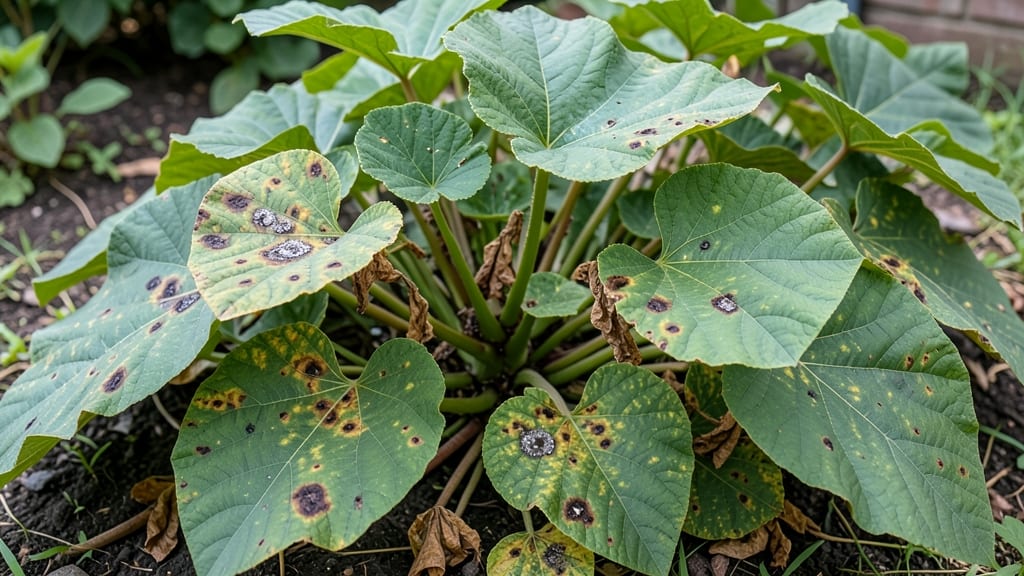
Most fungal infections start with tiny specks—yellow, brown, or white—that grow into larger lesions. Humidity and poor airflow are the perfect storm for these diseases, so I’ll show you how to spot the early warning signs and what each disease looks like up close.
Think of this as your field guide to keeping those sweet potato leaves healthy and productive.
Once you recognize the patterns, treatment becomes straightforward: prune infected leaves, improve airflow, and use organic sprays like neem oil or copper fungicide. Prevention is easier than cleanup—regular inspections and proper spacing save you from heartbreak later in the season.
We’ll cover the 10 most common fungal blights, with clear descriptions of symptoms, causes, and step-by-step fixes. No more guessing whether those spots are harmless or a full-blown crisis. Let’s get those leaves back to their vibrant best.
Root Causes of Leaf Troubles
Sweet potato leaves don’t just wilt or spot out of nowhere—there’s usually a clear chain of events leading to their decline. Understanding these triggers helps you act fast and stop diseases before they spread. Here’s why your leafy greens might be under siege:
Fungal diseases are the #1 culprit behind sweet potato leaf discoloration, spots, and decay. These microscopic invaders thrive in warm, humid conditions and exploit weak spots in your plants. Here’s how they break through:
- Spore Germination: Fungal spores (like those from Alternaria, Cercospora, or Phytophthora) land on leaves via wind, water, or tools.
Once moisture lingers (think rain, overhead watering, or high humidity), they germinate—sending out tiny tubes to penetrate leaf tissue. - Example: Cercospora leaf spot thrives when leaves stay wet for 12+ hours. That’s why morning dew or poor drainage turns into a fungal buffet.
- Weakened Plant Defense: Stressed plants (from drought, nutrient deficiency, or physical damage) have thinner cell walls, making them easier targets. Fungi release enzymes to break down plant cells, creating the telltale spots or lesions you see in pictures.
- Rapid Spread: Fungi reproduce exponentially under ideal conditions. A single infected leaf can release thousands of spores in days, turning a single plant into an outbreak.
💡 Pro Tip: Fungal spores can overwinter in soil or plant debris. Always rotate crops and remove infected leaves to starve them out!
Water isn’t just a necessity—it’s a double-edged sword for sweet potato leaves. Both overwatering and underwatering create the perfect storm for disease:
- Excess Moisture = Fungal Paradise: - Poor Drainage: Waterlogged soil cuts off oxygen roots need, causing root rot (Phytophthora).
The fungus then spreads upward, clogging leaf veins and causing yellowing or brown patches. - Overhead Watering: Wet leaves for long periods create a film of water, trapping spores and bacteria.
This is how Alternaria (a common sweet potato blight) gets its foothold. - Fix: Water at the base of plants in the morning, and ensure raised beds or containers have drainage holes.
- Drought Stress = Open Invitation: - When soil dries out, leaves wilts and develop thin, brittle edges.
These damaged cells are easy entry points for fungi like Fusarium. - Sign: Look for crispy leaf edges paired with dark, water-soaked spots—this combo often means drought + fungal infection.
✨ Key Insight: Sweet potatoes prefer consistent moisture but hate soggy roots. Aim for 1–1.5 inches of water per week, adjusting for rain.
A sick plant is a magnet for diseases. When sweet potatoes lack proper care, their leaves become low-hanging fruit for pathogens. Here’s how neglect sets the stage:
- Nutrient Deficiencies: - Low Potassium (K): Weakens cell walls, making leaves susceptible to blight.
You’ll see yellowing edges (early warning) before spots appear. - Low Nitrogen (N): Pale, stunted leaves can’t photosynthesize efficiently, reducing energy to fight off infections. - Fix: Test soil and amend with compost or a balanced fertilizer (like 10-10-10) before planting.
- Physical Damage: - Hail, pests (like sweet potato weevils), or rough handling create open wounds.
Fungi like Colletotrichum (which causes anthracnose) exploit these gaps to infect vascular tissue. - Prevent: Use row covers in storm-prone areas and inspect leaves regularly for chewed edges or holes.
- Crowded Plants:
- Poor airflow traps humidity near leaves, creating a fungal greenhouse effect. Diseases like Pythium (which causes damping-off) thrive in these conditions.
- Solution: Space plants 12–18 inches apart and prune lower leaves to improve circulation.
Some factors are beyond your control, but knowing them helps you mitigate risk:
| Factor | How It Causes Disease | Your Defense |
|---|---|---|
| High Humidity | Spores germinate faster in 70%+ humidity. | Use fungicides (like copper spray) in rainy seasons. |
| Temperature Swings | Sudden heat/cold shocks plants, lowering immunity. | Mulch to regulate soil temp; avoid planting in frost-prone areas. |
| Contaminated Soil | Old fungal spores in soil infect new plants. | Solarize soil or use biofumigation (mustard seed cover crops). |
| Windborne Spores | Fungal spores travel miles on wind currents. | Plant barrier crops (like basil) to disrupt spore paths. |
Some pests don’t just damage leaves—they carry diseases or create wounds that invite infections. Watch for:
- Sweet Potato Weevils: Their larvae bore into stems, weakening the plant and leaving entry points for Fusarium wilt.
- Aphids: These sap-suckers excrete honeydew, a sticky film that promotes sooty mold (a secondary fungal growth).
- Whiteflies: Their feeding stresses leaves, making them vulnerable to Alternaria infections.
🔥 Quick Action: Spray neem oil or introduce ladybugs to control pests before they become a disease gateway.
Quick Fixes for Fungal Foes
Sweet potato leaves may look like a lush green canvas, but fungal diseases can turn them into a sad, spotted mess. 🍂 The good news? Most issues have simple, effective fixes—if you catch them early.
Below, we’ve mapped the most common causes to practical solutions, so you can restore your plants to their vibrant best.
Cause: Alternaria, Cercospora, or Phytophthora infections (often from wet leaves or poor airflow). How to Fix It:
🍳 Step 1: Prune Infected Leaves
- Snip and toss leaves with dark spots or rings immediately. Use sterilized pruners (wipe with rubbing alcohol) to avoid spreading spores.
- Do not compost infected foliage—bag it and throw it away.
👨🍳 Step 2: Apply Fungicide
- Baking soda spray (1 tsp baking soda + 1 quart water + a drop of dish soap) works for mild cases.
Spray early morning or evening to avoid leaf burn. - For stubborn infections, use a copper-based fungicide (like Cupric Hydroxide) or a neem oil solution (1 tbsp neem oil + 1 tsp mild soap per quart of water).
🌡️ Step 3: Boost Airflow & Dryness
- Space plants 12–18 inches apart to improve airflow.
- Water at the base (not overhead) and avoid evening watering to let leaves dry quickly.
Cause: Erysiphe or Oidium fungi thrive in humid, shaded conditions. How to Fix It:
🔪 Step 1: Scrub Off Mild Cases
- Gently wipe leaves with a soft cloth dampened in soapy water (1 tsp mild soap per gallon of water).
- Avoid harsh scrubbing—this can damage tender leaves.
⏰ Step 2: Increase Sun & Air
- Move plants to a sunnier spot (at least 6–8 hours of direct light daily).
- Use a fan on low setting near plants to reduce humidity around leaves.
✨ Step 3: Prevent Recurrence
- Apply sulfur spray (1–2 tbsp per gallon of water) every 7–10 days if mildew persists.
- Space plants wider and prune lower leaves to improve airflow.
Cause: Fusarium or Pythium root rot, often from overwatering or compacted soil. How to Fix It:
💡 Step 1: Check the Roots
- Gently dig around the base to inspect for black, mushy roots. If severe, the plant may need replacement.
- Repot in fresh, well-draining soil (mix in perlite or sand).
🌱 Step 2: Adjust Watering Habits
- Water deeply but infrequently—let the top 1–2 inches of soil dry out between waterings.
- Ensure pots have drainage holes and elevate containers to prevent soggy roots.
🎯 Step 3: Strengthen the Plant
- Fertilize lightly with a balanced, low-nitrogen fertilizer (like 5-5-5) to support recovery.
- Avoid wetting leaves when watering to prevent further spread.
- Rotate crops—don’t plant sweet potatoes in the same spot year after year.
- Solarize soil (cover with clear plastic for 4–6 weeks in summer) to kill fungal spores before replanting.
- Use mulch (straw or wood chips) to prevent soil splashing onto leaves.
- Monitor humidity—aim for 40–60% and use a dehumidifier in greenhouses if needed.
Pro Tip: 💡 Early action is key! The moment you spot discoloration, isolate the plant and treat it. Most fungal diseases spread faster than you think—don’t wait until half your leaves are affected. With these fixes, your sweet potato plants will bounce back stronger than ever!
Frequently asked questions about sweet potato leaf diseases
How can I tell if my sweet potato leaves have a fungal disease just by looking?
Check for these key visual clues: dark brown or black spots with halos, powdery white coatings (like dust), or yellowing between veins. Fungal spots often have ragged edges and may appear on both leaf surfaces, while bacterial infections usually have water-soaked centers that turn yellow. Compare your leaves to the disease pictures in our guide.
Can I still harvest sweet potatoes if the leaves have diseases?
Yes, but only if the tuber itself is healthy. Focus on harvesting when the leaves start yellowing naturally (not from disease) and the vines die back. Diseased leaves won’t affect the tubers below ground, but avoid eating leaves with severe fungal growth. Always wash harvested sweet potatoes thoroughly before storage.
What’s the fastest way to stop powdery mildew from spreading?
Act immediately by pruning infected leaves and spraying with a 1:1 milk-water mix (1 part milk to 9 parts water). For stubborn cases, use neem oil (1 tbsp per quart of water) every 5–7 days. Improve airflow by spacing plants wider and moving them to sunnier spots—powdery mildew hates direct sunlight.
Are there any organic fungicides that work better than baking soda?
Copper fungicide (like Bordeaux mixture) is highly effective against Alternaria and Phytophthora. For milder cases, garlic spray (blend 2 cloves of garlic + 1 quart water, strain, and add 1 tsp soap) works well. Always rotate treatments to prevent resistance—never use the same fungicide more than 3 times in a row.
Why do some sweet potato varieties get diseases more often than others?
Genetics play a huge role! Heirloom varieties often lack disease resistance compared to modern hybrids like Beauregard or Georgia Jet. Disease-prone types may have thinner leaves or weaker natural defenses. Always choose certified disease-resistant seeds or slips when possible, and avoid planting susceptible varieties in humid climates.