
Landscaping
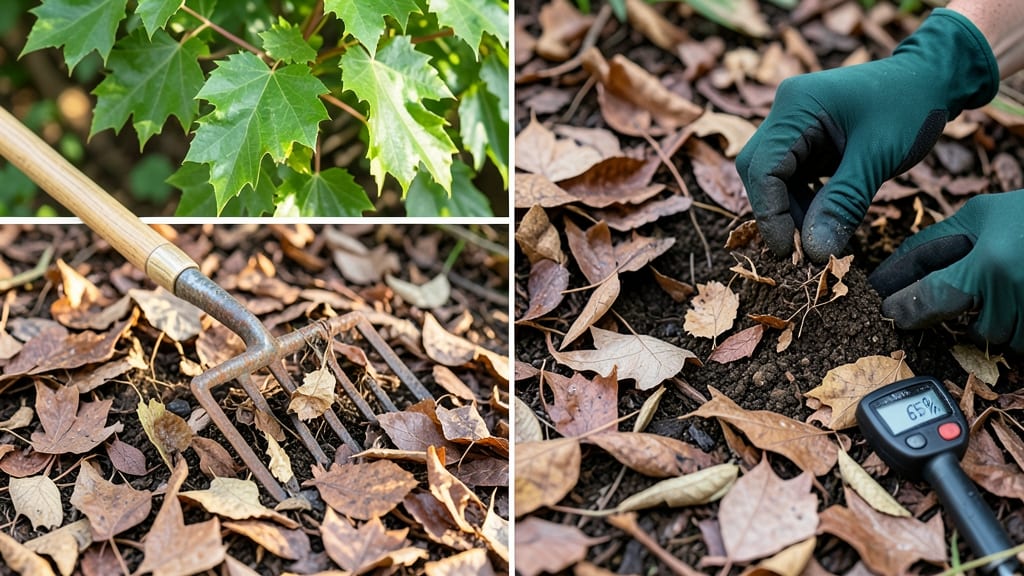
Leaf mulch looks like dark brown to black, decomposed leaves that resemble coarse, crumbly soil with a slightly spongy texture and earthy aroma. It breaks down into nutrient-rich humus over time, often retaining a leafy structure in early stages.
When you first see leaf mulch, it might remind you of damp, aged autumn leaves that have been broken down into tiny fragments.
The texture is surprisingly soft yet sturdy, almost like a mix between soil and shredded paper. 🌿 Unlike fresh leaves, it won't crumble into powder when you squeeze it—it holds its shape while still feeling light and airy.
This unique balance makes it perfect for improving soil structure and moisture retention in gardens.
One key detail to notice is how the color shifts as it decomposes. Freshly shredded leaves start green or brown, but quality leaf mulch takes on deeper hues—almost like rich coffee grounds mixed with dark earth.
The earthy aroma becomes stronger as it ages, signaling it's ready to enrich your soil. I always check for this rich, slightly sweet smell before using it in my garden beds.
💡 In This Article
- Leaf Mulch Appearance: Stages of Decomposition
- How to Identify Quality Leaf Mulch for Gardening
Leaf mulch appearance: stages of decomposition
Leaf mulch undergoes dramatic transformations as it decomposes, starting with freshly shredded leaves that look like dark green or brown confetti. At this stage, the texture is still somewhat fibrous and leafy, with visible veins and edges.
As decomposition begins, the leaves soften and lose their crispness, becoming more pliable and easier to break down. This early stage mulch might still feel slightly springy when compressed, similar to damp cardboard.
The magic happens when the leaves reach the 2-4 month decomposition stage, where they transform into that signature dark brown to black appearance. At this point, the mulch resembles coarse, crumbly soil with a slightly spongy texture—almost like a mix between wet sand and finely shredded paper.
The particles are typically 1/4 to 1/2 inch in size, with a noticeable earthy aroma that becomes stronger as decomposition progresses. This stage is ideal for garden use as it retains moisture while still allowing air circulation.
What most people don't realize is how the moisture retention changes at each stage. Fresh mulch holds water like a sponge, but as it decomposes, it develops tiny air pockets that improve drainage while still maintaining moisture.
The fully decomposed mulch (6+ months) becomes almost indistinguishable from topsoil, with a velvety texture that crumbles easily between fingers. This final stage is rich in nutrients and perfect for seed beds, though it loses some of its recognizable leaf structure.
The color transformation is one of the most noticeable clues about decomposition level. Fresh mulch appears greenish-brown, while partially decomposed mulch takes on a chocolate-brown hue. Fully decomposed mulch turns nearly black, resembling rich compost.
This color shift happens because the chlorophyll breaks down and the carbon content increases, creating that deep, earthy pigment. 🌱 The aroma also evolves from fresh-cut grass to a sweet, earthy scent that signals readiness for garden use.
One key visual difference between quality leaf mulch and other mulches is its lack of uniformity. Unlike wood chips or straw, leaf mulch maintains a natural irregularity in particle size and shape. This variation actually helps create a more diverse soil structure when tilled in.
The best quality mulch will have a mix of fine particles and slightly larger chunks, creating a balanced texture that improves both aeration and water retention in garden beds.
When testing decomposition at home, perform the "squeeze test": press a handful of mulch—if it holds its shape but crumbles easily, it's ready. If it feels powdery, it's over-decomposed; if it's still leafy, it needs more time.
This simple test helps gardeners determine the perfect stage for their specific needs, whether they're looking for quick moisture retention or long-term soil enrichment. ✨