
Fertilization
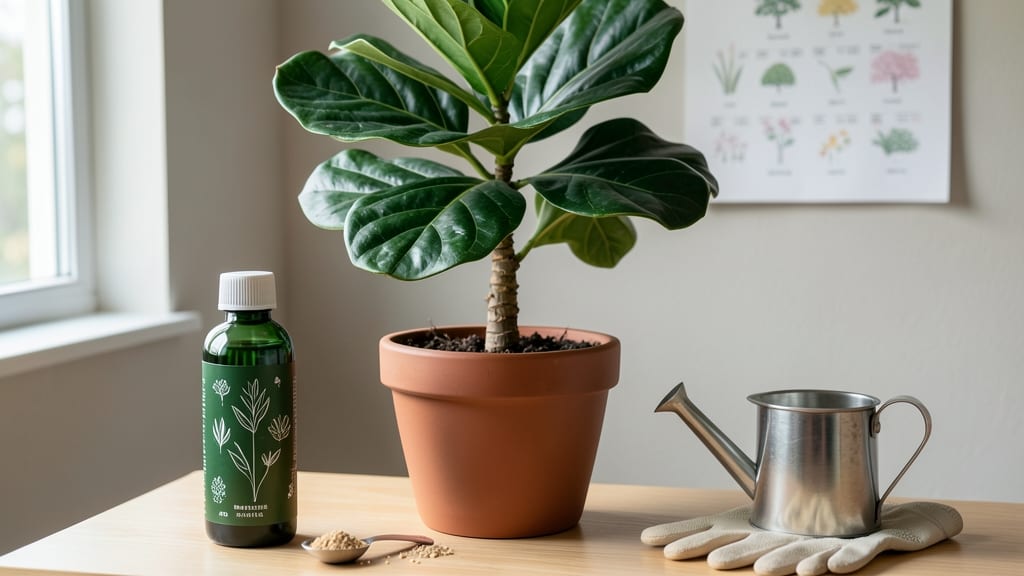
Fertilizing your fiddle leaf fig at the right time 🌿 can transform it from a struggling underachiever into a thriving showstopper.
Struggling to keep your fiddle leaf fig thriving? Timing your fertilization correctly can mean the difference between lush, vibrant leaves and a struggling plant that never quite recovers.
Most gardeners make the mistake of feeding their fiddle leaf fig year-round, but this tropical beauty actually has a clear growth cycle—spring and summer are when it craves nutrients, while fall and winter are all about rest.
In this guide, I’ll walk you through the seasonal schedule that keeps your fiddle leaf fig happy, from the first feed in early spring to the final boost before winter dormancy.
Optimal fiddle leaf fig fertilizing schedule by season
Fiddle leaf figs thrive when you match their fertilizing schedule to their natural growth cycles. Unlike outdoor plants tied to seasons, indoor fiddle leaf figs follow a year-round rhythm influenced by light exposure and temperature.
The key is understanding when your plant is actively growing versus resting—this makes all the difference in achieving those glossy, deep-green leaves everyone admires.
Most gardeners make two critical mistakes: either fertilizing too early in spring before growth resumes or continuing through winter when the plant is dormant. Your fiddle leaf fig’s nutrient needs shift dramatically between seasons, so let’s break down the perfect timing for each phase.
Whether you’re in a warm climate where indoor conditions stay consistent or a cooler zone where your plant might experience subtle seasonal shifts, these guidelines will keep your fiddle leaf fig healthy and vibrant year-round.
🌿 Seasonal Fertilizing Guide for Fiddle Leaf Figs
| Season | Growth Phase | Fertilizing Frequency | Fertilizer Type | Key Notes |
|---|---|---|---|---|
| Spring (March-May) | Active Growth | Every 4 weeks | Balanced liquid (10-10-10) | Start after new growth appears; use half-strength |
| Summer (June-August) | Maintenance Growth | Every 6-8 weeks | Slow-release granular | Reduce frequency to avoid salt buildup; water thoroughly after applying |
| Fall (September-October) | Pre-Dormancy | Every 8-10 weeks | Light organic (fish emulsion) | Stop by late October; focus on root health |
| Winter (November-February) | Dormancy | None | N/A | No fertilization; monitor for pests instead |
Spring is when your fiddle leaf fig wakes up from its winter rest. By March, you’ll notice new growth emerging from the top or along the stems. This is your cue to resume fertilizing—but only after you’ve repotted if needed (fresh soil means fewer immediate nutrients).
Use a balanced liquid fertilizer at half-strength to avoid shocking the roots. Think of it as giving your plant a gentle growth boost after months of dormancy.
In summer months, your fiddle leaf fig enters maintenance mode. The heat can stress plants, so shift to a slow-release granular fertilizer applied every 6-8 weeks. This approach prevents nutrient burn while keeping roots fed consistently.
Water thoroughly after applying to help distribute the granules evenly. If you notice brown leaf tips, it’s a sign you’re overdoing it—cut back immediately and flush the soil with water to remove excess salts.
As autumn arrives, your fiddle leaf fig begins preparing for dormancy. By September and October, reduce fertilization to every 8-10 weeks and switch to a light organic option like fish emulsion. This helps the plant store nutrients for winter without overstimulating new growth.
Stop fertilizing entirely by late October, as the plant’s metabolism slows down. Instead, focus on keeping the soil slightly moist and the environment consistently cool.
Winter is the most critical time to stop fertilizing entirely. Your fiddle leaf fig is in a natural state of dormancy, and feeding it during this period can lead to root damage or even death.
Instead, use this time to inspect your plant for pests like spider mites or mealybugs, which thrive in dry winter air. Increase humidity around your plant with a pebble tray or humidifier to mimic its tropical origins.
One question I hear often is whether indoor vs. outdoor conditions affect this schedule. The short answer? Not significantly for fiddle leaf figs, since they’re indoor plants.
However, if your home has large windows that let in intense sunlight during summer, your plant may experience a mini growth surge—in this case, you can fertilize lightly every 6 weeks instead of 8.
Conversely, if your home stays cool year-round (like in northern climates), your fiddle leaf fig might not fully dormant, so you can extend the fall feeding window by a month.
Pro tip: Keep a simple garden journal to track your fiddle leaf fig’s response to fertilization. Note when you apply fertilizer, what type you use, and any changes in leaf color or growth.
Over time, you’ll learn your specific plant’s preferences—some thrive on a stricter schedule, while others need more frequent feeding. This personalized approach ensures your fiddle leaf fig stays lush and healthy for years to come.
Remember, the goal isn’t to fertilize as often as possible—it’s to support your plant’s natural cycles. When done right, your fiddle leaf fig will reward you with bold, healthy leaves and minimal stress. Happy growing! 🌱
Signs your fiddle leaf fig needs fertilizer (and when to hold off)
Your fiddle leaf fig 🌿 might be silently screaming for nutrients—or begging you to stop! Yellowing leaves, stunted growth, and brown leaf edges are classic signs your plant needs feeding. But how do you know if it's nutrient deficiency or over-fertilization causing the problem?
The key lies in understanding your plant's seasonal needs and what its leaves are trying to tell you.
First, observe your fiddle leaf fig's growth patterns. Healthy plants grow 2-4 new leaves per month during spring and summer. If growth slows dramatically or stops entirely, it's often a sign of nutrient exhaustion.
Even worse, purple or brown leaf tips can indicate fertilizer burn from overdoing it. The challenge? Both under- and over-fertilizing cause leaf issues—but the solutions couldn't be more different.
⚠️ When to Fertilize Fiddle Leaf Figs (And When to Pause)
Feed during: Spring (March-May) and early fall (September-October) when your plant is actively growing. Skip fertilization in winter (November-February) when growth slows dramatically. Never fertilize when your plant is stressed (e.g., after repotting or moving locations).
Warning signs of over-fertilizing: Crispy brown edges, leaf drop, or white crust on soil surface. Flush soil immediately with water if you see these symptoms.
Let's start with the clearest signs your fiddle leaf fig needs fertilizer. Yellow leaves with green veins are a classic iron or nitrogen deficiency. These nutrients are essential for leaf production, and if your plant isn't getting enough, it'll start dropping older leaves to conserve energy.
Another red flag? Smaller-than-average leaves that appear pale or dull—this often means your plant is starving for micronutrients like magnesium or zinc.
But here's where it gets tricky: Slow growth can also mean your plant is root-bound or underwatered. To rule out fertilization needs, check the soil moisture first. Stick your finger 1-2 inches deep—if the soil is dry, water thoroughly before fertilizing.
If the soil is moist but growth remains sluggish, it's time to feed. Pro tip: Use a balanced liquid fertilizer (like 10-10-10) at half-strength to avoid shocking your plant.
On the flip side, over-fertilizing is just as damaging. Burnt leaf edges, leaf drop, or white salt deposits on the soil surface are unmistakable signs you've gone too far. If you notice these, stop fertilizing immediately and flush the soil with water to remove excess salts.
For severe cases, repot your plant in fresh, nutrient-free soil to give it a clean start. Remember, fiddle leaf figs are sensitive to salt buildup, so always follow the "less is more" rule.
Create a simple seasonal fertilization checklist to keep your fiddle leaf fig happy year-round. In spring (March-May), feed every 4-6 weeks to encourage new growth. During summer (June-August), reduce to every 6-8 weeks unless you notice deficiencies.
In fall (September-October), give one last light feeding to prepare for dormancy. And in winter (November-February), let your plant rest—no fertilizer needed! 🌿