
Pruning
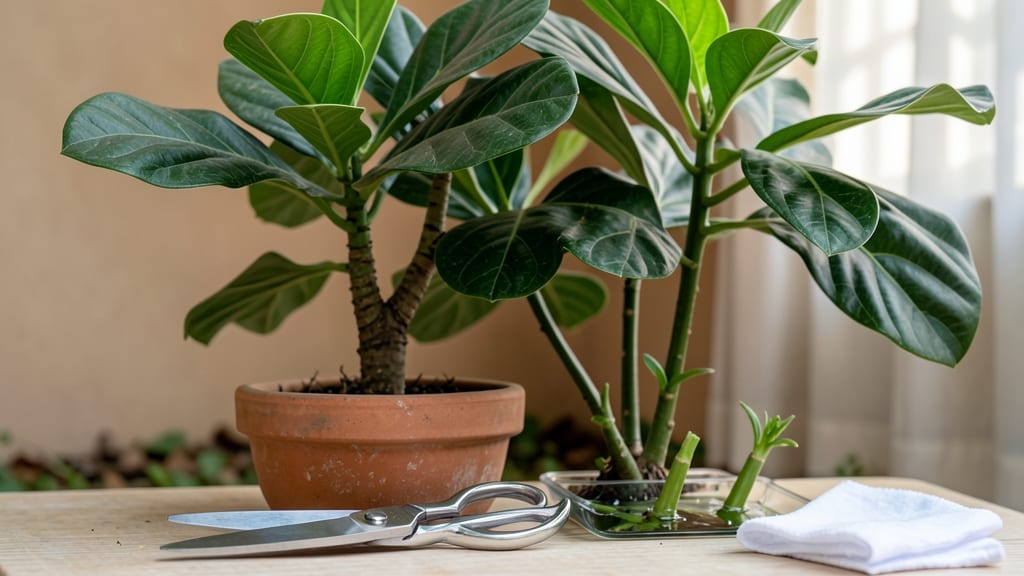
Pruning your fiddle leaf fig plant doesn’t have to be intimidating—just three strategic cuts can turn those sad, leggy stems into a bushier, healthier plant. 🌿 I’ve revived multiple fiddle leaf figs with this method, and the difference is shocking: within weeks, you’ll see fresh growth where there were bare branches before.
Timing is everything—prune in spring or early summer when the plant is actively growing, not during winter dormancy. You’ll need sharp pruning shears (clean them with rubbing alcohol first!), a small pot for cuttings if you want to propagate, and a spray bottle for post-pruning misting.
The key is cutting just above a leaf node (where leaves grow) at a slight angle—this encourages new branches to sprout from that spot.
After pruning, give your plant a light mist to reduce stress, and move it to a spot with bright, indirect light (no harsh sun for a few days). You’ll notice new growth within 2-4 weeks, and those bare stems will fill in with lush foliage.
The best part? You can root the cuttings to grow new plants—free fiddle leaf figs for your friends!
Here’s the secret: fiddle leaf figs are tougher than they look. As long as you avoid over-pruning (never cut more than 1/3 of the plant at once) and keep the soil slightly moist, your plant will bounce back stronger.
Think of pruning as a reset button—done right, it’s the easiest way to revive a struggling fiddle leaf fig.
📚 In This Guide
- What you need
- Instructions
- Tips and common mistakes
- Wrapping up and next steps
What you need
- ● Sharp pruning shears – Bypass pruners (not anvil-type) to avoid crushing stems. Size: 5-7 inches, with a fine-toothed grip for precision.
- ● Rubbing alcohol (70% or higher) – 1 small bottle (4 oz) to sterilize tools before and after pruning.
- ○ Horticultural sealant (optional but helpful) – 1 small bottle (e.g., Tree Seal Tape) to coat cut stems if propagating.
- ● Disposable gloves – 1 pair (nitrile or latex) to protect hands from sap and bacteria.
- ● Newspaper or drop cloth – 1 large sheet to catch debris and protect surfaces.
- ● Small container with water – 1 shallow tray (for propagating cuttings).
- ● Rooting hormone – 1 small packet (e.g., Clonex) to boost cutting success if propagating.
- ● Spray bottle with water – 1 small bottle to mist leaves post-pruning (reduces stress).
- ● Plant food (balanced fertilizer) – 1 dose (e.g., 20-20-20) to nourish the plant after pruning.
- ● Notebook & pen – 1 each to track pruning dates and plant responses.
Step-by-step instructions for pruning a fiddle leaf fig plant
Here's how I bring my fiddle leaf figs back to life with just three strategic cuts—no fancy tools or guesswork.
✂️ Step 1: Identify Leaves to Prune
Start by scanning your plant from top to bottom. Look for leaves that are yellowing, brown at the edges, or completely dried out—these are your targets. I also remove any leaves growing too close together, as they compete for energy and weaken the plant. Healthy leaves should be deep green, firm, and spaced about 4-6 inches apart along the stem.
Don’t prune more than one-third of the plant at once, even if it looks overgrown. Fiddle leaf figs are sensitive to drastic changes. If you’re unsure, snap a photo first and compare it to healthy reference images online. Real talk: I’ve over-pruned before, and the plant took months to recover.
✂️ Step 2: Sterilize Tools and Make Clean Cuts
Before you cut, wipe your pruners or sharp scissors with rubbing alcohol to kill any bacteria or fungi lurking on the blades. Dirty tools can introduce infections that cause more damage than the leaves you’re removing. I like to use a clean, sharp pair of bypass pruners—they make cleaner cuts than dull tools, which tear the stem and slow healing.
Cut just above a leaf node (the bump where leaves and stems meet) at a 45-degree angle. This angle helps water run off instead of pooling on the cut, which prevents rot. Avoid cutting too close to the node—leave about ¼ inch of stem to allow new growth to sprout. If you’re pruning a long, leggy stem, you can cut it back to just above a lower leaf node to encourage bushier growth.
✂️ Step 3: Prune for Shape and Health
Step back and assess the plant’s shape. If it’s leaning or growing unevenly, prune the longer stems first to encourage a more balanced form. I often trim the topmost leaves to reduce legginess—this signals the plant to focus energy on filling out rather than reaching for light. For a fuller look, you can also snip off the tips of branches to prompt branching at the nodes below.
Watch for suckers—those small shoots growing from the base or along the stem. While they might seem harmless, they drain energy from your main plant. Remove them completely at the base with a clean cut. After pruning, wipe down the stems with a damp cloth to remove any sap or debris, which helps prevent fungal issues.
💧 Step 4: Care for Your Fig After Pruning
Pruning stresses the plant, so hold off on watering for 3-5 days to let the cuts heal. Fiddle leaf figs are drought-tolerant, and overwatering after pruning can lead to root rot. Once you resume watering, soak the soil thoroughly until water drains from the bottom of the pot, then let it dry out 1-2 inches deep before watering again.
Place your pruned fiddle leaf fig in bright, indirect light for the next week—avoid direct sunlight, which can scorch fresh cuts. You’ll notice new growth within 4-6 weeks, starting from the leaf nodes where you made your cuts. If your plant still looks sad after pruning, check its light conditions—low light is the #1 reason fiddle leaf figs struggle.
⏰ Step 5: Repurpose Pruned Leaves (Optional)
Don’t toss those pruned leaves! You can propagate new plants from healthy cuttings. Place the cuttings in a jar of water, ensuring the nodes are submerged but the leaves stay dry. Change the water every 3-5 days and wait for roots to grow—usually in 4-8 weeks. Once roots are 2-3 inches long, plant them in fresh potting mix and care for them like a mature fiddle leaf fig.
If you’re not into propagation, compost the leaves instead. They’ll break down quickly and add nutrients to your garden. Just avoid composting any leaves that show signs of disease or pests. Here’s the thing—every cut you make is a chance to revive and multiply your plant. That’s the magic of pruning!
Tips & tricks for perfect fiddle leaf fig pruning
Simple pruning can transform a struggling fiddle leaf fig into a thriving showstopper—here’s how to avoid the most common mistakes.
Timing is Everything: The best time to prune is during spring or early summer when your plant is actively growing. This gives it the energy to recover quickly and produce new growth. Avoid pruning in fall or winter when the plant is resting—those cuts won’t heal as well, and you might end up with more stress than revival. I’ve learned this the hard way after seeing plants struggle to bounce back during colder months.
Tool Selection Matters: While bypass pruners are ideal, you can use clean, sharp scissors in a pinch. Just make sure they’re sterilized with rubbing alcohol first—dirty tools can introduce bacteria that cause infections. For larger stems, a small pruning saw works well, but avoid tearing the bark, which can damage the plant. I keep a small bottle of rubbing alcohol near my plant care station for quick sterilization between cuts.
Visual Cues for Healthy Cuts: When making your 45-degree angle cut just above a leaf node, look for the stem to have a slight sheen—this indicates healthy tissue. If the stem looks dry or cracked, it’s better to skip that cut and focus on healthier areas. Also, check that the cut exposes a tiny bit of green tissue inside the stem; this is where new growth will emerge. This small detail makes a huge difference in recovery time!
Post-Pruning Light Strategy: After pruning, place your plant in bright, indirect light for at least a week—this helps the cuts heal without risking sunburn. I’ve noticed that plants in east-facing windows recover fastest because they get gentle morning light without harsh afternoon sun. If your space only has direct light options, use a sheer curtain to diffuse the intensity during the first week.
Pro Tips for Prune Fiddle Leaf Fig Plant
- Simple pruning can transform a struggling fiddle leaf fig into a thriving showstopper—here’s how to avoid the most common mistakes.
- Timing is Everything: The best time to prune is during spring or early summer when your plant is actively growing.
- Tool Selection Matters: While bypass pruners are ideal, you can use clean, sharp scissors in a pinch.
Frequently asked questions
When is the best time to prune a fiddle leaf fig?
Prune your fiddle leaf fig anytime it needs it, but the best times are during its active growing season (spring or early summer). Avoid heavy pruning in winter, as growth slows down, and the plant may struggle to recover. Light trimming to remove dead or yellow leaves can happen year-round!
What if I cut too much off my fiddle leaf fig?
Don’t panic! While it’s best to avoid drastic cuts (never remove more than 1/3 of the plant at once), your fiddle leaf fig is resilient. Focus on healthy stems and leaves, and it’ll bounce back with new growth. Just keep an eye on its watering needs—pruned plants may need slightly more hydration while recovering.
Can I propagate my fiddle leaf fig from the cuttings?
The cuttings you remove during pruning can root easily in water or soil. Place them in a jar of water (change weekly) or moist potting mix, and keep them in bright, indirect light. Roots should appear in 2–4 weeks. Just avoid overwatering—your new plantlings will thank you!
Why are my fiddle leaf fig leaves turning yellow after pruning?
Yellow leaves after pruning are usually normal—your plant is shedding old or damaged foliage to focus energy on new growth. However, if all leaves yellow or drop suddenly, check for overwatering, pests, or stress from poor light. Adjust care and monitor for improvement in 2–4 weeks.
What should I do with the pruned leaves?
Don’t toss them! Dry the leaves for compost (they break down slowly) or use them as mulch. You can also repurpose them into natural plant markers, dried arrangements, or even tea (steep in hot water for a mild caffeine boost—just don’t overdo it!). Just avoid composting diseased leaves.
Wrapping up and next steps
Pruning your fiddle leaf fig doesn’t have to be intimidating—it’s all about reviving your plant with confidence! Remember, the key is patience, clean cuts, and timing, whether you’re trimming leggy growth or rejuvenating drooping branches.
With just a few strategic snips, you’ll encourage lush new growth and keep your fig thriving for years.
Now that you’re armed with the know-how, grab those shears and give your plant some love! 🌿 Ready for the next step? Check out our guide on caring for your pruned fiddle leaf fig to keep it happy and healthy.