
Pests and Diseases
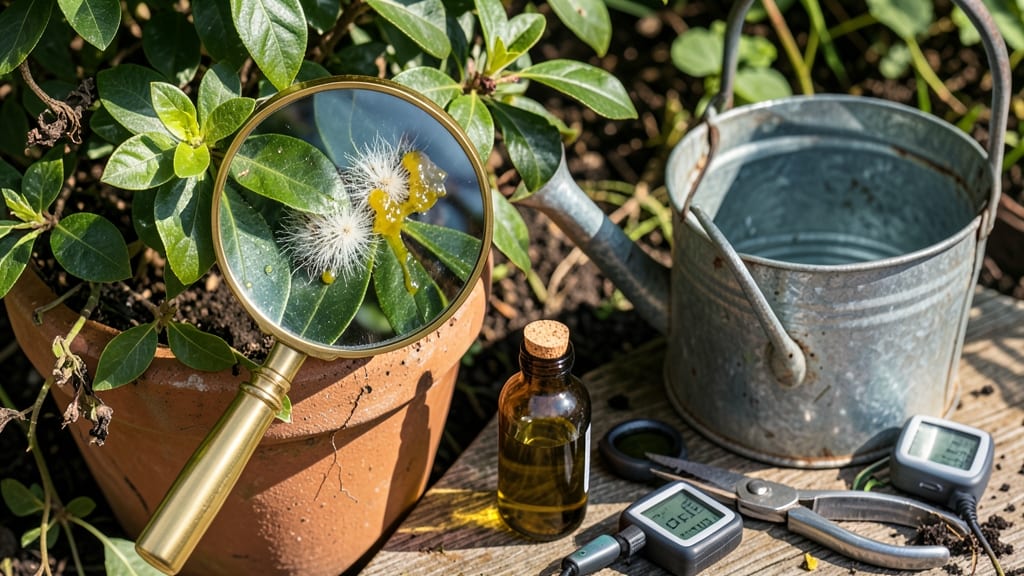
Jasmine leaf disease turns your fragrant climber into a sad, spotty mess—unless you catch it early. 🌿 I’ve battled powdery mildew, bacterial spots, and fungal infections on my star jasmine, and the key is acting fast before the leaves yellow or drop.
These organic fixes work without harsh chemicals, saving your plant’s delicate blooms and glossy foliage.
Most jasmine leaf diseases start with too much moisture—whether from overhead watering, poor airflow, or humid summers. You’ll spot white powdery patches, dark brown spots with yellow halos, or blackened edges on leaves.
The moment you see these signs, prune infected leaves and isolate the plant to stop the spread. A simple neem oil spray (1 tablespoon per quart of water) tackles fungi and bacteria while being safe for bees.
Prevention is easier than cure: water at the base in the morning, space plants for airflow, and mulch to keep roots dry. My jasmine now thrives with weekly copper fungicide sprays in humid months—no more wilting vines or lost blooms.
The payoff? A fragrant, disease-free climber that keeps flowering all season.
Even if your jasmine looks hopeless now, cut back the worst damage, treat aggressively for 2 weeks, and watch it bounce back. The same methods work for gardenia, camellia, and other tropical favorites. Let’s get your jasmine back to its glory!
Root Causes Of Leaf Damage
When your jasmine’s leaves start looking sad—spotted, curled, or suddenly yellow—it’s usually a sign that something’s gone wrong beneath the surface. Understanding why these issues pop up is the first step to fixing them.
Below, we break down the most common culprits behind leaf disease in jasmine plants, backed by science and actionable insights.
Fungi like Alternaria, Septoria, or Botrytis thrive in damp, warm conditions and are the #1 reason for jasmine leaf disease. These pathogens latch onto weak spots—often from overwatering, poor airflow, or stress—and start spreading like wildfire.
How it happens:
- Excess moisture: Fungi love humidity, especially when leaves stay wet for more than 6 hours (e.g., from overhead watering or poor drainage).
- Poor air circulation: Dense foliage or crowded plants trap moisture, creating the perfect fungal buffet.
- Stress signals: Weakened plants (from nutrient deficiencies or transplant shock) are easier targets.
💡 Pro Tip: Check the underside of leaves for fuzzy mold or dark spots—this is your first clue. Early action (like neem oil sprays) can stop outbreaks before they spread.
Pests like spider mites, aphids, and whiteflies don’t just suck sap—they injure leaves as they feed, leaving behind a trail of discoloration, stippling, or even holes. Their saliva can also trigger secondary infections.
How it happens:
- Spider mites: These microscopic pests thrive in dry, dusty conditions and create fine webbing on leaves, leading to yellowing and premature leaf drop.
- Aphids: Clusters of these sap-suckers excrete sticky honeydew, which attracts sooty mold—a black fungal growth that blocks sunlight.
- Whiteflies: Their feeding weakens leaves, making them susceptible to viral infections.
🔍 Spot the Signs: Look for tiny moving dots on leaf undersides, webbing, or a shiny residue (honeydew). A strong spray of water can knock them off temporarily, but long-term control requires organic pesticides like insecticidal soap.
Jasmine plants are sensitive to water stress—whether from overwatering (root rot) or underwatering (drought stress). Both scenarios weaken the plant, making it vulnerable to diseases.
How it happens:
| Overwatering | Underwatering |
|---|---|
|
|
💡 Fix It Fast: For overwatering, improve drainage by adding perlite to soil and repotting if roots are mushy. For underwatering, water deeply but only when the top 1–2 inches of soil are dry.
Jasmine plants love sunlight, but too much direct sun (especially in hot climates) can scorch leaves, making them prone to fungal infections. Even sudden temperature swings (like cold drafts) can shock the plant.
How it happens:
- Sunburn: Leaves exposed to harsh afternoon sun develop bleached or crispy patches, especially on the upper surface.
- Cold stress: Temperatures below 50°F (10°C) can cause leaf discoloration or blackened edges.
- Windburn: Constant wind dries out leaves, creating small, dead patches.
🌿 Shield Your Plant: Provide afternoon shade in hot climates and use frost cloths in winter. Mulching helps regulate soil temperature.
Jasmine plants need a balanced diet of nitrogen, phosphorus, and potassium. When one nutrient is missing, leaves send distress signals like yellowing, spotting, or poor growth—often mistaken for disease.
How it happens:
Nitrogen (N) Deficiency
Iron (Fe) Deficiency
Magnesium (Mg) Deficiency
💡 Boost Nutrients: Test your soil and amend with compost, worm castings, or chelated iron. For quick fixes, use a balanced organic fertilizer (like fish emulsion) every 4–6 weeks.
Fixing Fungal and Bacterial Leaf Issues
When your jasmine’s leaves start looking sad—spotted, yellowed, or wilted—it’s time to act fast. The good news? Most leaf diseases respond well to early, targeted care, especially when you use organic methods.
Below, we’ll break down practical fixes for the most common causes, from fungal infections to bacterial blights, plus prevention tips to keep your plants thriving.
Fungi love damp, humid conditions, and jasmine plants are prime targets for powdery mildew, leaf spot, or downy mildew. Here’s how to tackle them:
🔥 Remove Infected Leaves Immediately
- Why? Fungal spores spread like wildfire—removing affected leaves cuts off the infection source.
- How? Use sterilized scissors or pruners (wipe with rubbing alcohol between cuts) to snip off yellow, brown, or moldy leaves.
Drop them in a sealed bag and toss them in the trash (don’t compost!). - Pro Tip: 💡 If the disease is severe, prune 10-15% of the plant’s foliage to improve airflow and reduce humidity around remaining leaves.
🍳 Apply a Fungicide Spray (Organic Options)
Fungi hate competition—these natural sprays disrupt their life cycle:
- Neem Oil Spray (1 tsp neem oil + 1 tsp mild soap + 1 quart water)
- How to Use: Spray early morning or late evening (avoid direct sunlight) every 5-7 days until symptoms disappear.
- Why It Works: Neem oil contains triterpenoids, which smother fungal spores.
- Baking Soda Solution (1 tbsp baking soda + 1 quart water + a few drops of dish soap)
- How to Use: Spray every 7-10 days—it raises the leaf’s pH, making it inhospitable for fungi.
- Copper Fungicide (like Copper Soap or Bonide Copper Fungicide)
- How to Use: Follow label instructions—copper ions disrupt fungal cell walls.
🌡️ Adjust Growing Conditions Fungi thrive in stagnant, moist air.
Fix these issues to starve them out: - ✅ Improve Air Circulation: Space plants 3-4 feet apart or use a small fan on low setting near them. - ✅ Water at the Base: Avoid overhead watering—water jasmine at the soil level in the morning so leaves dry quickly. - ✅ Reduce Humidity: If indoors, use a dehumidifier or open windows to keep humidity below 60%. - ✅ Mulch Properly: Use straw or pine needles (not thick layers) to keep soil moist but prevent fungal splashing onto leaves.
Bacterial infections (like Xanthomonas or Pseudomonas) cause water-soaked spots that turn brown and ooze. Unlike fungi, bacteria spread via water splashes—so prevention is key.
👨🍳 Prune and Sterilize Aggressively
- Why? Bacteria spread through contaminated tools and water.
- How? Cut out all infected leaves (even small spots) and sterilize tools with 70% isopropyl alcohol between cuts.
- Pro Tip: 🔥 If the disease is in the stem, prune 6 inches below the lesion to prevent spread.
🥘 Use a Copper-Based Bactericide
Copper is one of the few organic treatments that kill bacteria:
- Copper Soap Spray (like Organic Disease Control)
- How to Use: Spray every 7-10 days—it disrupts bacterial cell membranes.
- Bonus: Also prevents fungal reinfection.
🔪 Prevent Waterborne Spread
- ❌ Stop Overhead Watering: Use a soaker hose or drip irrigation to keep leaves dry.
- ✅ Disinfect Water: If using rainwater or pond water, boil it for 1 minute or add 1 tsp hydrogen peroxide per gallon before watering.
- ✅ Avoid Wet Foliage: Water early in the day so leaves dry by evening.
Viruses (like Tobacco Mosaic Virus) cause mosaic patterns, stunted growth, and leaf curl. Unfortunately, there’s no organic cure—but you can contain and prevent spread.
🎯 Remove Infected Plants Immediately
- Why? Viruses spread via sap-sucking insects (aphids, whiteflies) and contaminated tools.
- How? Dig up and destroy infected jasmines—do not compost them. Burn or trash them to prevent reinfection.
🛡️ Protect Healthy Plants
- 🔥 Use Insecticidal Soap (like Safer® Brand) to eliminate aphids and whiteflies weekly.
- 🌿 Quarantine New Plants: Keep newly purchased jasmines separate for 2-4 weeks before introducing them to your garden.
- 🧼 Sterilize Tools: Wipe pruners with rubbing alcohol before and after use.
Once your plant recovers, stop the cycle with these long-term strategies:
| Problem | Prevention Fix | How to Do It |
|---|---|---|
| High Humidity | Improve airflow | Space plants, use fans, prune thick growth |
| Overwatering | Water deeply but infrequently | Check soil moisture—water only when top 1-2 inches are dry |
| Poor Drainage | Amend soil with perlite/sand | Mix 20% perlite into potting soil |
| Pests (Aphids/Whiteflies) | Regular inspections + neem oil sprays | Spray every 2 weeks as a preventative |
| Stress from Heat/Drought | Mulch and shade cloth | Use straw mulch and 30% shade cloth in peak summer |
Final Pro Tip: ✨ Rotate your organic treatments—fungi and bacteria can develop resistance. Alternate between neem oil, copper, and baking soda every few weeks for best results.
By acting fast and methodically, you can revive your jasmine and keep it disease-free for years! 🌸
Frequently asked questions
What are the first signs my jasmine has a fungal infection?
Look for white powdery patches (powdery mildew) or dark brown/black spots with yellow halos (leaf spot). Check the undersides of leaves for fuzzy mold growth—this is your earliest warning. Fungal spores spread fastest in humid conditions, so act within 3-5 days of spotting symptoms.
Can I save my jasmine if the disease has spread to the stems?
Yes, but you’ll need aggressive pruning. Cut back to healthy green growth, sterilizing your tools with rubbing alcohol between cuts. For stem infections, remove 6 inches below the lesion to prevent spread. Apply copper fungicide immediately and improve airflow around the plant. Severe cases may require repotting in fresh, sterile soil.
Why does my jasmine keep getting leaf spots even after treatment?
This usually means pests (like spider mites) or bacteria are still present, or your plant is stressed. First, inspect leaf undersides for tiny moving dots (mites) or sticky residue (aphids). Then, sterilize your water (boil or add hydrogen peroxide) and rotate treatments—alternate between neem oil and copper every 2 weeks to prevent resistance. Poor drainage or overwatering can also reinfect treated plants.
Is it safe to use chemical fungicides on jasmine?
Chemical fungicides like propiconazole or chlorothalonil can work fast, but they’re not ideal for jasmines—especially if you have bees or children around. For organic safety, stick to copper-based sprays (like Copper Soap) or potassium bicarbonate. Always test on a small leaf first and avoid spraying when flowers are open to protect pollinators.
How often should I spray neem oil to prevent diseases?
For prevention, spray every 2 weeks during humid months (spring/fall). If your jasmine is already showing early signs, apply weekly for 2-3 weeks, then reduce to monthly. Always mix 1 tsp neem oil + 1 tsp mild soap per quart of water and spray in the early morning or evening to avoid leaf burn from sunlight. Stop spraying 2 weeks before harvest if you’re growing edible jasmines (like jasmine tea).