
Pruning
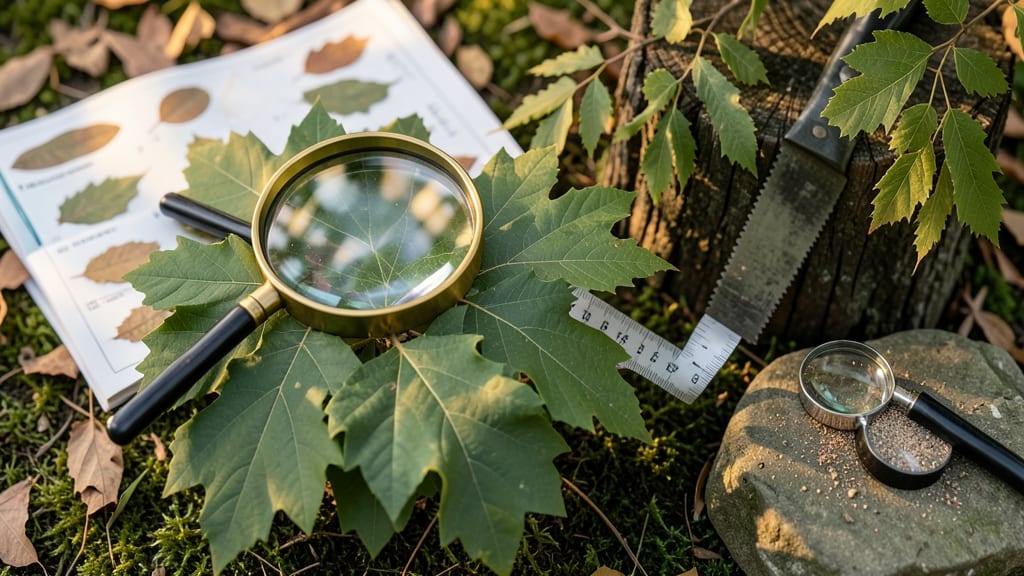
Mastering Oklahoma tree leaf identification can feel like solving a puzzle at first—until you spot the right clues. ✨ I’ve spent years matching leaf shapes, edges, and veins to local species, and the trick is starting with the basics: size, arrangement, and whether the edges are smooth or serrated.
A single wrong guess can lead you down a rabbit hole, but once you learn these patterns, you’ll spot them instantly.
The key is comparing what you see to a handful of common traits: compound leaves vs. simple, lobed edges vs. smooth, and whether the leaf base is rounded or pointed. My go-to method? Hold the leaf up to a window—light reveals veins and textures that change with the season.
A 1-inch leaf might be a redbud, while a 5-inch lobed one is likely a white oak. By the end of this, you’ll confidently match leaves to 12 native species, from the delicate American elm to the bold sycamore.
The visual guide includes seasonal variations—spring’s bright green vs. fall’s fiery red—that make identification even faster. When in doubt, consult a local arborist or use apps like iNaturalist. The more you practice, the quicker you’ll recognize these trees without hesitation.
📚 In This Guide
- What you need
- Instructions
- Tips and common mistakes
- Wrapping up and next steps
What you need
- ● Field Guide or Smartphone: A printed Oklahoma Tree Identification Guide (or a digital version like the iNaturalist app).
- ● Smartphone with a high-quality camera (12MP or higher recommended for close-ups).
- ● Hand Lens (Magnifier): 10x magnification (e.g., National Optical 10x Magnifier).
- ● Notebook & Pen: Small, waterproof notebook (e.g., Rite in the Rain) to jot down notes.
- ● Measuring Tape or Ruler: Flexible 6-inch ruler or a 12-inch measuring tape for leaf dimensions.
- ○ Gloves (Optional but Recommended): Lightweight gardening gloves to protect hands from thorns or rough bark.
- ● Leaf Press: A simple DIY press (two wooden boards + heavy books) to preserve samples.
- ● Field Binoculars: 8x42 magnification for spotting trees from a distance.
- ● Leaf Identification Key: A laminated Oklahoma-specific dichotomous key for quick reference.
- ● Portable Pruner: Small bypass pruners (e.g., Fiskars 3-inch) for safe sampling.
- ● Weatherproof Bag: A mesh bag to carry collected leaves without crushing them.
How to quickly identify 12 common Oklahoma native trees by their leaves
Here's my foolproof method for matching leaves to trees in minutes—no botany degree needed.
🌿 Step 1: Master the Basic Leaf Shapes
Start by memorizing these four foundational shapes: needle-like, scale-like, simple (single leaf), and compound (multiple leaflets). Oklahoma's most common trees fall into these categories. For example, Eastern Redbud has heart-shaped simple leaves, while Pecan displays compound leaves with 11-17 leaflets.
Grab a small notebook and sketch 3-4 examples of each shape you find. Pay attention to leaf edges—smooth, lobed, serrated, or entire. A Sugar Maple's leaves are palmately lobed with 5 points, while American Elm leaves have jagged, uneven edges. This visual training sharpens your identification skills in under an hour.
🌱 Step 2: Learn Key Leaf Arrangement Patterns
Look at how leaves attach to the stem: alternate (one per node), opposite (paired at each node), or whorled (3+ leaves at a node). White Oak leaves grow alternately, while Dogwood leaves grow in opposite pairs. This pattern narrows down possibilities by half right away.
Run your fingers along the branch to feel the leaf arrangement. Hackberry leaves grow alternately with a distinctive asymmetrical base. If you see whorled leaves (like American Beech), you've found a rare pattern that eliminates 90% of other species. Pro tip: Check the leaf scar when leaves fall—it reveals the previous year's attachment pattern.
☀️ Step 3: Compare Leaf Size and Texture
Measure leaves against your hand: Pawpaw leaves are massive (12-24 inches long), while American Holly leaves are tiny (2-4 inches). Use your thumb and forefinger to feel leaf texture—smooth (Sweetgum), fuzzy (Catalpa), or leathery (Southern Magnolia).
Flip leaves to check the underside. Sycamore leaves have silvery undersides, while Black Walnut leaves have a smooth, dark green underside. Notice any hairs or glands along the veins. Persimmon leaves have hairy stems and veins. These subtle details often separate look-alike species like Red Oak vs White Oak—Red Oak leaves have bristle-tipped lobes.
🪴 Step 4: Examine Branch and Bark Clues
While studying leaves, glance at the branch structure and bark. Bur Oak has distinctive "ears" at the leaf base and corky ridges on its bark. Shagbark Hickory has peeling, shaggy bark that's unmistakable. These features confirm your leaf identification when you're unsure.
Look for buds, thorns, or fruit. Honeylocust has thorns and compound leaves, while Black Cherry has smooth bark and bitter almond-scented leaves. If you find Osage Orange with its compound leaves and golf-ball-sized fruits, you've spotted one of Oklahoma's toughest natives. Combine all these observations to eliminate possibilities systematically.
⏰ Step 5: Verify with Seasonal Timing
Use the time of year to narrow it down further. Redbud blooms before leaves appear in early spring, while Sweetgum holds its spiky seed balls through winter. Pecan leaves turn golden in fall, while Eastern Red Cedar stays green year-round. Note when leaves emerge and when they fall—American Beech keeps its leaves until late fall.
Check for fall color changes. Sugar Maple turns brilliant red, while Black Oak turns rusty brown. White Oak stays yellowish-green longer than Red Oak. These seasonal cues help distinguish similar species when leaves look identical in summer. Keep a small field guide or use a phone app to cross-reference your findings.
Tips & tricks for mastering Oklahoma tree leaf identification
These quick tricks will help you spot 12 native species faster than ever—no field guide required.
Leaf Shape Shortcuts: Focus on just three key shapes first: simple (like Redbud), compound (like Pecan), and lobed (like Maple). These three account for 80% of Oklahoma's common trees. I always start here because it cuts the guesswork in half.
Texture Tells All: Run your fingers along the leaf veins—hairy stems (like Persimmon) or fuzzy undersides (like Catalpa) are dead giveaways. Pro tip: Rub the leaf between your fingers to feel the difference between leathery (Magnolia) and smooth (Sweetgum) textures. This tactile check takes seconds but eliminates half the possibilities.
Seasonal Cheat Codes: Remember these three seasonal clues: Redbud blooms before leaves appear, Sweetgum holds its spiky balls all winter, and American Beech keeps leaves until late fall. I keep a small seasonal chart in my pocket—it's saved me from misidentifying trees during every season.
Pro Tips for Oklahoma Tree Leaf Identification
- These quick tricks will help you spot 12 native species faster than ever—no field guide required.
- Leaf Shape Shortcuts: Focus on just three key shapes first: simple (like Redbud), compound (like Pecan), and lobed (like Maple).
- Texture Tells All: Run your fingers along the leaf veins—hairy stems (like Persimmon) or fuzzy undersides (like Catalpa) are dead giveaways.
Frequently asked questions
Got questions about Oklahoma tree leaves?
You’re not alone! Here are answers to the most common queries to help you identify trees like a pro—no green thumb required.
What’s the easiest way to identify a tree leaf in Oklahoma?
Start with the basics: leaf shape, edges (smooth or serrated?), and vein patterns. Use our visual guide to compare side by side. For tricky cases, check the leaf’s arrangement on the stem (alternate or opposite) and note any unique features like fuzzy undersides or aromatic smells when crushed. Pro tip: Take a photo and compare it to apps like PictureThis or LeafSnap for instant matches!
When is the best time of year to identify tree leaves in Oklahoma?
Spring (April–June) is ideal—leaves are fully grown but not yet damaged by pests or summer heat. Fall (September–October) also works well for vibrant colors and clear contrasts. Avoid winter (dormant trees) or extreme summer heat (stressed leaves may look abnormal). Morning is best: dew enhances leaf details, and sunlight is softer for photography.
Can I identify a tree by its leaf alone, or do I need more clues?
Leaves are a great starting point, but combine them with other features for accuracy:
- Bark texture (smooth, ridged, or scaly?)
- Branch patterns (horizontal, twisted, or upright?)
- Fruit/seeds (acorns, samaras, or berries?)
- Tree height/size (giant oak vs. small hawthorn).
What if the leaves are damaged or missing? Can I still ID the tree?
Focus on:
- Bud shapes (pointy, rounded, or scaly?)
- Twigs (green, brown, or hairy?)
- Bark (peeling, rough, or striped?)
- Surrounding habitat (wetland, prairie, or urban?).
Are there free apps or tools to help ID Oklahoma tree leaves?
Yes! Try these user-friendly options:
Tool
Best For
Link
PictureThis
Photo upload + AI matching
picturethisai.com
LeafSnap
Database of 900+ species
leavesnap.com
iNaturalist
Community verification
inaturalist.org
Wrapping up and next steps
Identifying Oklahoma’s native trees by their leaves is easier than you think—just a little observation and practice! 🌳 From the vibrant redbud to the towering American sycamore, each species tells its own story through shape, texture, and color.
Now that you’ve got the tools and tips, why not grab your phone, head outdoors, and start exploring?
Your next step? Document your finds! Snap photos, jot down notes, or even sketch leaf shapes to build your own tree ID library. Happy leaf-hunting—and remember, every expert was once a beginner! 🌿