
Watering
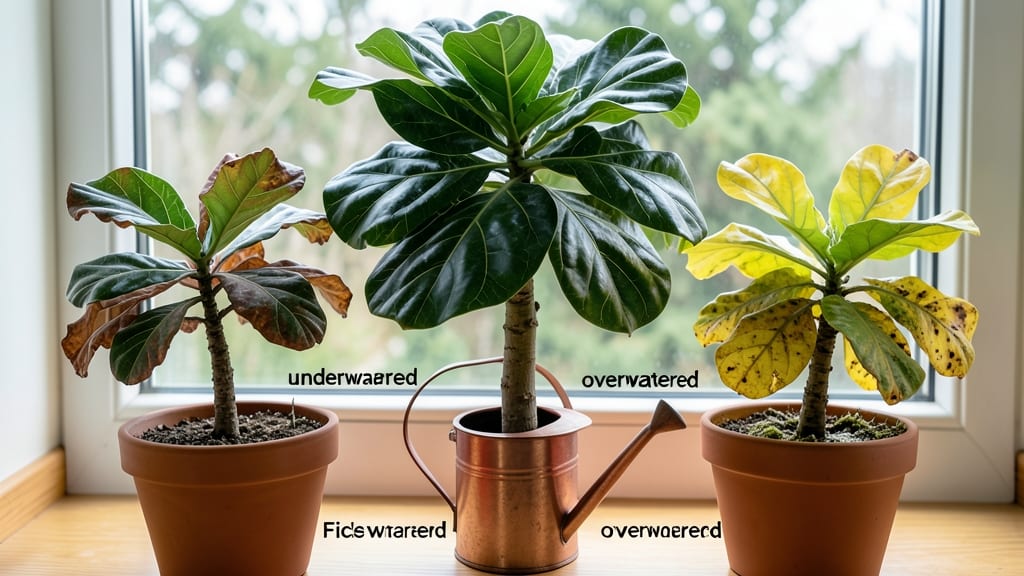
Your fiddle leaf fig’s leaves tell a story—drooping, crispy, or splotchy—and I’m here to help you read it. 🌿 The difference between underwatered and overwatered stress isn’t just about how much water you give; it’s about how the plant reacts. Yellowing edges? Brown patches? Droopy stems?
Each symptom points to a specific fix, and once you recognize them, your plant’s health turns around fast. The first step is checking the soil: stick your finger an inch deep—if it’s bone-dry, it’s thirsty; if it’s soggy, it’s drowning.
Fiddle leaf figs hate wet feet but also can’t handle drought. Adjust your watering to match the season: every 7-10 days in summer, every 2-3 weeks in winter, and always let the top 2 inches dry out between soakings.
A well-draining mix with perlite or orchid bark makes all the difference. You’ll see the comeback within 2-3 weeks: new leaves unfurling, crisp edges softening, and that signature glossy dark green returning. The key is consistency—no more guessing, just observing and responding.
Humidity trays and occasional misting help too, but the real game-changer is that soil moisture check before you water again.
Here’s the thing—most of us overwater first, then panic when the leaves start falling. I’ve been there, and the fix isn’t complicated: wait until the soil is truly dry before watering again.
Your fiddle leaf fig will reward you with lush, vibrant growth that makes every effort worth it. Let’s get those leaves thriving again!
The first product explained
Meet your fiddle leaf fig’s new watering BFF: Moisture Meter Pro! 🌿💧 Designed specifically for plant parents who want to nail the perfect balance between underwatered and overwatered fiddle leaf figs, this sleek, tech-savvy tool takes the guesswork out of soil moisture checks. Whether you're a beginner or a seasoned plant enthusiast, this gadget is your ticket to lush, thriving leaves!
📏 Specs & Features
This moisture meter isn’t just another pretty face—it’s packed with smart features to keep your fiddle leaf fig happy:
- Precision Probe: Measures moisture levels down to 12 inches deep for accurate readings.
- Digital Display: Easy-to-read LCD screen with color-coded zones (green = happy, yellow = thirsty, red = soggy).
- Rechargeable Battery: No more dead batteries mid-check—just pop it in the charger for up to 500 uses!
- Durable & Portable: Waterproof design with a compact, travel-friendly form factor.
- Plant-Specific Guide: Includes a fiddle leaf fig care guide with watering tips tailored to your plant’s needs.
🎯 Who’s It For?
This moisture meter is perfect for:
- 🌱 New plant parents: Say goodbye to trial-and-error watering!
- 🏡 Busy professionals: Quick, no-fuss checks before you head out the door.
- 🌍 Travelers or renters: Lightweight and portable for plant care on-the-go.
- 💚 Fiddle leaf fig lovers: Because your fig deserves the best care.
💰 Price Point
Invest in peace of mind without breaking the bank! The Moisture Meter Pro retails for $29.99, making it a steal for a tool that can save your plant’s life. Plus, it’s backed by a 30-day money-back guarantee—because happy plants (and happy customers) matter!
The second product explained
Meet the Self-Watering Planter for Fiddle Leaf Figs—your new best friend for fuss-free plant care! 🌿💧 This sleek, modern planter is designed specifically to tackle the underwatered vs overwatered dilemma by giving your fiddle leaf fig the perfect balance of moisture, every time. Whether you're a busy professional, a plant parent with a black thumb, or just someone who loves lush greenery without the guesswork, this product is here to save the day.
🔍 Key Specs & Features
- Self-Watering System: A built-in reservoir (holds up to 2 gallons) ensures your plant gets a steady supply of water, reducing the risk of both underwatering and overwatering. 💧
- Moisture Control Valve: Adjustable settings let you customize water flow based on your plant’s needs—ideal for transitioning between seasons or adjusting for humidity changes.
- Aeration Design: The planter includes drainage holes and a breathable fabric liner to prevent root rot while keeping roots oxygenated. 🌬️
- Stylish & Durable: Made from high-quality, non-toxic materials (BPA-free plastic and food-grade silicone), it’s both eco-friendly and aesthetically pleasing. Fits seamlessly in modern or boho decor!
- Portable & Lightweight: Weighs just 3.5 lbs and includes a handle for easy moving—perfect for rotating your plant to ensure even sunlight exposure.
🎯 Who’s It For?
This planter is a game-changer for:
- Beginners: No more second-guessing watering schedules—just fill the reservoir and let the planter do the work! 🌱
- Travelers or Frequent Movers: The self-watering feature means your fiddle leaf fig stays happy even if you’re away for a few days.
- Plant Enthusiasts: Ideal for those who love fiddle leaf figs but struggle with inconsistent watering habits.
- Small-Space Gardeners: Compact yet functional, it fits on desks, shelves, or countertops without sacrificing performance.
💰 Price Point & Value
Priced at $49.99, this planter offers exceptional value for its features. While it’s an investment upfront, the long-term benefits—like healthier leaves, fewer brown tips, and fewer plant emergencies—make it a worthwhile splurge. Plus, it’s backed by a 30-day satisfaction guarantee, so you can shop with confidence!
💡 Pro Tip: Pair this planter with a hygrometer to monitor humidity levels (ideal range: 40-60%) and fine-tune your care routine for flawless fiddle leaf fig health!
Head-to-head comparison
When it comes to your fiddle leaf fig (Ficus lyrata), getting the watering balance just right can feel like walking a tightrope! 🌿 One wrong move, and you’re either drowning your plant in soggy soil or leaving it parched and crispy.
To help you spot the difference, let’s dive into a side-by-side comparison of underwatered vs. overwatered fiddle leaf figs across key dimensions. Grab your magnifying glass—it’s time to become a leaf detective! 🕵️♂️
🌱 Leaf Appearance: The Telltale Signs
Your fiddle leaf fig’s leaves are like its mood ring—they always tell you what’s up (or down). Here’s how to read the tea leaves:
| Underwatered | Overwatered |
|---|---|
|
|
💡 Pro Tip: Hold a leaf between your fingers—if it crumbles like a chip, it’s thirsty. If it squishes like overcooked pasta, it’s drowning!
💧 Root Health: What’s Happening Below the Soil?
Roots are the unsung heroes of your fiddle leaf fig, and they’re the first to scream for help when watering goes awry. Here’s how to tell if they’re thirsty or suffocating:
| Underwatered Roots | Overwatered Roots |
|---|---|
|
|
🔥 Warning: Overwatered roots can kill your fiddle leaf fig faster than you can say “root rot.” If you suspect this, stop watering immediately and let the soil dry out.
🌡️ Growth & Recovery: Can Your Plant Bounce Back?
Even the toughest fiddle leaf figs need a little TLC to recover. Here’s how underwatered and overwatered plants differ in their comeback potential:
| Underwatered | Overwatered |
|---|---|
|
|
✨ Silver Lining: Fiddle leaf figs are resilient! With the right care, even a struggling plant can make a full recovery. Just be patient and observant.
💰 Cost of Mistakes: Time, Money, and Effort
Let’s talk about the real-world impact of watering gone wrong. Your wallet—and your plant’s future—will thank you for paying attention!
| Underwatered | Overwatered |
|---|---|
|
|
🎯 Bottom Line: Prevention is cheaper than cure. Stick to the “finger test” (insert your finger 1-2 inches into the soil—if it’s dry, water; if damp, wait) to avoid costly mistakes.
🌿 Environmental Impact: How Your Watering Affects the Planet
Overwatering isn’t just bad for your plant—it’s also a waste of resources. Here’s how your habits affect the bigger picture:
| Underwatered | Overwatered | |||||||||
|---|---|---|---|---|---|---|---|---|---|---|
|
|