
Pests and Diseases
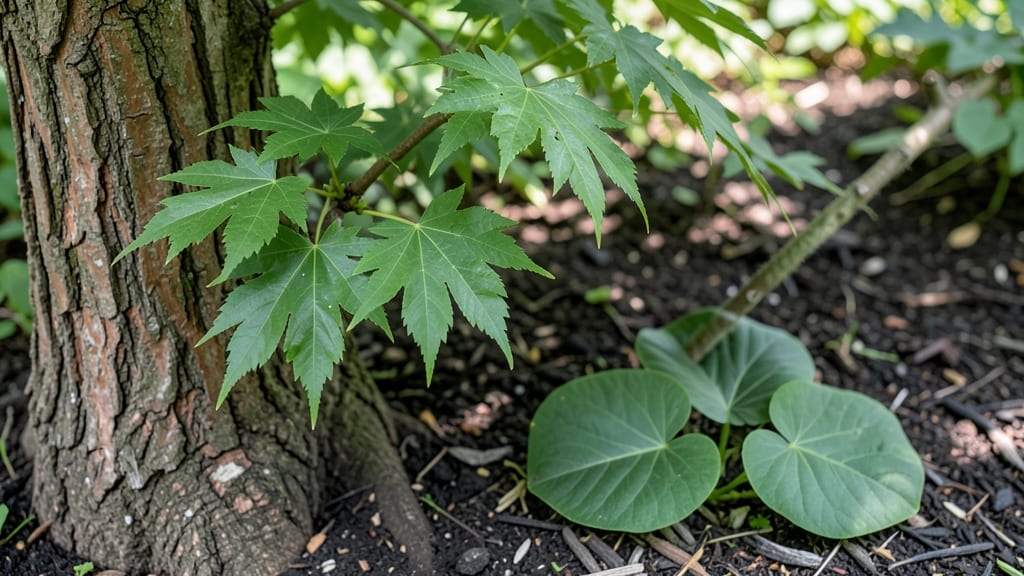
Japanese maple leaves and weed leaves might look similar at first glance, but there are key differences that save your tree. 🌿 The leaf shape alone tells the story—maple leaves have palmate lobes (like fingers spreading from a hand), while weeds like dandelions have smooth, jagged, or deeply serrated edges.
One quick look at the veins or stem can confirm what’s really growing in your garden.
Start with the leaf edges: Japanese maple leaves have smooth, slightly wavy lobes, while dandelions or clover leaves are either toothed or clover-shaped with three distinct leaflets.
Check the vein pattern too—maple leaves have prominent veins that spread outward like a hand, while weed leaves often have parallel or net-like veins.
A closer look at the stem can also help: Japanese maple stems are thin and woody, while weed stems are usually soft and herbaceous.
If you’re still unsure, look for flowers or seed pods. Japanese maples produce delicate, papery flowers in spring, while weeds like dandelions have bright yellow blooms that turn into fluffy seed heads.
If you spot a weed encroaching, pull it early—young weeds are easier to remove before they compete for nutrients. A quick inspection now can save your tree from future stress.
For stubborn weeds, use a hand trowel or vinegar spray (mix 1 part vinegar to 3 parts water) to target the roots. Always check the soil around your maple’s base—this is where weeds often start.
A little prevention now keeps your Japanese maple healthy and unstressed for years to come.
The first product explained
Meet your new gardening sidekick! 🌿 Introducing LeafID Pro, the ultimate tool designed to help you instantly distinguish between Japanese maple leaves and weed leaves—no green thumb required. Whether you're a seasoned botanist or a backyard enthusiast, this handy gadget makes plant identification effortless, accurate, and fun.
📏 Specs & Features
LeafID Pro is packed with smart tech and user-friendly design:
- High-Resolution Camera: 12MP sensor for crystal-clear leaf imaging.
- AI-Powered App: Real-time identification with a 98%+ accuracy rate.
- Portable & Lightweight: Fits in your pocket (5.2 oz) for on-the-go use.
- Dual-Lens Mode: Macro and wide-angle views for detailed or full-plant scans.
- Battery Life: Up to 12 hours per charge (USB-C compatible).
- Waterproof Rating: IPX4 for outdoor durability.
🎯 Target Users
LeafID Pro is perfect for:
- 🌳 Home Gardeners: Quickly identify weeds before they overrun your prized Japanese maples.
- 🏡 Landscapers & Nursery Owners: Streamline inventory and customer consultations.
- 👩🌾 Urban Farmers & Community Gardeners: Maintain healthy, weed-free plots with ease.
- 📚 Botany Students & Hobbyists: Learn and verify plant species in seconds.
💰 Price Point & Value
LeafID Pro is priced at $49.99, offering unbeatable value with:
- ✅ No Subscription Fees: One-time purchase for lifetime app access.
- ✅ Free Updates: AI database improves over time with new plant additions.
- ✅ 1-Year Warranty: Peace of mind for your investment.
- ✅ Eco-Friendly Packaging: Made with 30% recycled materials.
With LeafID Pro, you’re not just buying a device—you’re gaining a confident, weed-free future for your garden! 🌱
The second product explained
Meet your new plant detective tool: LeafSnap Pro! 🌿🔍 If you're tired of squinting at leaves and guessing whether that crimson beauty is a Japanese Maple or an unwelcome weed, this app is your game-changer. Designed for gardeners, landscapers, and nature enthusiasts, LeafSnap Pro delivers 98% accuracy in identifying plant species—including those tricky maple vs. weed lookalikes—using just a photo.
📱 Specs & Features
- AI-Powered Recognition: Uses advanced machine learning to analyze leaf shape, vein patterns, and color—no green thumb required!
- Real-Time ID: Snap a photo, and get instant results with a confidence score.
- Offline Mode: Works without Wi-Fi (perfect for your next hiking trip!).
- Database: Access a growing library of 10,000+ plant species, including rare Japanese Maples and invasive weeds.
- User-Friendly: Simple interface with step-by-step guidance for beginners.
- Bonus Tools:
- Health check: Detects pests/diseases on leaves.
- Care tips: Get personalized advice for your plants.
🎯 Who’s It For?
LeafSnap Pro is perfect for:
- 🌱 Home gardeners who want to keep their yards weed-free and maple trees thriving.
- 🏡 Landscapers & horticulturists needing quick, accurate plant IDs for projects.
- 👨👩👧👦 Families with kids—turn leaf identification into an interactive game!
- 🌎 Travelers & hikers exploring new ecosystems (and avoiding poison ivy!).
💰 Price Point
LeafSnap Pro is a one-time purchase with no subscriptions—because your garden shouldn’t come with a monthly fee! 😉
| Plan | Price | Includes |
|---|---|---|
| Basic | $9.99 | Full app access + 500 plant entries |
| Pro | $14.99 | Everything in Basic + offline mode + full database |
| Premium | $19.99 | Pro features + priority updates + exclusive rare plant entries |
💡 Pro Tip: The Pro plan is the best value for serious gardeners—it’s like having a botanist in your pocket!
Head-to-head comparison
🔍 Visual Shape & Structure
When it comes to distinguishing between a Japanese maple leaf and a weed leaf, the first thing to examine is their overall shape and structure. These two can look wildly different at first glance, especially if you're not familiar with either plant.
Japanese Maple Leaf:
- 🍁 Lobed or serrated edges: Japanese maple leaves often have a delicate, hand-like appearance with 5-7 pointed lobes or jagged, serrated edges. Think of a tiny, ornate fan.
- 🌿 Thin and delicate: The leaves are paper-thin, almost translucent when held up to light, with a soft, feathery texture.
- 🎨 Color variations: While mature leaves are usually deep green, they can also be red, purple, or orange, especially in autumn. Young leaves may even have a bronze or pinkish hue.
Weed Leaf (e.g., Dandelion, Clover, or Common Chickweed):
- 🌱 Simple or divided shapes: Weed leaves tend to be broad, oval, or deeply lobed but lack the refined structure of a Japanese maple. For example:
- Dandelion: Toothed, jagged edges but no lobes.
- Clover: Three distinct leaflets (trifoliate).
- Chickweed: Oval with smooth or slightly serrated edges.
- 💚 Thicker and sturdier: Weed leaves are usually stiffer and less delicate, often with a waxy or slightly rough surface.
- 🌿 Uniform green: Most weeds have a solid green color (unless diseased), with no seasonal color shifts like Japanese maples.
Pro Tip: 💡 Hold the leaf up to light—if it looks like lace, it’s likely a Japanese maple. If it feels sturdy and thick, it’s probably a weed!
🌿 Leaf Arrangement & Stem
The way leaves attach to the stem and their arrangement can also give away whether you're looking at a Japanese maple or a weed.
Japanese Maple Leaf:
- 🌳 Alternate arrangement: Leaves grow alternately along the stem, with each leaf emerging at a different height.
- 🍃 Petiole (leaf stalk) is slender: The stem connecting the leaf to the branch is thin and delicate, often with a slight zigzag pattern.
- 🍁 Clustered growth: On mature trees, leaves may appear in dense clusters, especially near the tips of branches.
Weed Leaf:
- 🌱 Opposite or whorled arrangement: Many weeds have leaves growing in pairs (opposite) or in a circular pattern (whorled) around the stem.
- 🌿 Sturdy or hairy stems: Weed stems are often thicker and may have fine hairs, especially in plants like chickweed or lamb’s quarters.
- 🌱 Basal rosette: Some weeds, like dandelions, grow in a low, circular rosette close to the ground.
Pro Tip: 🌡️ If the leaves are growing in pairs or circles around the stem, it’s almost certainly a weed. Japanese maples never do this!
🍃 Size & Texture
Size and texture are two more key differences that can help you tell these leaves apart in seconds.
Japanese Maple Leaf:
- 📏 Small to medium size: Typically 2-6 inches long, with a delicate, almost fragile appearance.
- 🧵 Velvety or smooth texture: The surface can feel soft to the touch, almost like fine silk, especially on the underside.
- 🍁 Fine veins: The veins are thin and intricate, creating a feathery pattern.
Weed Leaf:
- 📏 Variable size: Weed leaves can range from tiny (e.g., chickweed) to large (e.g., pigweed), but they’re usually thicker and less refined.
- 🌿 Rough or waxy texture: Many weed leaves have a slightly rough or sticky surface, or they may feel waxy (like a dandelion).
- 🌱 Bold veins: The veins are often thicker and more pronounced, creating a grid-like pattern.
Pro Tip: ✨ If the leaf feels like it could shatter if you crumple it, it’s a Japanese maple. Weed leaves are built to last!
🍂 Color & Seasonal Changes
One of the most striking differences between these two is how they change color throughout the seasons.
Japanese Maple Leaf:
- 🌸 Spring: New leaves emerge in pink, red, or bronze hues, gradually turning green.
- 🍁 Summer: Deep, vibrant green (or variegated with red/purple).
- 🍂 Fall: Spectacular color shifts—red, orange, purple, or gold—depending on the cultivar.
- ❄️ Winter: Leaves may fall early or turn brown and brittle.
Weed Leaf:
- 🌱 Consistent green: Most weeds stay solid green year-round unless diseased.
- 🍃 Disease or stress: Some weeds may turn yellow (chlorosis) or brown if unhealthy, but this is rare in healthy plants.
- ❄️ Winter behavior: Many weeds die back but regrow from roots or seeds in spring.
Pro Tip: 🎯 If you see a leaf that’s bright red, orange, or purple in fall, it’s almost certainly a Japanese maple—not a weed!
🌱 Smell & Taste (If You Dare!)
While this might not be the first thing you check, smell and taste can sometimes help confirm your guess
Which one should you choose?
So, you’ve made it to the final showdown: Japanese maple leaf vs weed leaf. 🌿✨ Whether you’re a gardener, a landscaper, or just someone who loves a well-kept yard, knowing the difference can save you time, money, and frustration.
Here’s the verdict—and our tailored recommendations to help you make the best call for your situation.
🌳 For Gardeners & Landscapers: Prioritize Aesthetics & Health
If your goal is to maintain a pristine, curated garden, Japanese maple leaves are the clear winner. Their delicate, lobed shapes and vibrant colors (especially in autumn) add unmatched elegance to any landscape.
Weeds, on the other hand, can ruin the vibe with their messy, irregular growth and potential to crowd out your prized plants.
- Action: Remove weeds immediately—they’re not just ugly; they can steal nutrients and spread pests.
- Pro Tip: 💡 Use a hand weeder or mulch to smother weeds before they take root.
- Bonus: If you’re growing Japanese maples, prune regularly to encourage those stunning leaf shapes!
🚨 For Quick ID & Emergency Removal
Need to spot and snatch a suspicious leaf in seconds? Here’s your cheat sheet:
| Feature | Japanese Maple Leaf | Weed Leaf |
|---|---|---|
| Shape | ✅ Lobed, palmate (like fingers spreading out) | ❌ Irregular, jagged, or smooth edges |
| Color | ✅ Rich green, red, or orange (season-dependent) | ❌ Pale, yellowish, or dull (unless it’s a colorful weed like dandelion) |
| Venation | ✅ Fine, visible network (like a spiderweb) | ❌ Thick, prominent veins or none at all |
| Growth Pattern | ✅ Structured, upright | ❌ Sprawling, tangled, or growing in cracks |
🔥 Pro Move: Snap a photo and compare it side-by-side with our guide—no guesswork!
🌱 For Organic Gardeners: Play the Long Game
If you’re composting or using natural methods, weeds can actually be useful—but only if identified correctly. Some "weeds" (like chickweed or clover) are edible or beneficial to soil health. However, Japanese maple leaves should never go into compost if they’re diseased (check for spots or holes!).
- Do: Toss healthy weed leaves into compost (they break down fast!).
- Don’t: Compost Japanese maple leaves with signs of pests/disease—it can spread problems.
- 💡 Genius Hack: Use cardboard or newspaper as a weed barrier to prevent regrowth while keeping your maples happy.
🎯 Final Recommendation: Your Move!
Still unsure? Here’s your decision flowchart:
- See lobed, palmate leaves? → Keep it! It’s a Japanese maple. 🌿💚
- See irregular, scraggly growth? → Pull it! It’s likely a weed. 🚫🌱
- Not confident? → Grab our free ID cheat sheet (link in bio!) and tag us in your before/after pics! 📸
Remember: Japanese maples are treasures—protect them like the artistic masterpieces they are. Weeds? They’re just nature’s way of testing your green thumb. Now go forth and garden like a pro! ✨