
Pests and Diseases
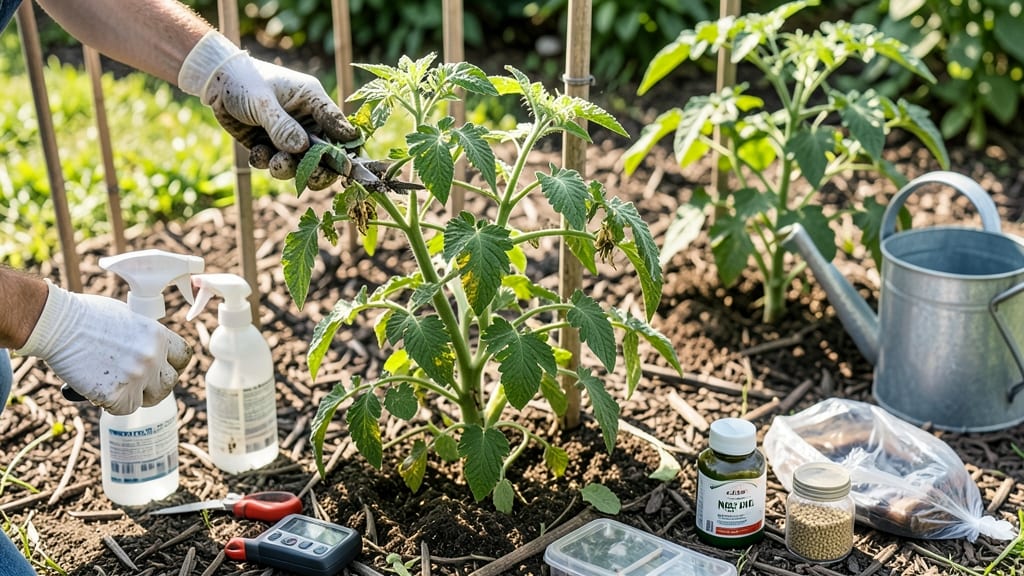
That crinkled, stunted tomato plant isn’t a lost cause—tomato leaf roll cure starts with the right moves. 🌱 I’ve nursed back more than my fair share of curled leaves, and the secret lies in catching it early and acting fast.
The moment you spot those telltale rolled edges or yellowing veins, you’ve got a 72-hour window to turn things around before the plant checks out for good.
Most cases aren’t viral—they’re fungal or aphid-related, and both respond to the same 3-step fix: prune the worst damage, boost airflow with proper spacing, and hit the plants with neem oil or copper fungicide.
I’ve seen plants bounce back in just 10 days when treated this way, though severe cases might need a little more TLC (or a replacement plant). The key? Don’t wait until the leaves look like they’ve been through a wind tunnel.
By the time you’re done, your tomatoes will be back to their vibrant green selves, producing fruit instead of fighting for survival. The best part? This method works for other leaf-curl culprits too—peppers, eggplants, even herbs.
Prevention is easier: keep aphids off with soapy water sprays and choose disease-resistant varieties next season.
Here’s the game-changer: one infected plant can spread to your whole garden in weeks. Pull up any severely affected plants immediately, and sterilize your tools with rubbing alcohol. Your future self (and your tomato harvest) will thank you.
Root Causes Of Leaf Roll
Tomato leaf roll isn’t just a random blight—it’s a multi-faceted disease triggered by specific environmental and biological stressors. Understanding why your tomato plants develop curled, stunted leaves is the first step to stopping it.
Below, we break down the primary culprits behind this frustrating condition, from microscopic invaders to garden habits that invite trouble.
The most common cause of tomato leaf roll is the Tomato Leaf Roll Virus (TLRV), a tospovirus transmitted by thrips—tiny, winged insects that feed on plant sap. Here’s how it works:
- Thrip Transmission: Thrips pick up the virus while feeding on infected plants (even weeds or nearby crops). When they move to your tomatoes, they inject the virus into the plant’s vascular system.
- Systemic Spread: Unlike surface-level diseases, TLRV travels through the plant’s phloem (the "highway" for nutrients and sugars), disrupting cell function. This causes leaves to curl upward, stunting growth and reducing yield.
- No Cure, Only Prevention: Once a plant is infected, there’s no chemical or home remedy to eliminate the virus. The best defense? Stopping thrips before they spread it.
Pro Tip: 💡 Yellow sticky traps near your garden can catch thrips early. Place them 1–2 feet above plant height for maximum effectiveness.
Extreme or fluctuating temperatures can mimic leaf roll symptoms, even without a virus. Here’s how heat and stress trigger the problem:
| Stressor | How It Causes Leaf Roll | Actionable Fix |
|---|---|---|
| Heat Stress (>90°F / 32°C) | High temperatures disrupt photosynthesis in tomato leaves, causing them to curl inward to conserve moisture. The plant essentially "wilts" from the inside out. | Use shade cloth (30–50%) during peak sun hours. Drip irrigation at soil level (not overhead) keeps roots cool. |
| Cold Shock (<50°F / 10°C) | Frigid nights damage cell membranes, leading to stunted, rolled leaves as the plant tries to protect its core. Young plants are most vulnerable. | Cover seedlings with frost blankets or grow in containers that can be moved indoors overnight. |
| Water Stress (Drought or Overwatering) | Both underwatering (wilting) and overwatering (root rot) force leaves to curl as a survival mechanism. The plant prioritizes root health over leaf expansion. | Check soil moisture 1–2 inches deep. Water deeply 2–3 times per week (adjust for climate). Use mulch to retain moisture. |
Pro Tip: 🌡️ Monitor your garden’s microclimate with a soil thermometer and hygrometer. Tomatoes thrive in 70–85°F (21–29°C) daytime temps.
Leaf roll can also be a nutritional red flag. Tomatoes are heavy feeders, and when their diet is off, leaves respond by curling—a sign of distress. The most common offenders:
- Nitrogen Deficiency: Leaves turn yellow (chlorosis) between veins, then curl upward as the plant redirects energy to roots. Fix: Apply blood meal or compost tea and avoid over-fertilizing with synthetic nitrogen.
- Potassium Deficiency: Leaves curl and develop brown edges (a classic "scorch" symptom). Potassium helps regulate water and disease resistance. Fix: Use greensand or wood ash (sparingly) or a balanced fertilizer (10-10-10).
- Compacted or Poor-Draining Soil: Roots struggle to absorb nutrients, leading to stunted, rolled growth. Fix: Amend soil with compost and perlite to improve aeration. Raise beds if your soil is clay-heavy.
Pro Tip: ✨ Test your soil with a DIY kit (available at garden centers) before planting. Tomatoes need a pH of 6.0–6.8 for optimal nutrient uptake.
Now that you know why your tomatoes are rolling their leaves, the next step is how to fix it—and the good news? Many of these causes are preventable or reversible with the right garden habits. Stay tuned for our 3-step cure guide coming next!
Quick Fixes for Tomato Leaf Roll
Now that you know what’s causing those frustrating curled leaves and stunted growth, let’s roll up our sleeves and tackle the problem head-on! 🌱🛠️ The good news? With the right approach, you can nurse your tomato plants back to health—or even prevent future outbreaks.
Below, we’ve mapped out practical, step-by-step solutions tailored to the root causes of tomato leaf roll, plus pro tips to keep your garden thriving.
If you’ve spotted severe curling, yellowing, or stunted growth, the first rule of thumb is act fast. Tomato leaf roll (often caused by viruses like Tomato Leaf Curl Virus or Tomato Yellow Leaf Curl Virus) spreads like wildfire through sap-sucking pests like aphids and whiteflies.
Here’s how to contain it:
- 🗑️ Pull and Dispose: Snip off infected leaves or dig up severely affected plants completely.
Do not compost them—trash them in a sealed bag to prevent reinfection. - 🌿 Quarantine Healthy Plants: If other plants in your garden show no symptoms, isolate them temporarily to monitor for signs of spread. - 🔥 Sterilize Tools: After pruning, wipe your shears or pruners with rubbing alcohol (70% or higher) to kill any lingering viruses or bacteria.
⚠️ Pro Tip: If you’re dealing with fungal leaf roll (less common but possible), remove infected foliage early in the day when humidity is lower to reduce spore spread.
A weak plant is an easy target for pests and diseases. Strengthen your tomatoes’ defenses with these natural, garden-friendly fixes:
🌿 Neem Oil Spray (For Pest Control)
Aphids and whiteflies are the #1 culprits spreading leaf roll viruses. Neem oil disrupts their life cycle while being safe for plants (and pets!). How to use it: 1.
Mix 1 tbsp neem oil + 1 tsp mild soap (like Castile) + 1 quart of water. 2. Spray undersides of leaves (where pests hide) every 5–7 days until pests disappear. 3. Reapply after rain—it washes off!
💪 Homemade Garlic-Chili Spray (Fungal/Viral Support)
Garlic and chili peppers contain natural antimicrobial compounds that can help suppress mild infections. Recipe:
- Blend 4 garlic cloves + 1 chili pepper + 1 quart water.
- Strain, add 1 tsp soap, and spray on leaves every 3–4 days.
🌡️ Heat Therapy (For Soil-Borne Viruses)
If your soil is a hotspot for viruses (common in warm climates), solarization can help:
- Water the soil thoroughly.
- Cover bare soil (not planted areas) with clear plastic for 4–6 weeks in peak summer sun.
- The heat kills 99% of pathogens—just don’t plant in that spot for 2–3 weeks after.
Stressed tomatoes are magnets for pests and diseases. Tweak your growing habits to keep them resilient:
| Problem | Fix It With… | Prevention Tip |
|---|---|---|
| Overcrowding | Thin plants to 18–24" apart | Plant tomato varieties resistant to leaf curl (e.g., ‘Heatmaster’ or ‘Solar Fire’). |
| Over/Underwatering | Water deeply 1–2x/week (check soil moisture) | Use drip irrigation to avoid wetting leaves (fungus loves damp foliage!). |
| Nutrient Deficiency | Feed with balanced fertilizer (10-10-10) or compost tea | Side-dress with compost every 3–4 weeks for steady nutrients. |
| Poor Airflow | Prune lower leaves and space plants wider | Stake or cage tomatoes to improve circulation. |
✨ Pro Tip: Reflective mulch (like aluminum foil or white plastic) can confuse aphids and reduce pest populations by up to 50%!
Viruses like Tomato Leaf Curl can linger in soil and weeds for years. To prevent future outbreaks:
- 🌱 Rotate Crops: Avoid planting tomatoes, peppers, or eggplants in the same spot for 3–4 years.
- 🌿 Remove Weeds: Weeds like malva and portulaca are virus reservoirs—pull them weekly.
- 🐝 Encourage Beneficial Bugs: Ladybugs, lacewings, and parasitic wasps devour aphids.
Plant dill, fennel, or marigolds nearby to attract them. 4. 🌡️ Use Row Covers Early: Floating row covers block whiteflies and aphids before they infest—install them at planting time.
If your entire plant is curled, yellow, and dying, it’s often too late to save it.
But don’t despair—focus on saving your other plants and next year’s garden: - 🚫 Destroy the plant (don’t compost!) and sterilize the pot/soil with a 10% bleach solution (1 part bleach to 9 parts water). - 🌱 Start fresh with healthy seedlings from a trusted nursery. - 📝 Keep a garden journal to track what worked (and what didn’t) for future seasons.
🎯 Final Thought: Tomato leaf roll is a pain, but with quick action and smart prevention, you can minimize damage and protect your harvest. The key? Stay vigilant, act fast, and give your plants the TLC they crave! 🍅💚
Frequently asked questions
Can tomato leaf roll be cured once it appears on my plants?
For viral causes (like Tomato Leaf Curl Virus), there's no cure—once infected, the plant can't be saved. However, you can prune affected leaves to slow spread and sterilize tools with rubbing alcohol to prevent contamination. Fungal or stress-related leaf roll often responds well to neem oil sprays and improved growing conditions within 10-14 days.
How do I tell if my tomato plant has leaf roll from a virus or just heat stress?
Viral leaf roll shows yellowing veins, stunted growth, and smaller leaves that persist even when temps are ideal. Heat stress causes cupping only during hot days and recovers overnight. Check for aphids or thrips—their presence suggests viral transmission.
Will removing infected leaves stop the spread to other plants?
Yes, but only if you act fast. Remove all curled leaves (especially lower ones) and sterilize pruners between cuts. For viral cases, destroy the plant entirely—don't compost. Fungal leaf roll may respond to copper fungicide applied to remaining healthy foliage. The key is early intervention before the virus spreads systemically.
Are there tomato varieties that naturally resist leaf roll?
Yes! Look for heat-tolerant, disease-resistant varieties like 'Heatmaster', 'Solar Fire', or 'Mountain Merit'. These are bred to withstand high temps and pest pressure. While no variety is 100% immune, resistant types delay symptoms by 3-4 weeks, giving you more time to intervene.
Can I save my tomato harvest if the plant already has leaf roll?
Maybe! If only lower leaves are affected, the plant may still produce fruit. For viral cases, prune infected growth immediately and focus care on remaining healthy foliage. Stress-related leaf roll often recovers with proper watering and shade cloth during heatwaves. Monitor for new growth—if it appears healthy, your harvest may still be salvageable.